Zodiac (2007)
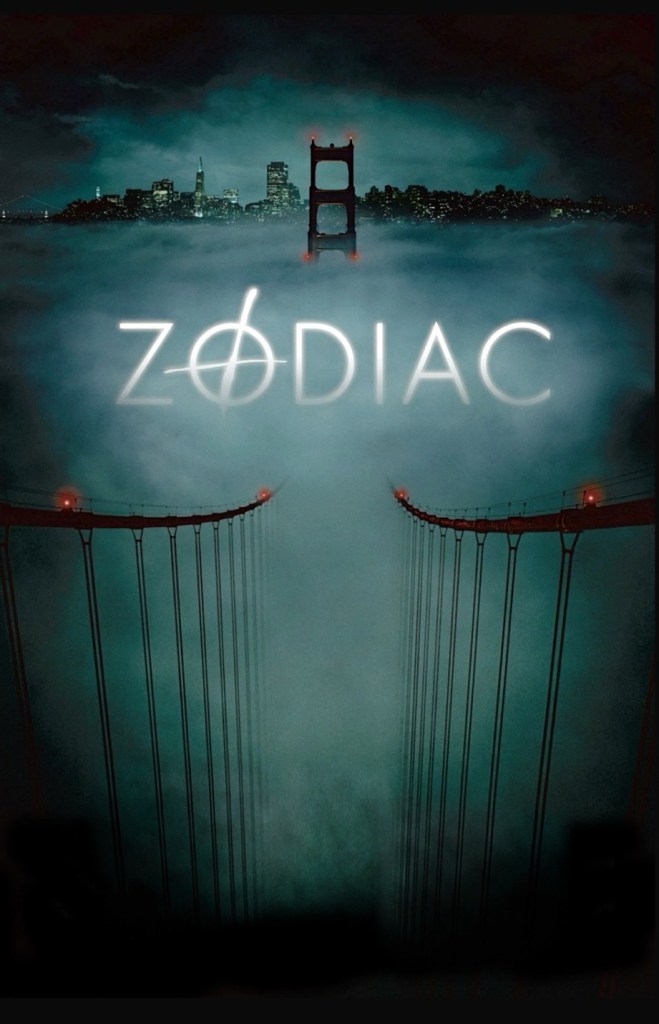
Directed by: David Fincher
Written by: James Vanderbilt
Starring: Jake Gyllenhaal, Mark Ruffalo, Robert Downey Jr., Anthony Edwards, Brain Cox, Elias Koteas, Donal Logue, John Carroll Lynch and Dermot Mulroney
Music by: David Shire
Rated: 15
In the summer of 1969 Northern California, a mysterious serial killer calling himself “The Zodiac” commits five murders across the state. When the Zodiac starts sending strange letters and threats to the San Francisco Chronicle newspaper company, the lives of three people, cartoonist Robert Graysmith (Jake Gyllenhaal), Inspector Dave Toschi (Mark Ruffalo) and crime reporter Paul Avery (Robert Downey Jr.) will be changed forever due to how far they are willing to go to solve the insolvable mystery…
Although the subject of the infamous Zodiac killer had been used as inspiration for films in the past such as Clint Eastwood’s Dirty Harry, David Fincher, having had experience in this type of murder mystery/thriller film before with Seven, was a perfect choice in finally giving this case, the respect it deserved.
Despite being limited in terms of narrative structure due to being based on a case that is still open as of 2025, Fincher takes advantage of this by making Zodiac a powerful character study of three different people that undergo devastating hardships as they become more obsessed with this killer. Even though this film uses Robert Graysmith’s 1986 and 2002 books Zodiac and Zodiac Unmasked as its main source and seem to side with his opinions over who the true killer was, Jake Gyllenhaal’s performance as Graysmith himself, thankfully does not attempt to completely glamorise him as shown throughout his character arc.
As for Ruffalo and Downey Jr., these future MCU mainstays are given the same amount of respect as Inspector Toschi and Paul Avery and their hardships along with Harris Savide’s impressive cinematography and David Shire’s haunting score is what makes this thriller worth watching, despite the lack of a conclusion.
Overall, Zodiac is a powerful and thrilling experience that gives real crime investigation the respect it deserves and shows how far humanity is willing to get easy answers in life.
Rating: 4.5/5
Se7en (1995)
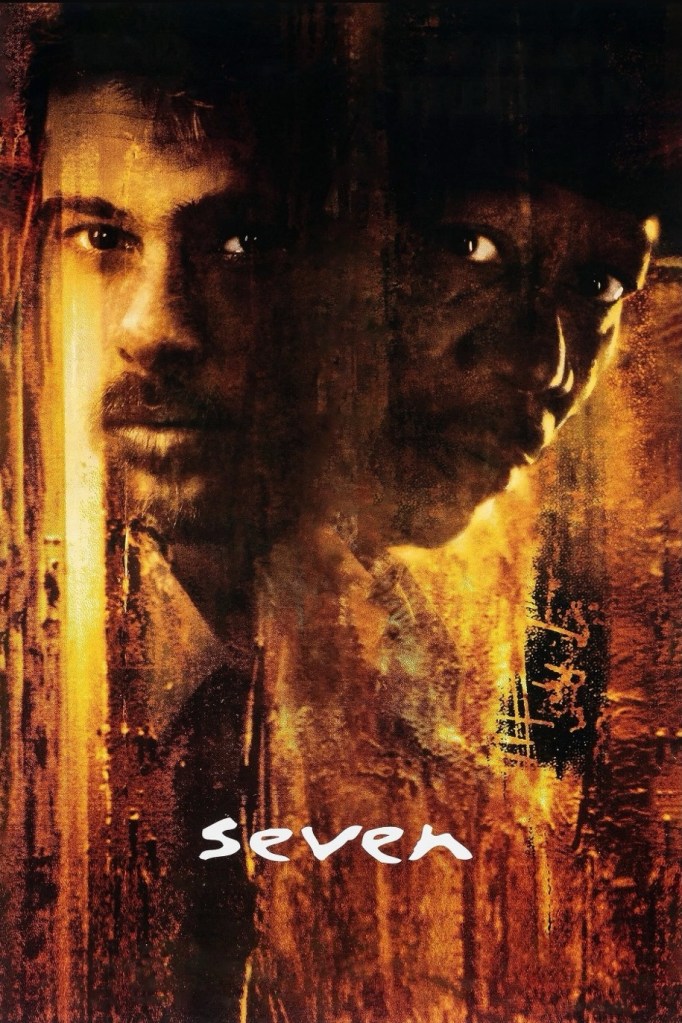
Directed by: David Fincher
Written by: Andrew Kevin Walker
Starring: Brad Pitt, Morgan Freeman, Gwyneth Paltrow, Richard Roundtree, R. Lee Ermey, John C. McGinley and Kevin Spacey
Music by: Howard Shore
Rated: 18
In an unnamed dystopian city riddled with poverty, crime and disorder, retiring Detective Lieutenant William Somerset (Morgan Freeman), is assigned on his last week, to oversee a case of numerous murders along with the younger David Mills (Brad Pitt). When Somerset and Mills discover that the murders have a link with the Christian ideas if the Seven Deadly Sins, the killer soon decides to lure both of them into a deadly trap…
Much like Planet of the Apes, Chinatown and The Empire Strikes Back, Se7en, David Fincher’s first true success after his traumatising experience with Alien 3, is one of those films where, even people who have never seen the film, are aware of its infamous twist ending involving a box.
While the ending could have been a bit stronger if the final scenes were not abruptly rushed, Se7en is still a powerful, thrilling and darkly entertaining mystery thriller, that took Morgan Freeman and Brad Pitt to new heights in their careers, with their powerful dynamic and tragic story arcs. Despite all his antagonistic roles being a lot more disturbing to watch given how he wasn’t acting in some incidences, the disgraced Kevin Spacey does do an amazing job at capturing the madness of the serial killer.
Overall, while some of the plot twists can be seen coming a while away, Se7en is still an interesting and well executed detective story, what would be a major influence in writing modern mystery fiction.
Rating: 4.5/5
Gone Girl (2014)
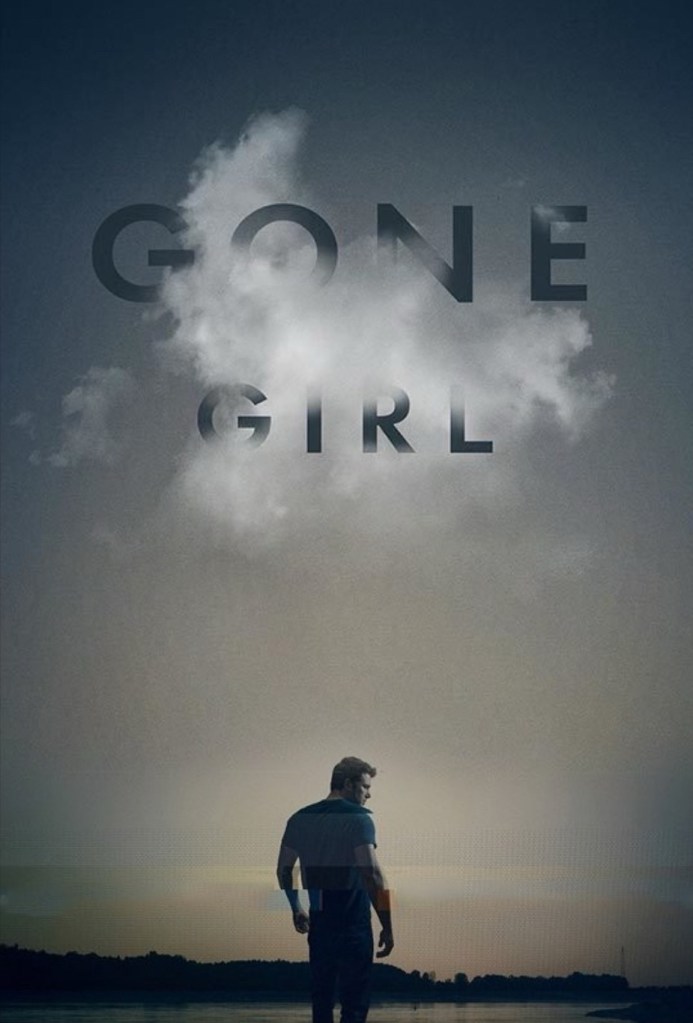
Directed by: David Fincher
Written by: Gillian Flynn
Starring: Ben Affleck, Rosamund Pike, Neil Patrick Harris, Tyler Perry and Carrie Coon
Music by: Trent Reznor and Atticus Ross
Rated: 18
On his fifth wedding anniversary to Amy Elliott Dunne (Rosamund Pike), a former celebrity in children’s literature, writing teacher Nick (Ben Affleck), discovers that she had mysteriously disappeared. As the media grows more and more hostile towards Nick and his sister, Margo (Carrie Coon), they soon discover a shocking truth that reveals the truth about his relationship with Amy…
David Fincher’s highest grossing movie and one of the most beloved films of the 2010s, Gone Girl skilfully adapts Gillian Flynn’s 2012 novel, to chilling effect. While some critics have suggested that this is an unintentional attempt at an anti feminism film, Fincher and Flynn’s tale is actually a dark commentary on how even the most perfect relationships can lead to toxicity, depending on circumstances.
While the mystery aspect that people love about David Fincher’s other works is still there, it is Rosamund Pike’s chilling performance as the missing Amy, that really makes this film amazing. While Ben Affleck does tend to underact in some scenes, both of these performances are fantastic at showing the flaws of this toxic couple.
Overall, while an unexpected twist in the middle of the film does rob it of a lot of the previously built up tension of the mystery focused first half, Gone Girl’s intense, mind-blowing and perfect ending of a plan coming full circle, is what makes this one of Fincher’s best films.
Rating: 4.5/5
Pretty Woman (1990)
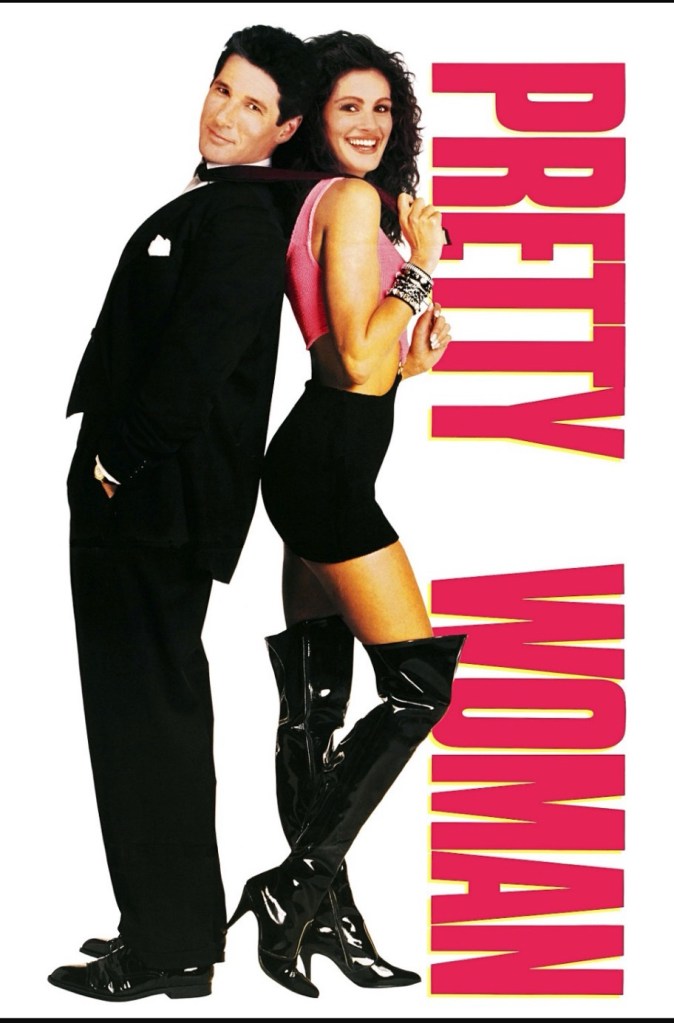
Directed by: Garry Marshall
Written by: J. F. Lawton
Starring: Richard Gere, Julia Roberts, Héctor Elizondo, Jason Alexander, Ralph Bellamy and Laura San Giacomo
Music by: James Newton Howard
Rated: 15
Edward Lewis (Richard Gere) is a corporate raider looking to make profits out of buying and breaking down businesses. While staying in Beverly Hills for a week long business trip, he ends up getting lost and is helped by a call girl named Vivian Ward (Julia Roberts) to his hotel. Being charmed by her direct, sarcastic nature and her quirky personality, Edwards invites her to stay with him for the trip, where he teaches her etiquette, in order to make it easier for him to buy a new company. However, things get complicated when they both start falling for each other…
Originally conceived as 3000, a dark satirical drama about the hard life of prostitution in 1980s Los Angeles, before Jeffery Katzenberg and Touchstone Pictures demanded it be changed into a romantic comedy, Pretty Woman has since become one of the most beloved movies of 1990, even holding a three decade long record as Disney’s highest grossing R-rated film until 2024’s Deadpool & Wolverine.
While the premise of a corporate raider training a young woman to be high society woman, does sound really creepy in modern day sensibilities, this modern day reworking of the Pygmalion myths (that My Fair Lady also used), does manage to work thanks to Richard Gere and Julia Roberts’s chemistry and great acting. Even though others like Jason Alexander’s surprisingly unfunny antagonist could have been better, it is the love story and soundtrack which has made this a Rom-com classic.
Overall, despite the creepy premise and odd pacing, Pretty Woman does manage to be an entertaining film and a cute love story as well.
Rating: 4/5
The Big Lebowski (1998)
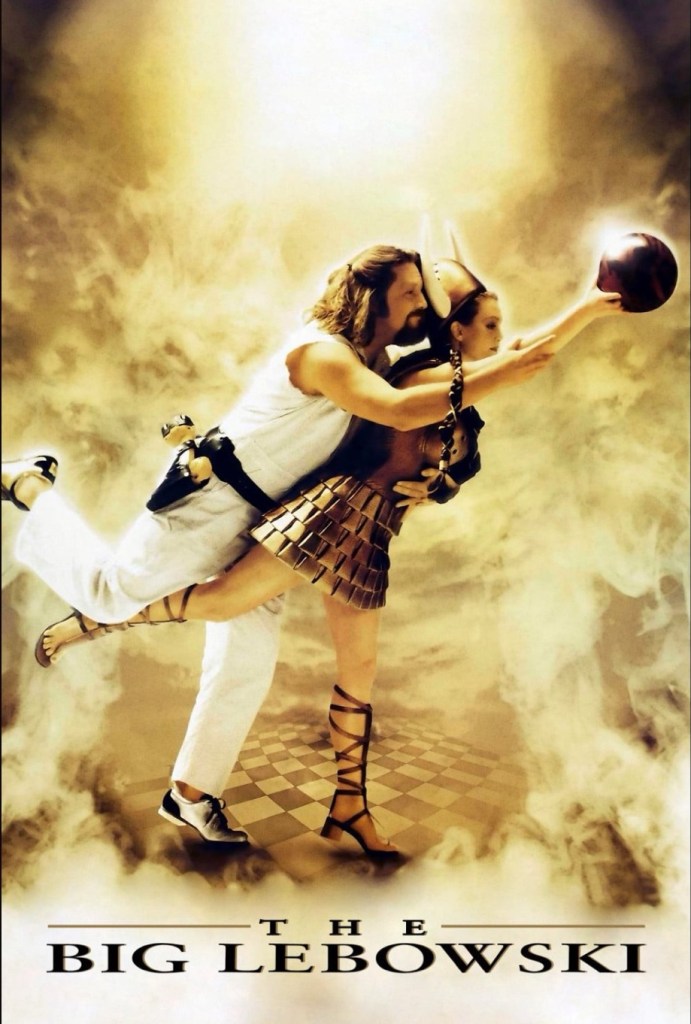
Directed by: Joel Coen
Written by Joel and Ethan Coen
Starring: Jeff Bridges, John Goodman, Julianne Moore, Steve Buscemi, David Huddleston, John Turturro, Philip Seymour Hoffman, Tara Reid, David Thewlis, Peter Stormare and Sam Elliott
Music by: Carter Burwell
Rated: 18
As told by an unseen Stranger (Sam Elliott), Jeffrey “The Dude” Lebowski (Jeff Bridges) is a lazy, yet honest man who lives a laidback lifestyle with occasional bowling with his friends, Vietnam veteran Walter Sobchak (John Goodman) and tagalong companion, Donny Kerabatsos (Steve Buscemi). When The Dude gets his rug soiled in a case of mistaken identity, his attempts to get payment for a new one, leads to him being forced to deliver a ransom message for the return of a kidnapped trophy wife named Bunny (Tara Reid)…
While Joel and Ethan Coen have been a bit more divisive when compared to other modern film auteurs, their films such as Barton Fink, Fargo and this film, inspired by Raymond Chandler detective fiction along with several real life people that the brothers knew, have always been known to have incredible dialogue and memorable moments.
While not providing clear answers to some of the more interesting themes of U.S. policy, The Big Lebowski is a film that thrives on its dark humor, surrealism and its characters, with the first two aspects getting the biggest laughs, especially during the infamous gun and ashes sequences.
Jeff Bridges shines in the role he was born to play as the lovable Dude, John Goodman is outstanding as the deranged, yet memorable Walter and while the other characters are basically one note jokes, the likes of Julianne Moore, Steve Buscemi, Sam Elliott, the late Philip Seymour Hoffman and John Tuturro (who would get his own spin-off in 2020), all make their insane characters memorable.
Overall, The Big Lebowski is a memorable showcase of the Coen brothers’s talents at dark comedy and witty storytelling.
Rating: 5/5
John Wick (2014)
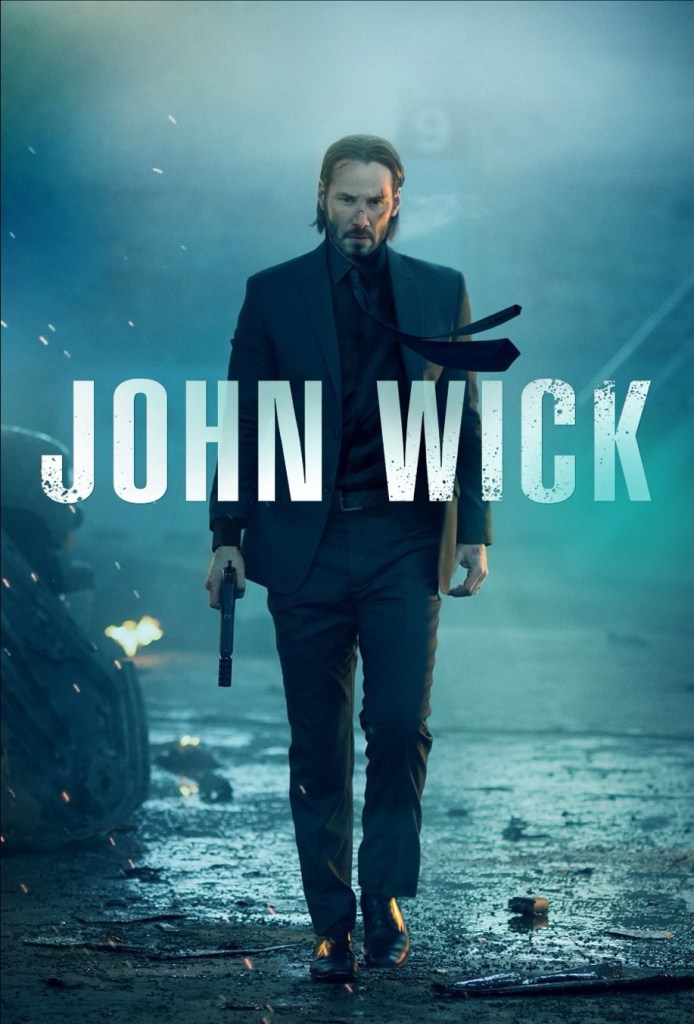
Directed by: Chad Stahelski
Written by: Derek Kolstad
Starring: Keanu Reeves, Michael Nyqvist, Alfie Allen, Adrianne Palicki, Bridget Moynahan, Dean Winters, Ian McShane, John Leguizamo and Willem Dafoe
Music by: Tyler Bates and Joel J. Richard
Rated: 15
Former hitman John Wick (Keanu Reeves) has his life destroyed when a Beagle puppy given to him by his late wife, Helen (Bridget Moynahan), is murdered by Iosef Tarasov (Alfie Allen), the reckless son of the Russian crime lord, Viggo (Michael Nyqvist). Now, with nothing else to lose, John must now embrace his background as the deadliest assassin alive and use the resources of his former employers, a secret society of assassins known as The High Table, if he ever hopes to gain vengeance…
Fresh off of his success with the Matrix trilogy, Keanu Reeves gives his best performance in years as a mostly silent assassin in Chad Stahelski’s magnum opus film about seeking revenge. Originally planned to focus on an older Clint Eastwood type assassin, Reeves manages to bring a lot of qualities from Eastwood’s roles as a silent killer, while also adding a touch of humor in how he interacts with anyone who isn’t an antagonist.
Another aspect that makes John Wick shine, is the world-building surrounding the society of contract killers, especially the Continental hotel. The fact that every character knows who John Wick is, the likes of great actors such as Ian McShane, Willem Dafoe and the late Lance Reddick as the entertaining supporting characters surrounding John’s world, help make this universe as interesting as the worlds of Blade Runner and Robocop.
Although Tyler Bates and Joel J. Richard’s score does get repetitive at times, the way the score is used to set the cyberpunk/neo-noir element without relying entirely on dialogue, adds another interesting comparison to Ridley Scott’s 1982 classic.
Overall, with brutal action setpieces, a basic, yet brutal revenge narrative and a wide variety of interesting characters and ideas, John Wick deserves its reputation as one of the best action films in decades.
Rating: 5/5
Terminator 2: Judgement Day (1991)
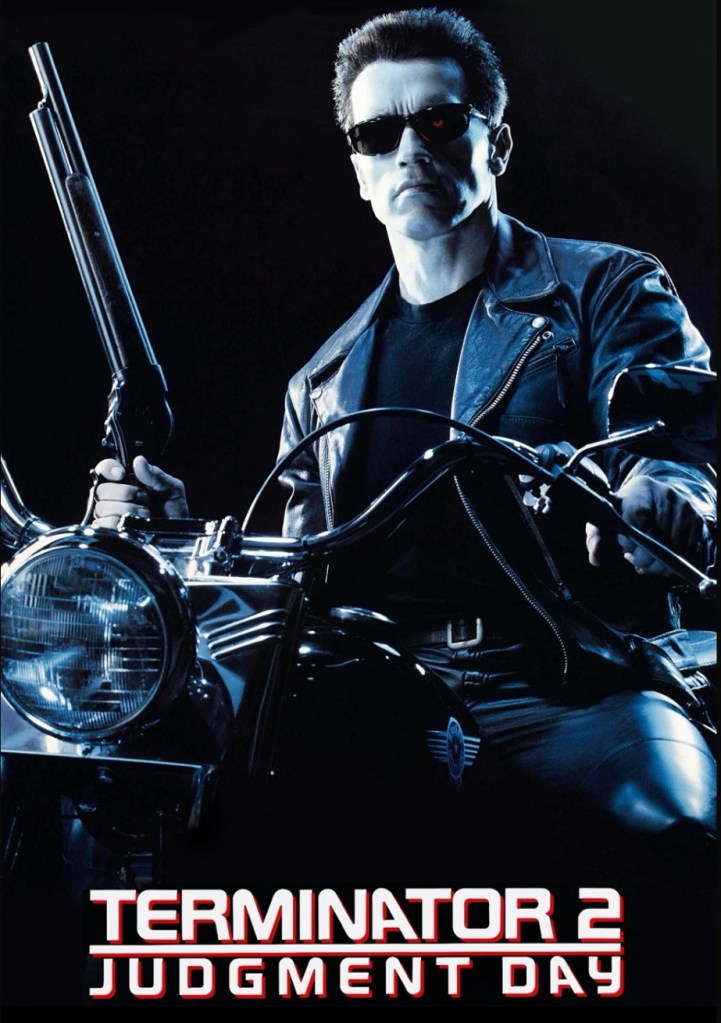
Directed by: James Cameron
Written by: James Cameron and William Wisher
Starring: Arnold Schwarzenegger, Linda Hamilton, Robert Patrick, Edward Furlong, Earl Boen and Joe Morton
Music by: Brad Fiedel
Rated: 15
Ten years after giving birth to John Connor (Edward Furlong), Sarah Connor (Linda Hamilton) has ended up locked in an asylum after failing to stop the creation of Skynet. Her fears soon are confirmed when an even more powerful Terminator, the T-1000 (Robert Patrick), is sent back in time to kill John. Now, both Sarah and John must rely on a reprogrammed T-800 (Arnold Schwarzenegger) if they ever hope to stop “Judgment Day”…
After directing two more features, Aliens and The Abyss, James Cameron had to settle numerous court battles relating to the ownership of the franchise from Orion and Harlen Pictures, who gave him a really hard time during production of the first film and from Sci-fi author Harlen Ellison who claimed that the film stole ideas from his TV shows. Despite this, James Cameron did manage to settle these lawsuits and managed to gain a much higher budget of $70 million from new distributor Mario Kasser and get the film done in time for its July 2nd, 1991 deadline.
Of all the Terminator films, Terminator 2: Judgment Day has the most emotional moments and character development of the entire franchise. For example, the theme of role-reversal of the T-800 and Sarah Conner is well told, with the latter going slowly insane with understandable reasons. From threatening to smash the T-800’s chip, to attempting to kill the future creator of Skynet who is revealed to be nothing more than a loving family man in front of his own family, while the T-800, on the other hand, forms a bond with John Connor, learns to become more human in his mannerisms and becomes a surrogate father figure for him, a brilliant example of subversive storytelling.
The T-1000 on the other hand, is one of the best creations of this film. As most film buffs know , this character is the main reason why Terminator 2 is regarded as one of the most important films in the history of visual effects as along with Jurassic Park‘s dinosaurs this character was one of the first characters to receive heavy use of CGI for most of its scenes. It still looks amazing though as Stan Winston blended the CGI with much more detailed prosthetics for his facial damage, even the infamous pestle-man design was done with prosthetics.
Overall, Terminator 2: Judgment Day is the magnum-opus of the series, which has since gone on to become listed the AFI’s top 10 Science Fiction films, Empire’s 500 greatest films, has won four Oscars for its technical achievements, became the highest-grossing film of 1991 and a majority of these scenes are the ones that people associate with the most, when talking about the Terminator series. James Cameron, satisfied with both films decided to end the franchise there and move on to other things.
Rating: 5/5
Inception (2010)
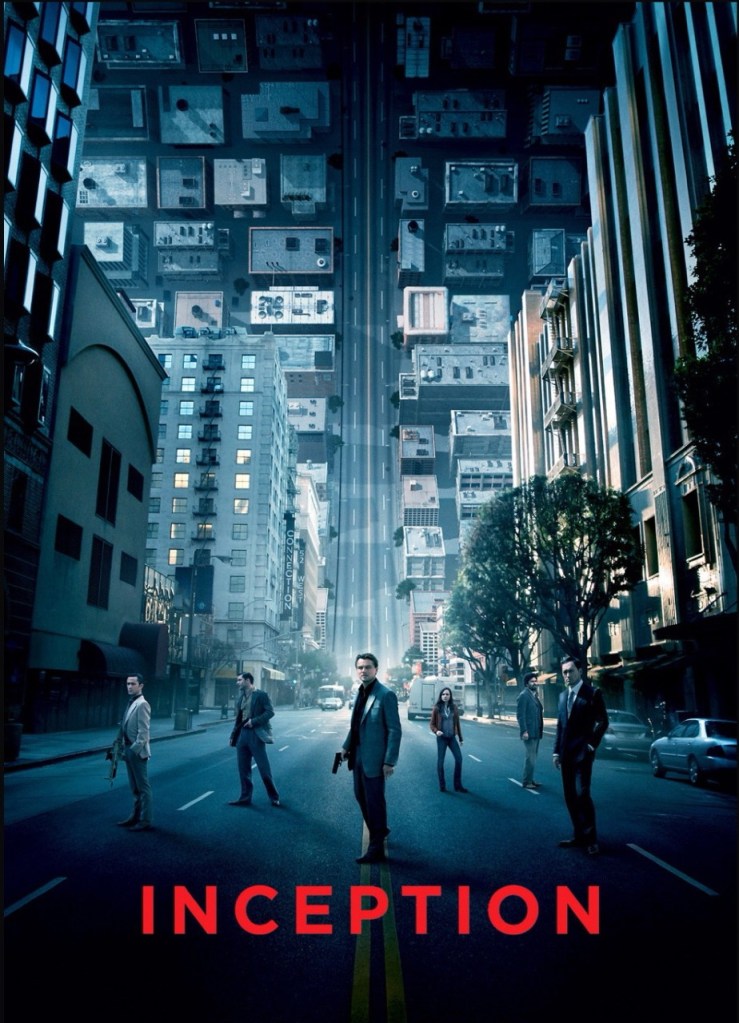
Directed by: Christopher Nolan
Written by: Christopher Nolan
Starring: Leonardo DiCaprio, Ken Watanabe, Joseph Gordon-Levitt, Marion Cotillard, Elliot Page, Tom Hardy, Cillian Murphy, Tom Berenger, Dileep Rao and Michael Caine
Music by: Hans Zimmer
Rated: 12A
Dom Cobb (Leonardo DiCaprio) and Arthur (Joseph Gordon-Levitt) work as “extractors”, a highly dangerous type of corporate spies who use highly advanced technology to steal secrets by entering their target’s minds via dream worlds. Their latest client, Mr. Saito (Ken Watanabe) offers to give Dom the freedom to return home to his estranged children if he successfully completes a mission to use his technology to convince a young billionaire named Robert Fischer (Cillian Murphy) to dissolve his father’s corrupt company…
Originally intended as a horror film throughout its decade long production history, Inception uses its fantastic themes about the subconscious of the human mind and the difference of dreams and reality, to create one of the most cinematic films of the 2010s even if some of the ideas were already used in the likes of The Matrix and Paprika.
To the non-surprise of anyone familiar with Christopher Nolan’s non-Batman films of the 2010s, Roger Deakins’s use of cinematography and the incredible sound-editing, fully emphasises the IMAX experience to the utter extreme, especially in the dream sequences in which both Nolan and Deakin take the concept of breaking dreams literally.
Overall, with fantastic performances from the likes of Leonardo DiCaprio, Michael Caine and Elliot Page and one of the largest scopes in cinematic history, Inception stands out as Nolan’s best film in ages.
Rating: 4.5/5
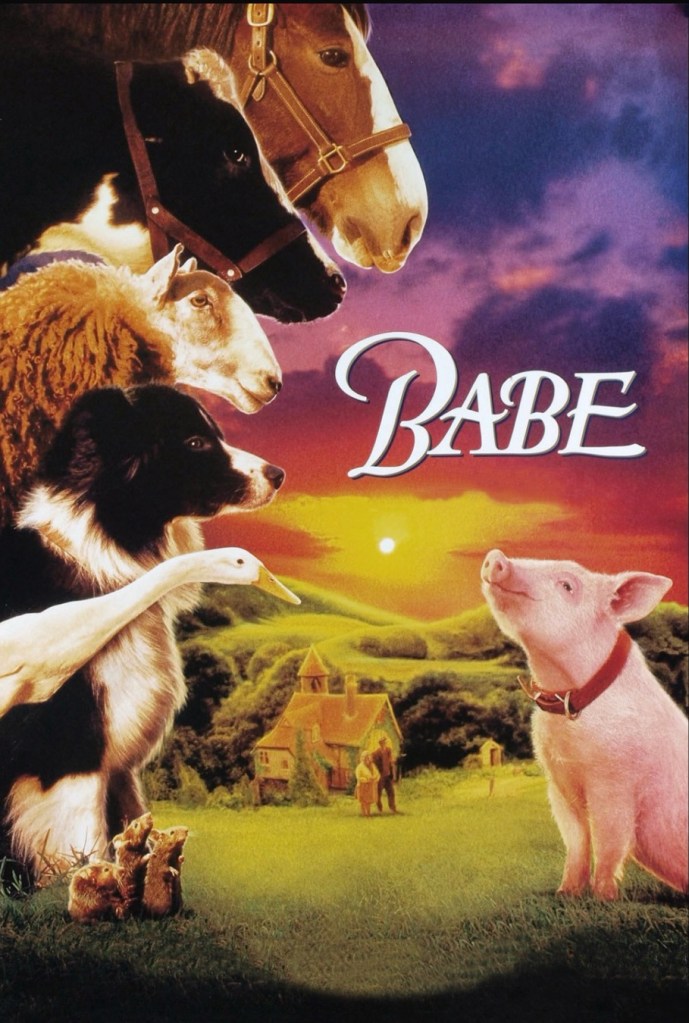
Babe (1995)
Directed by: Chris Noonan
Written by: George Miller and Chris Noonan
Starring: Christine Cavanaugh, James Cromwell, Magda Szubanski, Miriam Margoyles, Hugo Weaving, Danny Mann and Miriam Flynn
Music by: Nigel Westlake
Rated: PG
Babe (Christine Cavanaugh), a young piglet, is won at a “guess the weight” competition at a county fair by Farmer Hoggett (James Cromwell), as a possible new Christmas dinner. However, after Babe spends time with a bunch of other animals, such as his adoptive Border Collie mother, Fly (Miriam Margolyes), an elderly ewe named Maa (Miriam Flynn) and Ferdinand (Danny Mann), a duck that wants to be a rooster, and after he saves the sheep from rustlers, Hoggett decides to train the young pig to become the world’s first “Sheep-Pig”…
Three decades after its release, Babe, often mistaken for a George Miller film due to his close involvement in producing and writing the screenplay, (he would direct the underrated 1998 sequel though), still manages to be an impressive visual achievement in making talking animals look believable in a live-action film.
While the episodic structure of this film, literally divided into eight chapters that resemble the Dick King Smith novel that this was based on, can turn some people off, the visual presentation of Babe’s world feeling like a timeless fairy tale and the incredible voice acting from the likes of Hugo Weaving, Miriam Margolyes, the hilarious Danny Mann and the late Christine Cavanaugh as the titular character, helps make Babe feel like a story passed down from generation to generation.
Overall, with a fantastic score, impressive combinations of real animals, animatronics and CGI for the animal characters and a powerful story about overcoming prejudice and social norms, Babe is a charming and emotional experience, in spite of how dark some aspects of it are.
Rating: 4.5/5
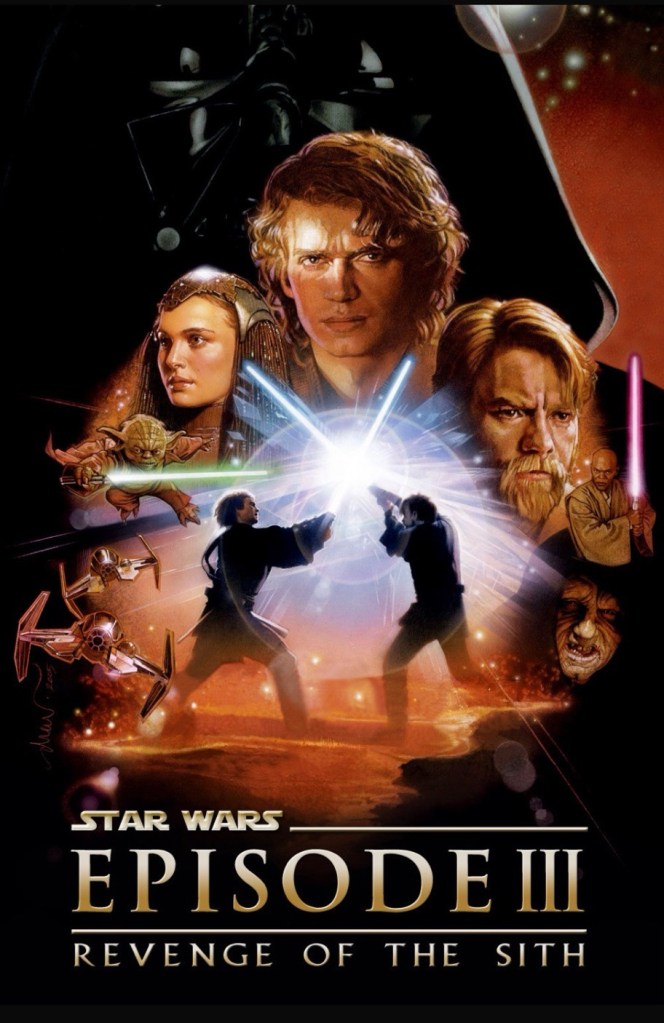
Star Wars: Episode III – Revenge of the Sith (2005)
Directed by: George Lucas
Written by: George Lucas
Starring: Ewan McGregor, Natalie Portman, Hayden Christensen, Ian McDiarmid, Samuel L. Jackson, Frank Oz, Matthew Wood, Anthony Daniels, Kenny Baker and Christopher Lee
Music by: John Williams
Rated: 12A
After three years of fighting in the Clone Wars alongside his best friend, Obi-Wan Kenobi (Ewan McGregor), Jedi Knight Anakin Skywalker (Hayden Christensen) has finally defeated Count Dooku (Christopher Lee) and is overjoyed to the news that his secret wife, Padmé Amidala (Natalie Portman), is pregnant with his child. However, while Obi-Wan leaves to take down the final Separatist leader, the half-alien, half droid General Grievous (Matthew Wood), Anakin is plagued by nightmares of Padmé dying and turns to Chancellor Palpatine (Ian McDiarmid) for help. When he finds out that Palpatine is in fact a Sith Lord, Anakin makes a fatal choice that will lead both the galaxy and himself towards a new era of devastation and civil war as the infamous Darth Vader…
The final instalment of the much derided Star Wars prequel trilogy and out of them, Revenge of the Sith not only surpasses the underwhelming last two entries with phenomenal cinematography and John Williams’s best score to date, is the best film since The Empire Strikes Back in the pre-Disney, George Lucas era of the franchise.
While the flaws of The Phantom Menace and Attack of the Clones such as the infamous romantic speeches, Hayden Christensen’s hard time acting with some questionable direction, some massive continuity errors towards the original trilogy regarding Anakin’s motivation to become Vader, Padme’s fate and the removal of crucial scenes that set up both the formation of the Rebel Alliance and Yoda (Frank Oz) discovering Dagobah, hold this film back from being perfect.
However, what’s great about this film is excellent rather then just OK. The opening space battle is really entertaining to watch, Ewan McGregor , Frank Oz and especially Ian McDiarmid give some of the best performances of their careers and the final act has some of the best moments of the entire franchise such as the Jedi Purge, Yoda and the Emperor using the senate platforms as battering rams via the force and the final duel between Obi-Wan and Anakin set on the Star Wars’s version of hell, Mustafar.
Overall a much more satisfying film then Phantom and Clones, and despite still having a few major hiccups with the dialogue and the story, Star Wars: Episode III – Revenge of the Sith did manage to serve a fitting finale to a legendary series (for 7 years that is..)
Rating: 5/5
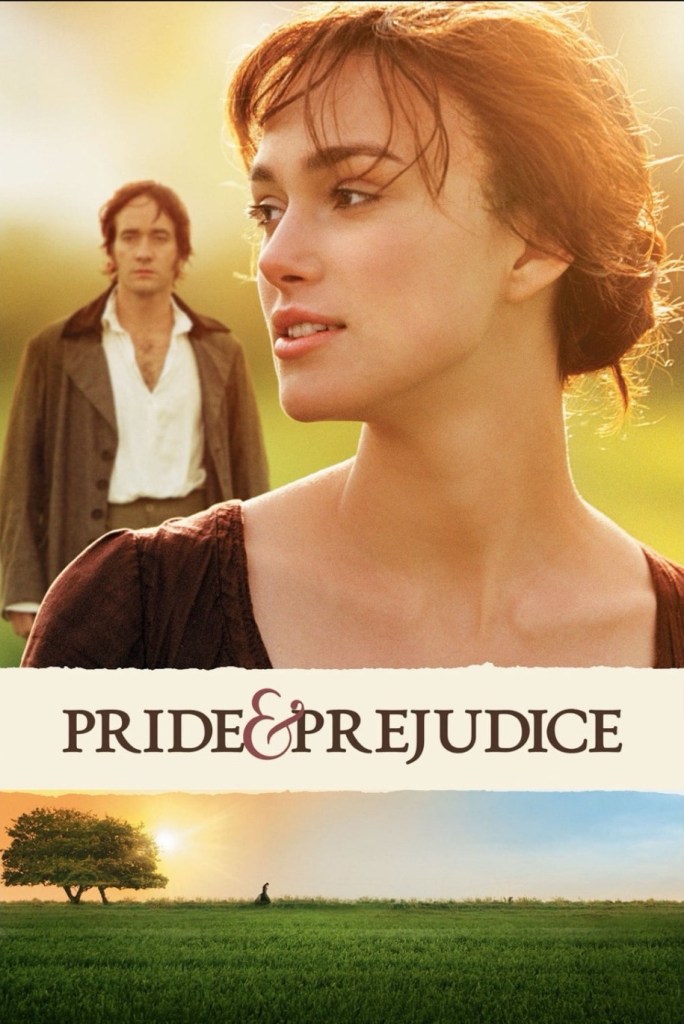
Pride & Prejudice (2005)
Directed by: Joe Wright
Written by: Deborah Moggach
Starring: Keira Knightley, Matthew Macfadyen, Brenda Blethyn, Donald Sutherland, Rosamund Pike, Jena Malone, Tom Hollander, Penelope Wilton and Judi Dench
Music by: Dario Marianelli
Rated: U
Set in eighteenth century rural England, Mr and Mrs Bennet (Donald Sutherland and Brenda Blethyn), are seeking out suitable suitors for their five daughters, Elizabeth (Keira Knightley), Jane (Rosamund Pike), Lydia (Jena Malone), Kitty (Carey Mulligan) and Mary (Talulah Riley), to help them out of their poor financial difficulties. As the four other daughters all find happiness throughout the days, Elizabeth, or “Lizzie”, finds out that Mr. Darcy (Matthew Macfadyen), one of the most snobbish men she has ever met, has more to him than meets the eye…
Regarded as one of the best adaptations of Jane Austen’s books, the 2005 film adaptation of her 1813 novel, Pride & Prejudice, is credited for making the period drama subgenre popular again with younger audiences along with Shakespeare in Love, paving the way for the likes of Downton Abbey and some of director Joe Wright’s other films like The Young Victoria.
Despite often being compared to the iconic 1990s BBC television miniseries which had Colin Firth and Jennifer Ehle in the Darcy and Lizzie roles (which was a heavy influence on the Bridget Jones franchise), both Keira Knightley and Matthew Macfadyen have great chemistry as these more realistic takes on these iconic literary characters. As expected from a British coproduction, the production design looks fantastic, even with the more down to earth depictions of the locations and costumes, something that greatly contrasts with other adaptations.
Overall, with a much more relatable take on this classic love story, by also focusing on the relationships between the Bennets as a family unit, and solid acting from the likes of Judi Dench, Donald Sutherland Rosamund Pike and the two leads, the 2005 film adaptation of Pride & Prejudice is one of the best depictions of Austen’s works and a cute story about working to overcome the titular “Pride & Prejudice” to find happiness.
Rating: 4.5/5
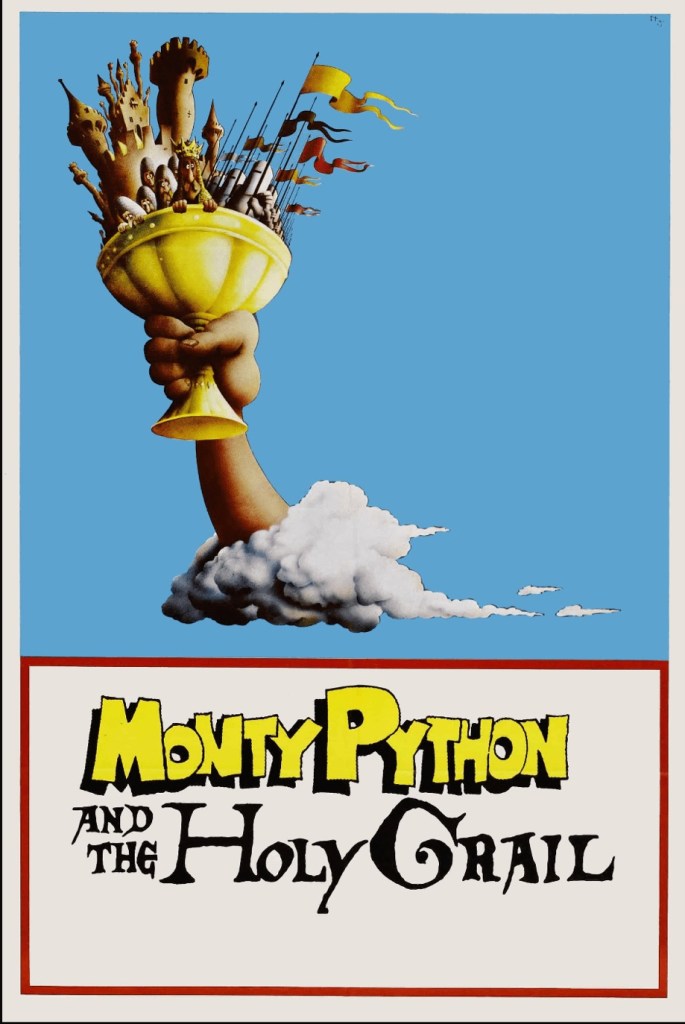
Monty Python and the Holy Grail (1973)
Directed by: Terry Gilliam and Terry Jones
Written by: Graham Chapman, John Cleese, Terry Jones, Terry Gilliam, Eric Idle and Michael Palin
Starring: Graham Chapman, John Cleese, Terry Jones, Terry Gilliam, Eric Idle and Michael Palin
Music by: De Wolf Music
Rated: 12A
In the Middle Ages, in the year of 932 AD to be precise, Arthur (Graham Chapman), King of the Britons, and his Knights of the Round Table, consisting of Sir Lancelot the Brave (John Cleese), Sir Bedevere the Wise (Terry Jones), Sir Galahad the Pure (Michael Palin), Sir Robin the Not-Quite-So-Brave-as-Sir-Lancelot (Eric Idle), and Sir Not-Appearing-in-this-Film decide not to go to Camelot as it is a “silly place”. They instead go on a quest from God (Also Graham Chapman) to retrieve the Holy Grail. However, rude French knights, horny nuns, a murderous rabbit and a murder investigation threaten to ruin their plans…
The source of so many jokes, cutaways and humor inspiration for generations of comedians, Monty Python and the Holy Grail, the British comedy group’s first feature film that wasn’t a collection of previous or remade comedy sketches from Flying Circus, is still one of the funniest films ever made.
Lampooning not just the King Arthur legends, but every fantasy story ever made, Holy Grail may not be as perfectly put together as Life of Brian was as sometimes, the sketches feel a bit disconnected from the main narrative. However, the group’s skill at comedy, the funny ways they get around having an incredibly small budget and the sheer madness of the situations that Arthur gets into, is what makes scenes such as the rude French, the killer rabbit, “GET ON WITH IT” and the infamous ending, comedy gold.
Overall, Monty Python and the Holy Grail is an outrageously funny and entertaining feature debut for one of the best comedy groups in history.
Rating: 4.5/5
Final Destination (2000)

Directed by: James Wong
Written by: Glen Morgan, James Wong and Jeffrey Reddick
Starring: Devon Sawa, Ali Larter, Kerr Smith, Kristen Cloke, Chad Donella, Seann William Scott, Amanda Detmer and Tony Todd
Music by: Shirley Walker
Rated: 15
After having a terrifying dream, high school student Alex Browning (Devon Sawa), manages to get a group of his friends off a plane, including an outsider girl named Clear Rivers (Ali Larter), just before the aircraft suddenly explodes in the air. However, Alex, Clear, jock Carter Horton (Kerr Smith), his girlfriend Terry Chaney (Amanda Detmer), class clown Billy Hitchcock (Seann William Scott), Alex’s best friend, Tod Waggner (Chad Donella) and their teacher, Ms. Lawton (Kristen Cloke), all find themselves at the mercy of Death, who has sworn revenge after being cheated…
Originally planned as an episode idea for the hit television series, The X-Files, Final Destination, which also took inspiration from a real nightmare that writer Jeffrey Reddick had about the true meaning of death, is a lot more atmospheric and mysterious than the gore heavy sequels, feeling like an episode of The Twilight Zone at times.
While the insane creativity of how Death dispatches its victims is started here, Director James Wong takes a much more restrained approach to the concepts of how Death operates, which results in some truly chilling moments, especially with the opening scene and in the moments before a killing happens.
Both Devon Sawa and Ali Larter make for the best characters of the franchise, along with the late Tony Todd making his one scene debut as the mysterious William Bludworth. While a lot of the other characters do embrace the stereotypical traits that the sequels would solely rely on, some like Seann William Scott’s comedic timing and Kristen Cloke’s traumatised teacher, do make them more interesting than usual.
Overall, Final Destination is a great and haunting experience about the terrifying concept of how the simple idea of being unable to control your own death, even if some of the first film’s least popular elements would become a lot more prominent as the franchise went on.
Rating: 3.5/5
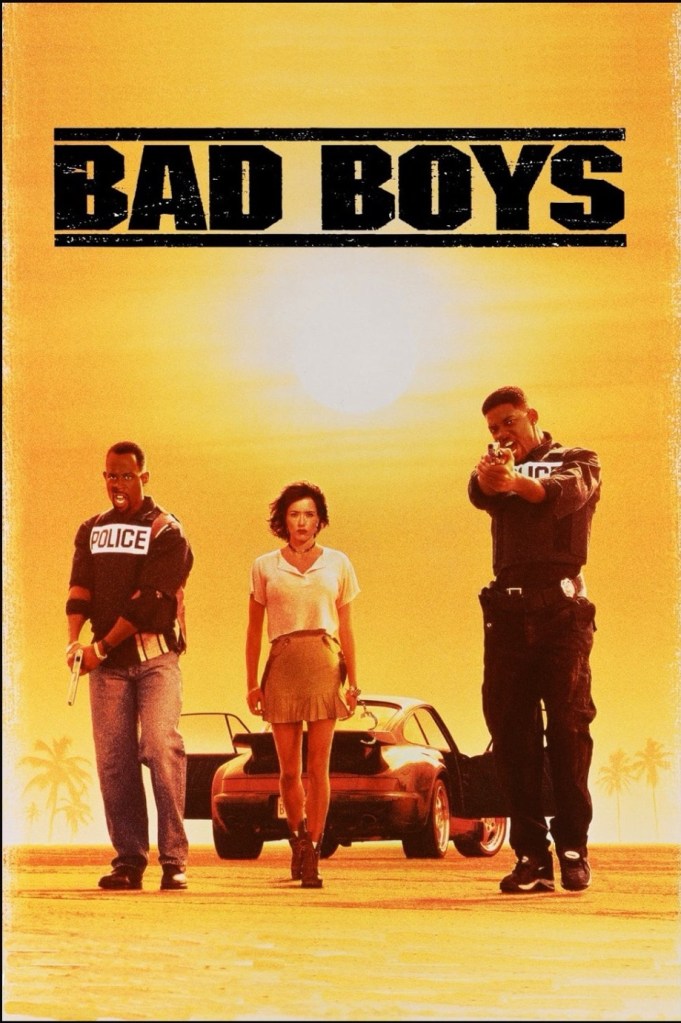
Bad Boys (1995)
Directed by: Michael Bay
Written by: Michael Barrie, Jim Mulholland and Doug Richardson
Starring: Martin Lawrence, Will Smith, Téa Leoni, Tchéky Karyo, Theresa Randle and Joe Pantoliano
Music by: Mark Mancina
Rated: 15
Mike Lowrey (Will Smith) and Marcus Burnett (Martin Lawrence) are two of the Miami Police Department’s most successful, yet trouble-prone detectives. When seized Mafia heroin gets stolen from the police vault and Mike’s ex-girlfriend and informant, Max Logan (Karen Alexander) gets murdered by the culprits, both Marcus and Mike are assigned to get information out of the only surviving witness, Max’s best friend, Julie Mott (Téa Leoni). However, as Julie will only talk to Mike, Marcus has to pretend that he is him, while Mike has to take care of Marcus’s family in his absence….
Michael Bay’s directorial debut after a career in television commercials and music videos, as well as one of the final collaborations between Jerry Bruckheimer and the late Don Simpson, may lack the originality of several popular buddy cop franchises at the time, such as Lethal Weapon, Die Hard and Beverly Hills Cops sequels. However, the hilarious banter between its two leads is what makes Bad Boys, a really entertaining popcorn flick.
Both Will Smith and Martin Lawrence shine in their bickering, yet loveable detective roles, with the latter getting the biggest laughs as he is forced to act like his partner to complete a mission, with Lawrence’s attempts to capture the Will Smith charm, without much luck. While the plot revolving around the drug dealers is not that interesting, it is interesting to see several of Bay’s directorial traits, such as explosives, exploration of gangsta culture and gun carnage, take shape in this film.
Overall, while not being that surprising and interesting as a serious cop drama, Bad Boys works best as a violent, yet comedic buddy film, with Smith and Lawrence getting huge laughs and great performances.
Rating: 3/5
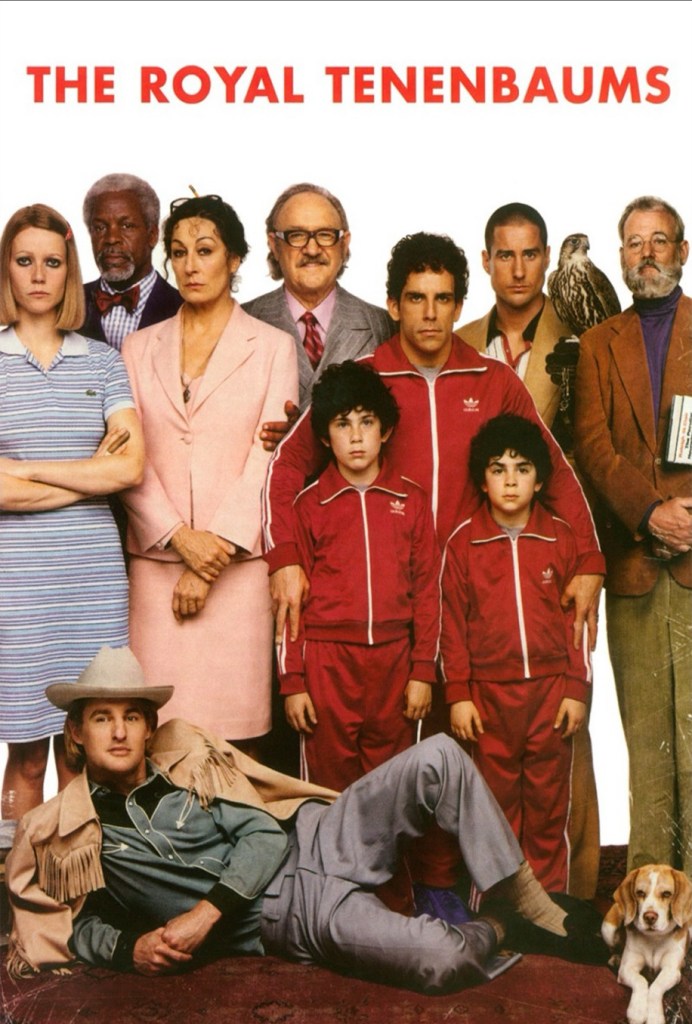
The Royal Tenenbaums (2001)
Directed by: Wes Anderson
Written by: Wes Anderson and Owen Wilson
Starring: Gene Hackman, Anjelica Huston, Ben Stiller, Gwyneth Paltrow, Luke Wilson, Bill Murray, Danny Glover, Owen Wilson and Alec Baldwin
Music by: Mark Mothersbaugh
Rated: 15
For the last twenty two years, the Tenenbaum family has been living apart due to the separation between father, Royal (Gene Hackman) and mother, Etheline (Anjelica Huston). While their grown up children, Chas (Ben Stiller), the adopted Margot (Gwyneth Paltrow) and Richie (Luke Wilson), have gone on to have success, all three of them are going through their own hard moments in their lives. However, a determined Royal wants to bring his family back together again by any means necessary.
Despite not being as quirky as the rest of the films in his long career, Wes Anderson’s third film after refining his skills with Bottle Rocket and Rushmore, The Royal Tenenbaums, would fully establish his beloved formula of a story split by chapters, offbeat deadpan comedy, and inventive production design.
While still a very funny film at times, especially with Royal’s crazy schemes to spend more time with his family and co-writer Owen Wilson’s cowboy character being hilarious in general, The Royal Tenenbaums does have a more emotional side when exploring the theme of trauma, especially with Luke Wilson’s Richie and his feelings towards his father and his adopted sister (emphasis on adopted, because if she wasn’t, a certain subplot could have derailed the film completely).
While Ben Stiller’s character does feel a lot more cliched than the other two siblings, the rest such as the already mentioned Luke Wilson, Gwyneth Paltrow’s sister character, Danny Glover, Anjelica Huston and the late Gene Hackman as the scheming Royal, all get their moments to shine.
Overall, in spite of it establishing a beloved formula that is still being used to this day, The Royal Tenenbaums is one of Wes Anderson’s most emotional and honest films about family trauma, while still having the iconic production design and offbeat humor that established Anderson as one of the most recognisable auteurs in twenty-first century cinema.
Rating: 4.5/5
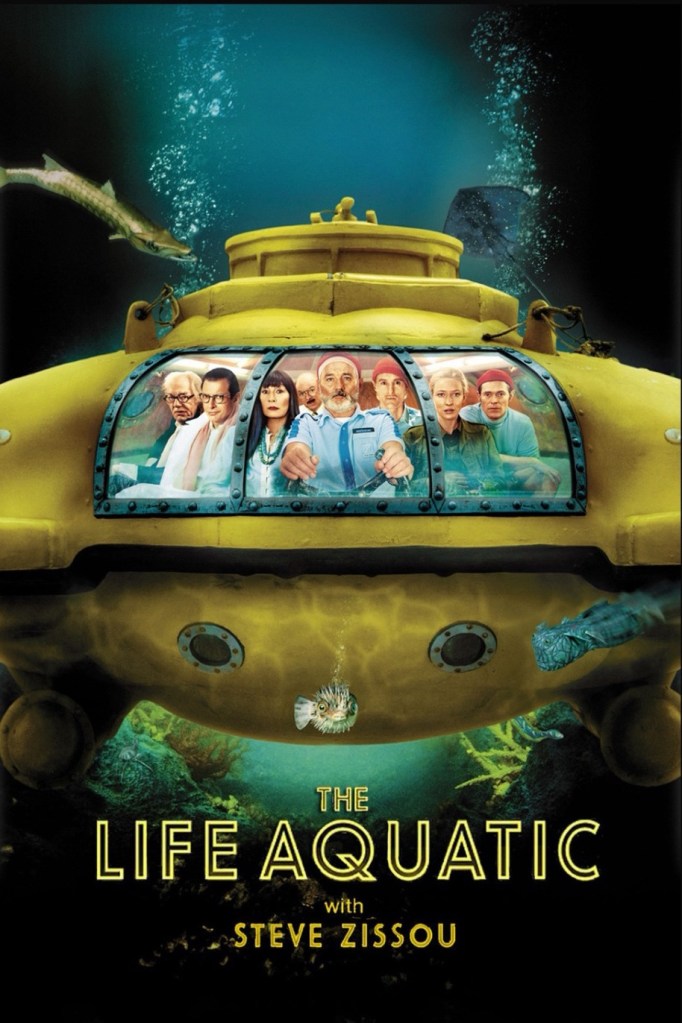
The Life Aquatic with Steve Zissou (2004)
Directed by: Wes Anderson
Written by: Wes Anderson and Noah Baumbach
Starring: Bill Murray, Owen Wilson, Cate Blanchett, Anjelica Huston, Willem Dafoe, Jeff Goldblum, Michael Gambon and Bud Cort
Music by: Mark Mothersbaugh
Rated: 15
Eccentric oceanographer Steve Zissou (Bill Murray) is on a rough patch in his career ever since his best friend, Esteban du Plantier (Seymour Cassel), was eaten by a rare “jaguar shark”. Determined to hunt down the beast, Zissou gathers up his team of explorers, including his most loyal worker, Klaus Daimler (Willem Dafoe), a pregnant reporter named Jane Winslett-Richardson (Cate Blanchett) and Ned Plimpton (Owen Wilson), a longtime fan of his films who claims to be his son, to embark on his latest adventure…
Despite being one of Wes Anderson’s least popular films at the time of its release, The Life Aquatic with Steve Zissou, does manage to do its job as a lovable parody of Jacques Cousteau’s documentaries, while also being a delightfully quirky adventure story as well.
While being a little too long for the deadpan comedy to really stick and a lot less creative in presenting Anderson’s iconic style apart from some well-animated sequences from Henry Selick, Life Aquatic does contain some great performances from the likes of Anderson mainstays Dafoe, Jeff Goldblum, Michael Gambon and Owen Wilson.
Overall, despite having the least interesting protagonist in Anderson’s filmography and some moments that are surprisingly unfunny, The Life Aquatic with Steve Zissou is still a very entertaining and affectionate parody of ocean documentaries, with a lot more quirky content that does manage to get huge chuckles.
Rating: 3.5/5
Fantastic Mr. Fox (2009)

Directed by: Wes Anderson
Written by: Wes Anderson and Noah Baumbach
Starring: George Clooney, Meryl Streep, Jason Schwartzman, Eric Anderson, Bill Murray, Willem Dafoe, Wally Wolodarsky, Owen Wilson, Jarvis Cocker and Michael Gambon
Music by: Alexandre Desplat
Rated: PG
After promising to stop his thieving habits, Mr. Fox (George Clooney) has spent twelve fox-years living in a hole with his wife, Felicity (Meryl Streep) and his son, Ash (Jason Schwartzman). When the family moves into a tree overlooking the three largest farms in the valley, Fox makes plans with his opossum assistant, Kylie (Wallace Wolodarsky), for one last heist. However, Fox’s actions catch the attention of the farmer’s leader, Frank Bean (Michael Gambon), resulting in him and the other farmers declaring war on all the animals in the valley….
A loose adaptation of one of Mr. Dahl’s most underrated books, Fantastic Mr Fox uses its complete use of stop-motion animation and the quirky directing style of Wes Anderson, to deliver one of the most unique animated films of the 2000s.
Although the humor can be hit or miss at times due to its deadpan delivery and the narrative does sometimes feel overstuffed with subplots, the voice-acting consisting of George Clooney’s wisecracking Mr. Fox, Michael Gambon’s menacing Bean and Willem Dafoe’s twisted Rat, is mostly flawless. Tristan Oliver’s beautifully staged cinematography and Alexandre Desplat’s Western-inspired score, is also what makes this film unique in its presentation and visual style that only Anderson can deliver.
Wes Anderson’s first animated film is an overall, fantastic one and one of the most unique ones of the twenty-first century.
Rating: 4.5/5
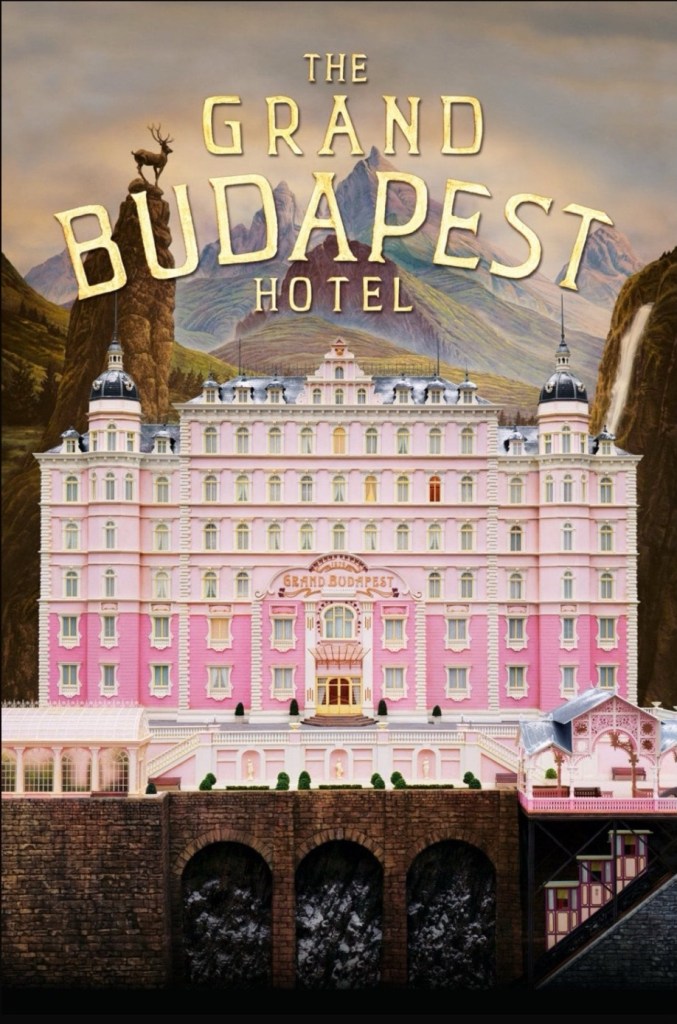
The Grand Budapest Hotel (2014)
Directed by: Wes Anderson
Written by: Wes Anderson
Starring: Ralph Fiennes, Tony Revolori, F. Murray Abraham, Adrien Brody, Mathieu Amalric, Willem Dafoe, Jeff Goldblum, Harvey Keitel, Jude Law, Bill Murray, Edward Norton, Saoirse Ronan, Jason Schwartzman, Léa Seydoux, Tom Wilkinson, Owen Wilson and Tilda Swinton
Music by: Alexandre Desplat
Rated: 15
As told in his novel, The Grand Budapest Hotel, an unnamed author (Jude Law and Tom Wilkinson as an elderly man), recounts a story told to him in 1968 by the Hotel’s owner, Zero Moustafa (Tony Revolori and F. Murray Abraham as an elderly man). Back in 1932, Zero worked as a loyal bellhop for the Hotel’s eccentric owner, Monsieur Gustave H. (Ralph Fiennes), where they embark on a crazy adventure across Eastern Europe, when the latter is framed of a murder for Countess Madame D. (Tilda Swinton), after he inherits a priceless painting…
Wes Anderson’s strongest work to date, as well as his funniest and most emotional, The Grand Budapest Hotel expertly blends comedic adventure and Anderson’s unique filming style, while also being a powerful meditation of on the loss of innocence during the 1930s rise of facist governments. This is shown with Anderson’s usual bright use of colours and iconic use of cinematography, growing more repressed as the facist government takes over, and in its emotional message of how nostalgic mementos can keep stories alive for generations.
Both Ralph Fiennes and newcomer Tony Revolori make for a fantastic double act as Gustave and his loyal bellhop, Zero. While the film is stuffed to the brim of Anderson familiar faces such as Willem Dafoe, Jeff Goldblum, Bill Murray, Jason Schwartzman and Owen Wilson, The Grand Budapest Hotel never loses sight on the two leads and their respective stories. Fiennes in particular, gives his best performance to date as this crazy, perverted, yet lovable and loyal hotel head, and Dafoe is on fire with his scariest character in his filmography.
Overall, The Grand Budapest Hotel is a fantastic showcase of everything Wes Anderson had learned as a director and writer up to that point, along with being a powerful friendship story that is both hilarious and heartbreaking at the same time.
Rating: 5/5
28 Days Later (2002)

Directed by: Danny Boyle
Written by: Alex Garland
Starring: Cillian Murphy, Naomie Harris, Christopher Eccleston, Megan Burns and Brendan Gleeson
Music by: John Murphy
Rated: 15
Twenty eight days after a virus outbreak decimated the United Kingdom, a young man named Jim (Cillian Murphy) wakes up from a coma to find this new reality. With the help of a group of survivors, including the tough Selene (Naomie Harris), a friendly taxi driver named Frank (Brendan Gleeson) and his daughter, Hannah (Megan Burns), Jim must make his way to Manchester where a radio broadcast has hinted of a possible cure or escape…
Credited for breathing new life into the zombie subgenre along with the Resident Evil franchise, Zack Snyder’s Dawn of the Dead remake and Shaun of the Dead, 28 Days Later is also a surprisingly emotional story about reconnecting with humanity, as shown with the relationships that Jim forms with the other characters.
Director Danny Boyle and writer Alex Garland, display their usual talents of horror/dark sci-fi storytelling with how creative the ruined version of the U.K. looks, as well has having fun ideas with the unseen concept of fast zombies, which leads to some really gory moments. For their first mainstream feature, actors Cillian Murphy and Naomie Harris make for a great double performance as the kind Jim and the hardened Selena, while Christopher Eccleston once again steals the show with his sheer intimidating ability as an army antagonist, showing why he was such an underrated Doctor.
Overall, with interesting worldbuilding, likable characters and a powerful story about the importance of retaining humanity in spite of living in a zombie apocalypse, 28 Days Later is one of Boyle’s best contributions to cinema.
Rating: 4.5/5
28 Weeks Later (2007)
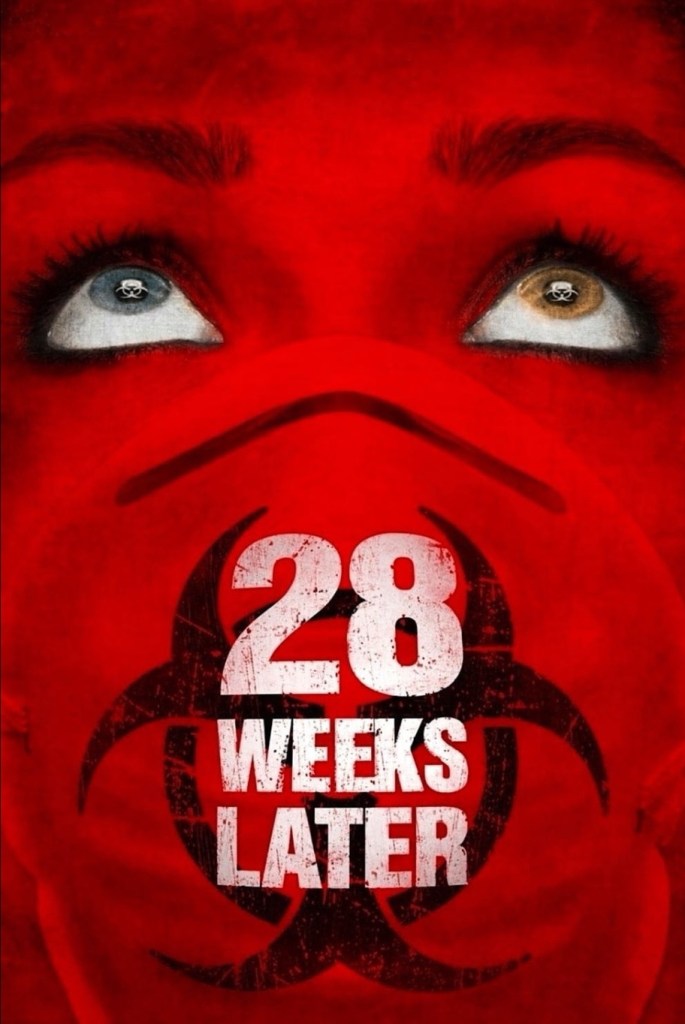
Directed by: Juan Carlos Fresnadillo
Written by: Rowan Joffé, Juan Carlos Fresnadillo, E.L. Lavigne and Jesus Olmo
Starring: Robert Carlyle, Rose Byrne, Imogen Poots, Mackintosh Muggleton, Jeremy Renner, Harold Perrineau, Catherine McCormack and Idris Elba
Music by: John Murphy
Rated: 18
Several months after the initial Rage Virus outbreak that destroyed the United Kingdom started, the island’s infected zombies have seemingly all died of starvation and NATO has begun the process of rebuilding the country. When two children named Tammy (Imogen Poots) and her younger brother, Andy (Mackintosh Muggleton), discover that their mother, Alice (Catherine McCormack), previously thought dead after their father, Don (Robert Carlyle), has instead become an asymptomatic carrier of the virus, which leads to another outbreak and fight for survival…
While lacking some of the independent creativity that Danny Boyle provided to the first film, 28 Weeks Later does manage to be a solid stand-alone sequel to Boyle’s 28 Days Later, although the editing is just plain embarrassing.
Even though this film is not as heartwarming as the “found family” aspect that made the first film so incredible, Weeks does manage to get a lot of great performances from future 2010s cinema mainstays Jeremy Renner, Rose Byrne, Imogen Poots and Idris Elba, while also providing ahead of its time social commentary about how the American military can easily make a bad situation worst, especially in how the new zombie apocalypse starts.
Director Juan Carlos Fresnadillo does a great job in staying loyal to Boyle and Alex Garland’s vision of an isolated, zombie infected Great Britain, even though some of the new worldbuilding of the attempt from world governments to rebuild the country could have been better explored, especially with the now-retconned epilogue sequence that is probably being saved for either Bone Temple or the upcoming final film in the franchise that Boyle will direct after returning to the franchise with 28 Years Later.
Overall, despite lacking some of the indie-style creativity of the original film and being a lot less ambitious , 28 Weeks Later is an ok and gory fun zombie sequel that has some interesting elements and great new characters.
Rating: 3/5
Clueless (1995)
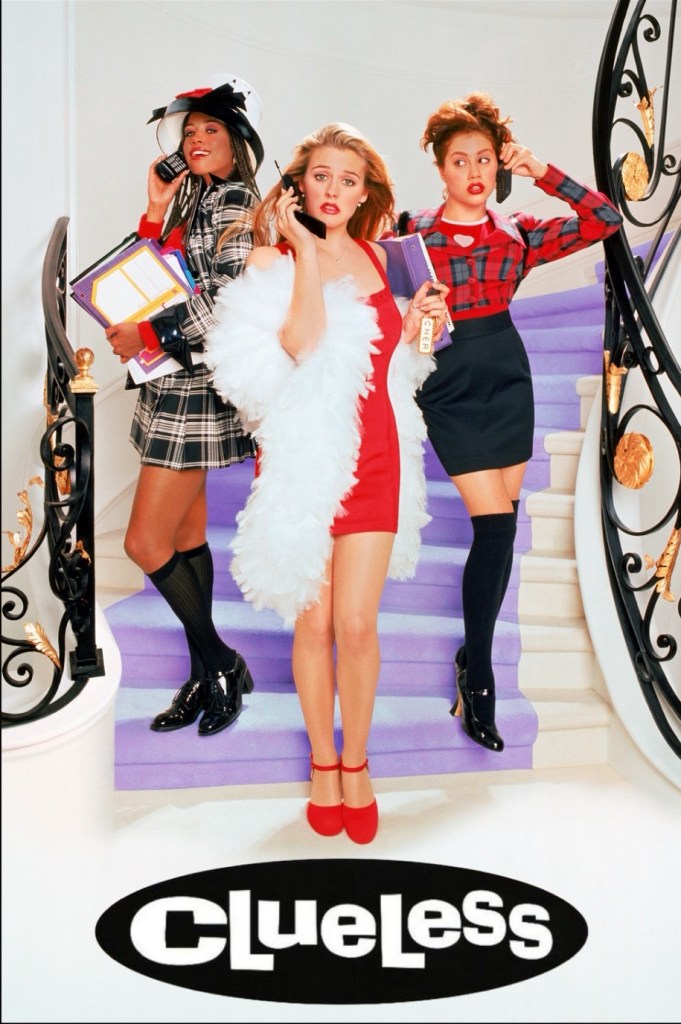
Directed by: Amy Heckerling
Written by: Amy Heckerling
Starring: Alicia Silverstone, Paul Rudd, Stacey Dash, Brittany Murphy, Dan Hedaya, Jeremy Sisto, Breckin Meyer, Justin Walker and Wallace Shawn
Music by: David Kitay
Rated: 12A
Although genuinely well-meaning and nice, in spite of being a spoiled rich girl, Cher Horowitz (Alicia Silverstone), does tend to be a bit clueless regarding relationships and is good at talking her way out of every bad situation, as pointed out by her socially conscious ex-stepbrother, Josh (Paul Rudd). After she starts feeling genuinely happy after helping her teacher, Mr. Hall (Wallace Shawn) with his love life, Cher and her best friend, Dionne Davenport (Stacey Dash), set out to take new transfer student, Tai Frasier (Brittany Murphy) under their wing, where even more high school chaos endures…
Starting off a new wave of beloved 1990s high school comedies that would include the likes of 10 Things I Hate About You, American Pie and (if one counts horror comedy) Scream, Clueless updates Jane Austen’s 1815 novel, Emma, into a 1995 Beverly Hills high school setting, with mostly charming results.
While Clueless is slightly more episodic than the listed examples, with Cher’s escapades revolving around her school and love life often not blending well until the last act, Alicia Silverstone’s iconic performance as her, as well as writer and director Amy Heckerling’s brilliant script, does make the experience very entertaining, even if some aspects revolving her relationship with Paul Rudd’s Josh, could have been reworked to make it less awkwardly weird, given how some audiences could easily mistake him as her brother.
Rudd, Stacey Dash, Wallace Shawn, Jeremy Sisto, Dan Hedaya and the late Brittany Murphy all manage to give solid performances however, and with a great soundtrack and a quirky atmosphere, Clueless is an overall, great example of the evolving nature of the high school subgenre, before it would enter into a new wave of iconic classics.
Rating: 4/5
The Hunger Games (2012)
Directed by: Gary Ross
Written by: Gary Ross, Suzanne Collins and Billy Ray
Starring: Jennifer Lawrence, Josh Hutcherson, Liam Hemsworth, Woody Harrelson, Elizabeth Banks, Lenny Kravitz, Stanley Tucci, Toby Jones and Donald Sutherland
Music by: James Newton Howard
Rated: 12A
For the past seventy three years, a post apocalyptic Earth, now renamed Panem, has been divided into twelve Districts, ruled by the tyrannical Capitol. As punishment for a failed rebellion, the Capitol has forced the other Districts to participate in the Hunger Games, a competition in which one male and female teenager from each District, will attempt to kill each other until one remains. During the selection of contesters for the seventy-fourth games, Katniss Everdeen (Jennifer Lawrence), a young archer from District 12, volunteers to take her sister, Prim’s (Willow Shields) place, when she is chosen. Now, along with the male representative of District 12, a young baker named Peeta Mellark (Josh Hutcherson), Katniss must rely on the help of 12’s only surviving contestant, Haymitch Abernathy (Woody Harrelson) and the eccentric Effie Trinket (Elizabeth Banks), if she ever hopes to survive The Hunger Games…
Although Battle Royale fiction had been prominent in both Western and Eastern media such as The Most Dangerous Game, The Running Man, and the obvious candidate, Battle Royale, author Suzanne Collins, when writing The Hunger Games in 2008, had the Greek myths of Theseus, along with a satirical look into the obsession with reality television in mind, when telling the story of Katniss Everdeen.
While this 2012 adaptation of Collins’s story may lack the gore and psychological depth of the book, Gary Ross does a great job at depicting the worldbuilding of Panem and the cruelty of this insane system. The acting from the likes of Jennifer Lawrence, Woody Harrelson, Elizabeth Banks and a deliciously slimy Donald Sutherland, is extremely good and James Newton Howard, once again provides a great score.
Overall, it could have been much less rushed and the shakey cam is some of the worst ever done, but The Hunger Games is a good example of modern science fiction and allegory, in spite of the amount of rehashing from other examples of this premise.
Rating: 3.5/5
There Will Be Blood (2007)
Directed by: Paul Thomas Anderson
Written by: Paul Thomas Anderson
Starring: Daniel Day-Lewis, Paul Dano, Kevin J. O’Connor, Ciarán Hinds and Dillon Freasier
Music by: Jonny Greenwood
Rated: 15
After getting a claim to silver and gold following a prospecting accident, Daniel Plainview (Daniel Day-Lewis), along with his adopted son, H.W. (Dillon Freasier and Russell Harvard as an adult), set out to get their hands on an oil deposit in the 1911 small American town of Little Boston. However, Daniel finds himself at odds with the town preacher, Eli Sunday (Paul Dano), where numerous incidents set off a silent war between the two men…
Regarded as one of Paul Thomas Anderson’s best films alongside Boogie Nights and Magnolia, There will be Blood blends both the concept of two powerful men’s war against each other from Christopher Nolan’s The Prestige, and the deconstruction of the American dream from Martin Scorsese films, with how their conflict is motivated by capitalism and oil greed.
While much has been said about Daniel Day-Lewis’s Academy Award winning performance as the unhinged Daniel Plainview, the infamous outbreak climax where his physical acting has absolutely no subtlety, actually works in showing how even the most powerful corrupt people are, at heart, furious and emotionally unstable, who cannot keep their emotions in check when feeling threatened. Even though the double acting job that Paul Dano does feels like a gimmick as one of the characters only appears in one scene, he does manage to leave an impression as the equally unstable preacher, Eli.
Overall, despite having some pacing issues in the middle, There will be Blood is an excellent parable about the dark side of the American dream, with incredible cinematography and the best performance from the recently un-retired Daniel Day-Lewis.
Rating: 4.5/5
Whiplash (2014)
Directed by: Damien Chazelle
Written by: Damien Chazelle
Starring: Miles Teller, J.K. Simmons, Paul Reiser and Melissa Benoist
Music by: Justin Hurtwiz
Rated: 15
Andrew Neiman (Miles Teller), is an ambitious young jazz drumming student, who gets a major opportunity when Terence Fletcher (J.K. Simmons), the conductor of the Shaffer Conservatory Studio Band, invites him to play in the Studio ensemble band as a reserve drummer. However, although Terence is very encouraging at first, Andrew soon discovers that he has a very short fuse, turning any simple practice session into a war zone of blood, sweat and tears…
Although director Damien Chazelle, after turning a portion of this script into a short film in 2013 to attract investors to fund the full version, intended this to be a practice run for his passion project, La La Land, Whiplash, ironically, has left an even bigger impact on film history than even that, and is one of the major highlights of 2010s cinema.
Much has been said about J.K. Summons’s Oscar winning performance as Blumhouse’s most realistic and frightening monster, the overly passionate Terence Fletcher, but where this film truly shines is the celebration of jazz music and having some of the best editing seen in decades, as the musical sequences rise in tension and speed between the clash of the artist and the teacher.
With a fantastic score, a dark story about the consequences of having a passion for a certain art form and one of the best supporting characters in film history, Whiplash, unlike Terence’s attitude towards his student’s music, is simply a perfect experience.
Rating: 5/5
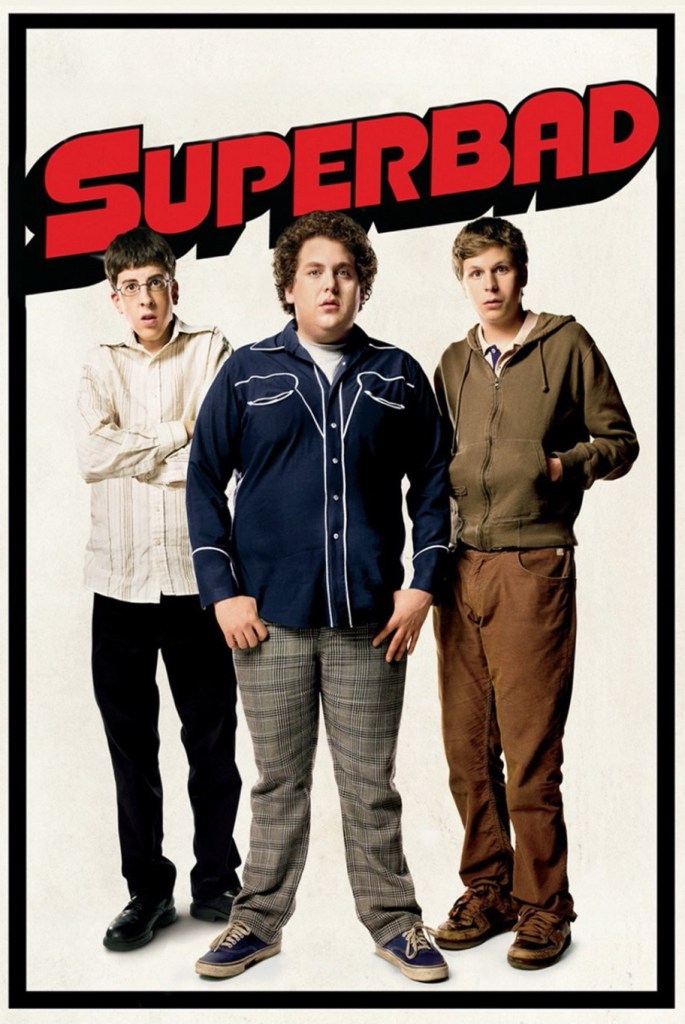
Superbad (2007)
Directed by: Greg Mottola
Written by: Seth Rogen and Evan Goldberg
Starring: Jonah Hill, Michael Cera, Christopher Mintz-Plasse, Emma Stone, Martha MacIsaac, Bill Hader and Seth Rogen
Music by: Lyle Workman
Rated: 15
Seth (Jonah Hill) and Evan (Michael Cera) are two unpopular high schoolers who are about to go to separate colleges. Wanting to lose their virginity with their respective girlfriends, Jules (Emma Stone) and Becca (Martha MacIsaac), Seth and Evan hire their other, even less popular friend, Fogell (Christopher Mintz-Plasse), to buy alcohol with a fake ID card, for a party. However, the night gets crazier and crazier when Fogell, under the name “McLovin”, ends up causing mass complications that involve cocaine gangs, robberies and bonding with two even more immature police officers (Seth Rogen and Bill Hader)…
Along with Judd Apatow’s films, comedy writers Seth Rogen and Even Goldberg have gone on to become one of the best examples of millennial culture in terms of comedy. However, their first film where they both wrote together, that kicked off the likes of Pineapple Express, This is the End and Sausage Party, is ironically, their most personal film, despite being filled with all the sex and stoner jokes that people have come to expect.
Heavily inspired on Seth and Evan’s high school years, up to the point where the two main characters have the same names, Superbad mostly shines in the craziness of the situations that they get into during one party night, with Christopher Mintz-Plasse’s debut performance as Fogell, getting the biggest laughs. While a lot of the humour isn’t for everyone, it does manage to handle the subject matter of the pressures of teenagers wanting to lose their virginity under peer pressure, better than how American Pie did, where that film ended up dropping the ball at the end.
Overall, while some characters such as Jonah Hill’s Seth, can get really annoying, others do manage to get massive laughs, which makes Superbad, an entertaining start to the Rogen and Goldberg collaborations in comedy.
Rating: 3.5/5
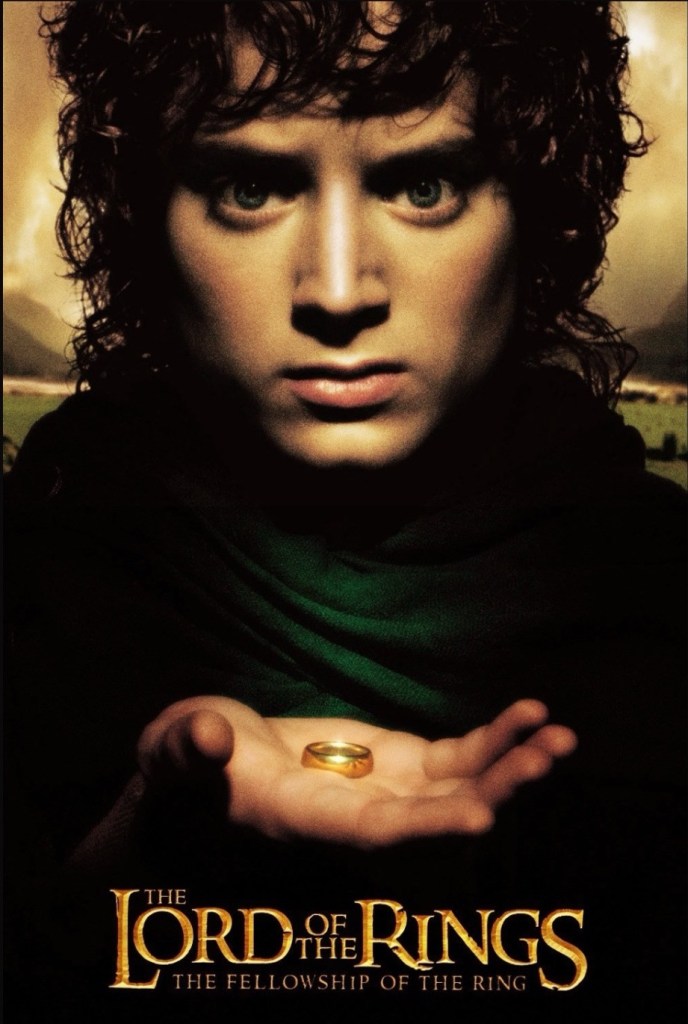
The Lord of the Rings: The Fellowship of the Ring (2001)
Directed by: Peter Jackson
Written by: Fran Walsh, Philippa Boyens and Peter Jackson
Starring: Elijah Wood, Ian McKellen, Viggo Mortensen, Liv Tyler, Sean Astin, Cate Blanchett, John Rhys-Davis, Billy Boyd, Dominic Monaghan, Orlando Bloom, Christopher Lee, Hugo Weaving, Sean Bean, Ian Holm and Andy Serkis
Music by: Howard Shore
Rated: PG (theatrical version), 12A (extended edition)
When the evil forces of the Dark Lord Sauron (Sala Baker), threaten Middle-Earth, a land populated by peaceful Hobbits, Wizards, Elves, Dwarves and Humans, a young Hobbit named Frodo Baggins (Elijah Wood) and his brave companions are entrusted to destroy the one thing that can give Sauron unlimited power, The One Ring. But evil forces such as the traitorous wizard Saruman (Christopher Lee), armies of Orcs, Goblins, Trolls and even the Ring itself with its seductive qualities, will do anything to stop them in their tracks.
From the opening speech that tells the audience the history of the Ring, right up to the powerful cliffhanger of Frodo and his best friend Samwise Gamgee (Sean Astin) leaving the group to destroy the Ring, Director Peter Jackson and his co-writers Fran Walsh and Phillipa Boyens, manage to bring J.R.R. Tolkien’s world of hobbits, elves and dwarves to life. The sweeping use of cinematography of New Zealand gives Middle-Earth a massive scope and Grant Major’s impressive production design of locations such as the countryside villages of Hobbiton, the beautiful nature-friendly Elf homes of Rivendell and Lothlorien and the dark forboding Mines of Moria, brings artists John Howe and Alan Lee’s visualisation of Tolkien’s world into a believable, yet fantastical reality.
The decision to only focus on Frodo’s quest, though purists may disagree, was a smart one as the story itself gives a lot of room in the development of the characters. Although Frodo himself is a good wide-eyed innocent forced into an unfriendly world, it’s the characters that surround him such as the wise, yet kind wizard Gandalf the Grey (Ian McKellen), Sam, the powerful elf-lords Elrond (Hugo Weaving) and Galadriel (Cate Blanchett), and the members of the Fellowship themselves such as Aragorn (Viggo Mortensen), the destined saviour of the humans of Middle-Earth, the elf prince Legolas ( Orlando Bloom) and the Dwarf warrior Gimli (John Rhys-Davis) and the world building of Middle Earth itself that makes this film such a joy to watch.
Overall, despite some dated CGI in terms of how it blends in the amazing practical and model work, The Lord of the Rings: The Fellowship of the Ring is an amazing experience that few films of this century have topped and is a great start to the greatest fantasy story of all time.
Rating: 5/5
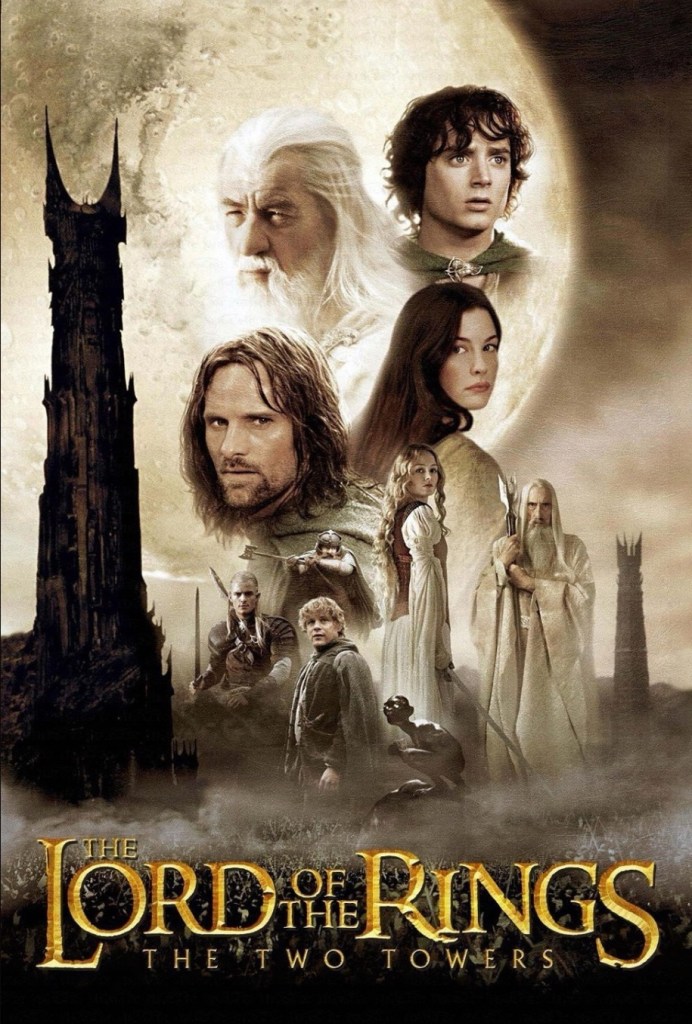
The Lord of the Rings: The Two Towers (2002)
Directed by: Peter Jackson
Written by: Fran Walsh, Philippa Boyens, Stephen Sinclair and Peter Jackson
Starring: Elijah Wood, Ian McKellen, Viggo Mortensen, Liv Tyler, Sean Astin, Cate Blanchett, John Rhys-Davis, Bernard Hill, Christopher Lee, Billy Boyd, Dominic Monaghan, Orlando Bloom, Hugo Weaving, Miranda Otto, David Wenham, Brad Dourif, Karl Urban and Andy Serkis
Music by: Howard Shore
Rated: 12A
As the forces of Sauron and Saruman (Christopher Lee) plot to wipe out all humans in Middle-Earth, Aragorn (Viggo Mortensen), Legolas (Orlando Bloom), Gimli (John Rhys-Davis) and the newly revived Gandalf the White (Ian McKellen) must save the kingdom of Rohan from the forces of Isengard. At the same time, Frodo (Elijah Wood) and Sam (Sean Astin) are forced to rely on the One Ring’s previous bearer, a small tormented creature named Gollum (Andy Serkis), to guide them into Mordor…
Despite having a less linear narrative than the first film, with three plot lines revolving around Frodo and Sam’s journey, Aragorn’s quest and the comic relief hobbits, Merry (Dominic Moughaun) and Pippin (Billy Boyd) encountering Treebeard (Also John Rhys-Davis) and the treelike Ents, all of these plots, although the latter one tends to drag a bit, all succeed in further developing the characters. This is shown with Frodo’s growing corruption to the Ring, Merry taking responsibility for his actions and Aragorn embracing his role as the future saviour of humankind. The population of the home of the Horse Lords, Edoras, such as the reluctant King Theoden (Bernard Hill), the slimy Grima Wormtongue (Brad Dorif) and the shield-maiden Ewoyn (Miranda Otto) help to establish both the frail, yet hopeful theme revolving humanity, while also giving the audience the chance to fully explore a human culture in a world populated by fantastical creatures.
Although the score is amazing and the setpieces such as the Battle of Helm’s Deep are stunning to look at, the biggest achievement in terms of visual effects comes in the form of Gollum. Being the first character in a live-action film to filmed in the revolutionary preformance capture system, Andy Serkis’s physical and emotional performance captures both the good and evil sides of the tormented creature, with the conversation sequence being one of the most intense psychological sequences put to film.
Overall, despite the Treebeard scenes sometimes dragging the film down, The Lord of the Rings: The Two Towers is still masterful filmmaking in terms of worldbuilding and character development and helped audiences get excited enough for the epic conclusion.
Rating: 5/5
The Lord of the Rings: The Return of the King (2003)

Directed by: Peter Jackson
Written by: Fran Walsh, Philippa Boyens and Peter Jackson
Starring: Elijah Wood, Ian McKellen, Viggo Mortensen, Sean Astin, Liv Tyler, Cate Blanchett, John Rhys-Davis, Bernard Hill, Billy Boyd, Dominic Monaghan, Orlando Bloom, Miranda Otto, Hugo Weaving, David Wenham, Karl Urban, John Noble, Andy Serkis, Christopher Lee (Extended Edition only), Brad Dourif (Extended Edition only), Ian Holm and Sean Bean
Music by: Howard Shore
Rated: 12A
With the forces of Isengard defeated, Aragorn (Viggo Mortensen) and the armies of Rohan and Gondor prepare to face Sauron for the fate of Middle-Earth. Meanwhile, as Frodo Baggins (Elijah Wood) and Sam Gamgee (Sean Astin) move closer and closer towards Mordor, Gollum (Andy Serkis), now fully consumed by his evil side, plots to lead the two Hobbits into a fatal trap…
Although the last two films had their fair share of cool setpieces, a majority of scenes in those films were used for the worldbuilding of Middle-Earth and to establish characters. With the final film however, Peter Jackson goes all out in filming some of the best battle sequences ever put to film, with the infamous Battle of the Pelennor Fields being a marvel in terms of spectacle and cinematography.
The butt-numbing running time of over four hours can be tiring for some, it is thankfully not boring, as time is used to wrap up every character’s arc beautifully. Frodo, Sam, Aragorn, Gandalf (Ian McKellen), Gollum and the rest of the cast are characters that the audience has grown to love. In spite of the criticism of the numerous endings, they are essential in giving each of them the send-off they deserve.
Overall, with all these things said about it, The Lord of the Rings: The Return of the King is a triumphant conclusion to Tolkien’s story and being the first fantasy film to win the Oscar for Best Picture, a crowning victory for fans of the much underappreciated genre. “The Road goes ever on” indeed…
Rating: 5/5
Shutter Island (2010)
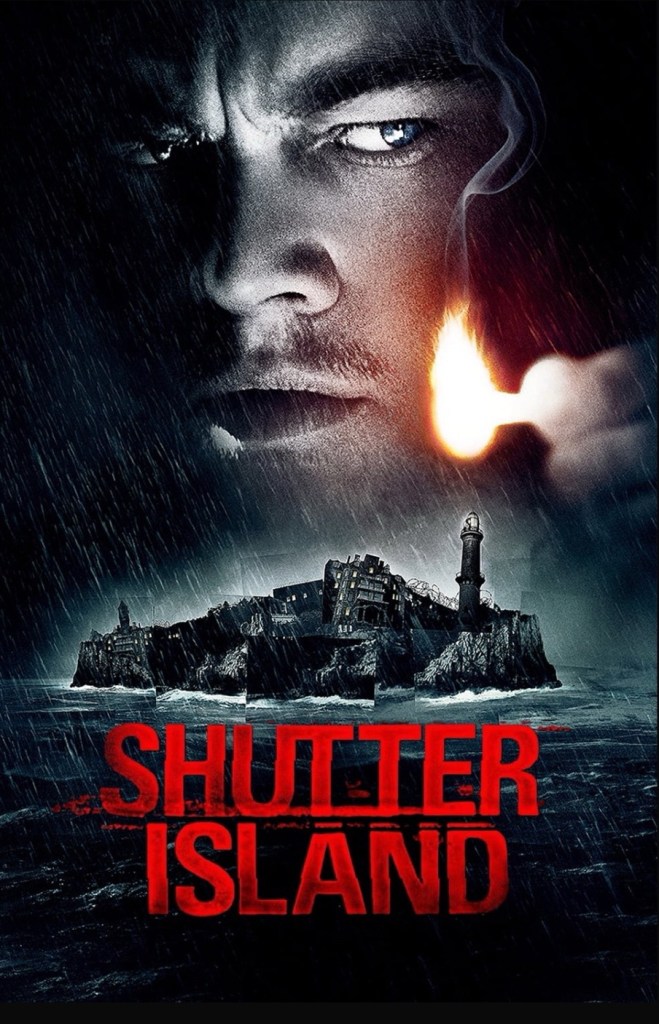
Directed by: Martin Scorsese
Written by: Laeta Kalogridis
Starring: Leonardo DiCaprio, Mark Ruffalo, Ben Kingsley, Michelle Williams, Emily Mortimer, Patricia Clarkson and Max von Sydow
Music by: N/A
Rated: 15
In 1954, U.S. Marshal Edward “Teddy” Daniels (Leonardo DiCaprio) and his assistant, Chuck Aule (Mark Ruffalo), are hired to investigate a disappearance of a patient from the Ashecliffe asylum, located on the remote Shutter Island. However, Teddy starts to make disturbing discoveries about the facility, while suffering from strange dreams about his late wife, Dolores (Michelle Williams)….
While not among the director’s best known works, especially when compared to the massive popularity that his next two films, Hugo and The Wolf of Wall Street would get in the 2010s decade, Shutter Island does manage to be one of Martin Scorsese’s more atmospheric films.
Mixing in Hitchcock style mystery with impressive cinematography from Robert Richardson, while Shutter Island, being based on a 2003 book aside, does feel very familiar in subject matter and themes to the other major Leonardo DiCaprio 2010 film released months later, Christopher Nolan’s Inception, the actor once again gives a fantastic performance, alongside Scorsese’s usual skill in getting performances out of him.
Overall, while confusing at times, especially with one line in the twist ending hinting at something completely different than what the source material intended, Shutter Island is a very good mystery story with great acting skills from the likes of Mark Ruffalo, Michelle Williams, Ben Kingsley and the late Max von Sydow, and solid direction as only Scorsese can provide.
Rating: 3.5/5
Hot Fuzz (2007)
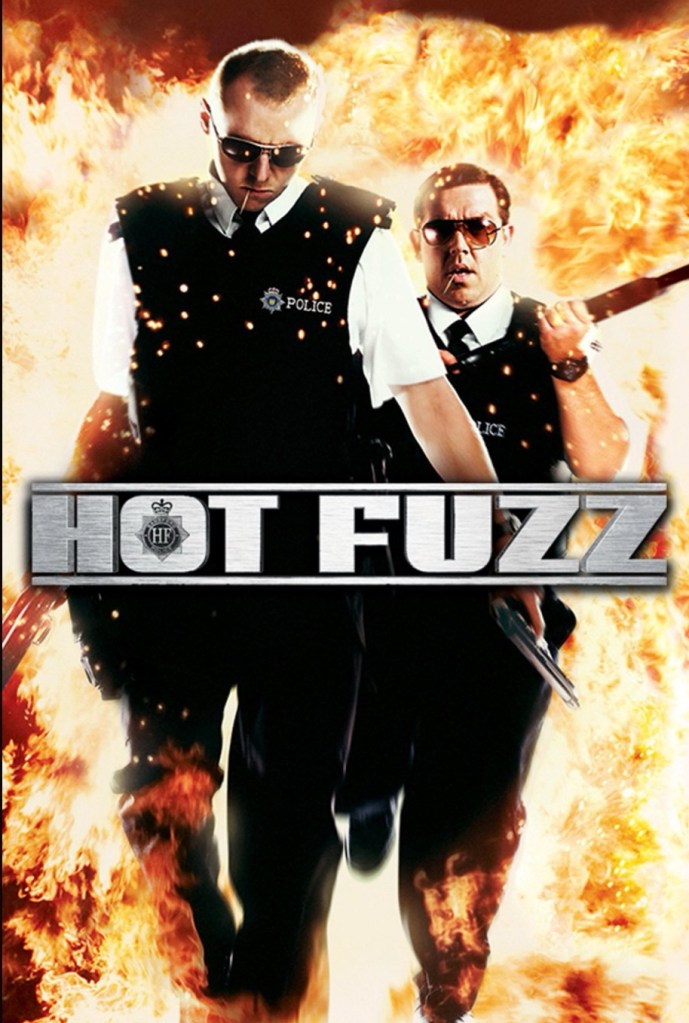
Directed by: Edgar Wright
Written by: Edgar Wright and Simon Pegg
Starring: Simon Pegg, Nick Frost, Jim Broadbent, Paddy Considine, Timothy Dalton, Bill Bailey, Bill Nighy, Martin Freeman, Edward Woodward, Billie Whitelaw, David Bradley and Olivia Colman
Music by: David Arnold
Rated: 15
Overachieving police officer Nicholas Angel (Simon Pegg) finally gets the promotion that he’s always wanted, only to realise that he has been reassigned from London to the rural community of Sandford, Gloucestershire, where no one seems to take law enforcement seriously, apart from village council projects. When a series of grisly murders start happening, Angel teams up with the inspector’s action movie-loving son, Danny Butterman (Nick Frost), in order to solve the mystery, while also dealing with runaway swans, incomprehensible accented farmers and the town’s strange obsession with preserving “The greater good”…
More insane, more funny and more creative through every rewatch, Edgar Wright’s second instalment in his Cornetto trilogy, Hot Fuzz, finally gives the U.K. its own action buddy cop film, in which the insane situations of explosions, shoot-outs and violence seen in Point Break and Bad Boys II (as the film keeps pointing out), are relocated into a small South West England town.
While some aspects of the main mystery does get complicated, both Wright and star Simon Pegg’s brilliant script uses this as an advantage to both poke fun and celebrate every cliché in these types of films, with the huge cast of British actors such as Jim Broadbent, Olivia Colman, Timothy Dalton, David Bradley, Bill Nighy and countless more, giving Hot Fuzz the feeling of a r-rated Wallace & Gromit film, given all the way the country’s style of comedy is implemented into the writing.
Overall, aside from Simon Pegg and Nick Frost’s leading roles being the most likable and entertaining in their entire double act comedy history, everything has already been said about Hot Fuzz and how it stands as one of the funniest films ever made.
Rating: 5/5
Children of Men (2006)
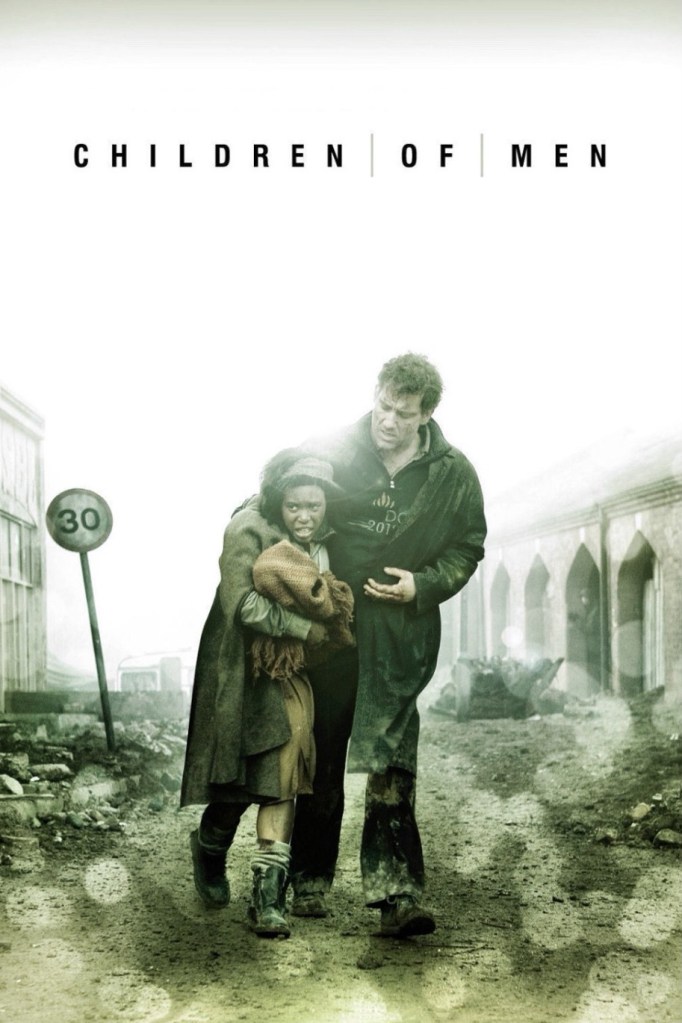
Directed by: Alfonso Cuarón
Written by: Alfonso Cuarón, Timothy J. Sexton, David Arata, Mark Fergus and Hawk Ostby
Starring: Clive Owen, Clare-Hope Ashitey, Julianne Moore, Michael Caine, Chiwetel Ejiofor, Charlie Hunnam and Pam Farris
Rated: 15
In the far future of 2027, humanity has nearly collapsed due to a worldwide epidemic of infertility, leaving many countries to devolve into police states of tyranny and oppression. In the U.K., former activist Theo Faron (Clive Owen), ends up unexpectedly reuniting with his former wife and leader of the resistance against the government, Julie (Julianne Moore). She then hires him to transport Kee (Clare-Hope Ashitey), the first woman to be pregnant in decades, escape the country to a utopia where scientists are working to cure the world’s infertility…
Alfonso Cuarón‘s chilling, yet hopeful film adaptation of P.D. James’s The Children of Men, is not only one of the best examples of 2000s science fiction cinema, but has become much more relevant for obvious reasons throughout the late 2010s and early 2020s, where only the concept of the infertility epidemic wasn’t needed for certain events to happen in real life.
With a bleakness rivalled only by 1980s nuclear war films and Steven Spielberg’s 2005 adaptation of War of the Worlds, Children of Men also manages to have a beating heart in its found family aspect among the main characters, with Clive Owen, Clare-Hope Ashitey and even Michael Caine in his most unconventional role as a farting cartoonist, all giving fantastic performances.
Overall, even if the ending’s pacing does start to wear out its welcome due to the numerous false ending points, Children of Men is a heartbreaking and haunting experience, where tv shows like The Walking Dead and The Handmaid’s Tale all owe a lot to this powerful story.
Rating: 4.5/5
Parasite (2019)
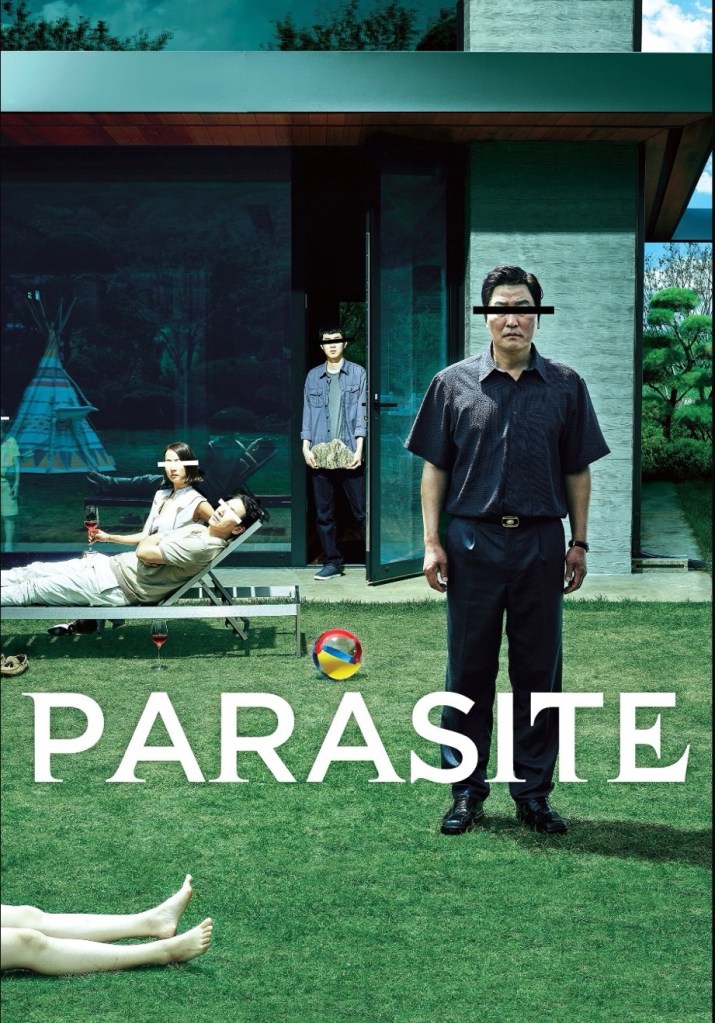
Directed by: Bong Joon Ho
Written by: Bong Joon Ho and Han Jin-won
Starring: Song Kang-ho, Lee Sun-kyun, Cho Yeo-jeong, Choi Woo-shik, Park So-dam and Jang Hye-jin
Music by: Jung Jae-il
Rated: 15
Seeking an opportunity to break away from their poor lifestyle, the Kim family consisting of father Ki-taek (Song Kang-ho), mother Park Chung-sook (Jang Hye-jin), son Kevin (Choi Woo-shik) and daughter Jessica (Park So-dam), end up working for the high-class Park Family after Kevin is given a job at the residence. However, the family’s unethical tactics for staying in the job ends up being their ultimate undoing…
This darkly funny and subversive take on the clash between social classes, coming from Snowpiercer director Bong Joon Ho, serves as not only one of the best films to have come from South Korea in years, but it also works as an amazing cautionary tale about the consequences of dishonesty.
Both families are given reasonable motivations behind their actions, with the rich Park family in particular not coming across as snobbish as in most of these types of characters in other films, while the poor Kim family are portrayed as creative and loving to each other, in spite of their unsavoury actions to the former.
Overall, Parasite is an exhilarating experience that fully deserves its triumph at the 2020 Academy Awards, while also warning its audience about the consequences of dishonesty.
Rating: 5/5
La La Land (2016)

Directed by: Damien Chazelle
Written by: Damien Chazelle
Starring: Ryan Gosling, Emma Stone, John Legend, Rosamarie DeWitt, Finn Wittrock and J.K. Simmons
Music by: Justin Hurwitz
Rated: 12A
Despite living in Los Angeles, the land of Hollywood, music and art culture, musician Sebastian “Seb” Wilder (Ryan Gosling) and aspiring actress Mia Dolan (Emma Stone), are struggling to make their dreams come true. When both these lost souls meet and inevitably fall in love. trails of compromise, rejection and the question about whether relationships can co-exist with their love, will test Seb and Mia like never before…
After giving us one of the best stories about the music industry in 2014 with the astonishing Whiplash it was only fitting that Damien Chazelle’s next film would be a full blown musical, shot in the style of the MGM musicals of the 1940s and 50s such as Singin’ in the Rain and An American in Paris. What sets this magnificently filmed film apart from others in that year’s numerous award seasons (including the infamous Best Picture goof at the Academy Awards), is the beautiful use of cinematography and lighting that fully embraces the genre’s stage roots.
With scenes that entirely black out apart from the focused characters to give the illusion of a theatre spotlight shining down on them, while other scenes change their visual style completely to give the film the feel of an art gallery, La La Land is one of the most visually stunning examples of these technical aspects. Several sequences involving Mia and Sebastian dancing in the stars, a sequence in which the presentation constantly changes from Gene Kelly style tap dancing, Chinese shadow puppetry, stop-motion and 1950s style use of logos and lighting, gives a majority of the locations the feeling of a painting come to life.
Although both Ryan Gosling and Emma Stone have excellent chemistry, and that the musical sequences are really well staged, especially the opening number, Another Day of Sun, just to warn people expecting the next Les Miserables or Dreamgirls , at the halfway point, the musical sequences stop until the near end. This does make the advertising for this film feeling a little disappointing as it had been a long time since an excellent live action musical that isn’t an adaptation of an already existing stage show or a jukebox musical like Mamma Mia, had been done at this level of talent. While their next film, The Greatest Showman, would overshadow this film a year later, Pasek and Paul’s songs here, are some of the best they have ever written.
Overall, despite the lack of the required number of songs for this to be considered a true musical, La La Land is excellent escapist entertainment, if you want something different from the usual Oscar- fare, and an excellent example of talent in the rare original musical film.
Rating: 4.5/5
X-Men (2000)
Directed by: Bryan Singer
Written by: David Hayter
Starring: Patrick Stewart, Hugh Jackman, Ian McKellen, Halle Berry, Famke Janssen, James Marsden, Bruce Davison, Rebecca Romijn-Stamos, Ray Park, Tyler Mane and Anna Paquin
Music by: Michael Kamen
Rated: 12A
Since the dawn of mankind, a secret section of humanity, ones that have additional abilities when compared to regular humans, have come to be known as “mutants” and are constantly mistreated by bigotry and violence. In modern times, the mistreatment of mutant kind has gotten so bad, that they have divided themselves into two groups under two of the most powerful members of their kind. The X-Men, led by Professor Charles Xavier (Patrick Stewart), seek to protect and educate humans to accept them, while The Brotherhood, led by Xavier’s former ally, Magneto (Ian McKellen), seek to eliminate humanity in revenge. When two recently discovered mutants, a young girl named Marie/Rogue (Anna Paquin) with the ability to absorb life forces, and a gruff ageless brawler named Logan/Wolverine (Hugh Jackman) who has retractable metal claws and a healing factor, catch the attention of Magneto, it is up for the likes of Cyclops (James Marsden), Jean Grey (Famke Janssen) and Storm (Halle Berry), to help them find their purpose in life,,,
Although the X-Men, a group of people with supernatural abilities fighting against human prejudice and radicals within their own ranks, had been around since 1963 as created by Stan Lee and Jack Kirby, it wasn’t until the highly successful 1992 animated series from Fox Kids, that made the likes of Wolverine, Magneto, Professor X and Jean Grey, household names on par with Superman, Batman and Spider-Man. While attempts had been made to bring Marvel’s “Merry Mutants” to the big screen since the 1980s, from Kathryn Bigelow, James Cameron and Joss Whedon, it wasn’t until the success of Blade that made 20th Century Fox reconsider the potential of reviving the superhero subgenre, and, along with Sam Raimi’s Spider-Man, the first X-Men film is credited for kickstarting the superhero domination of twenty first century cinema.
In spite of the huge deviations from the source material, including the infamous black leather outfits, downplaying important characters such as Cyclops and Sabretooth (Tyler Mane) and the character of Rogue being her, but in name only when compared to the comic counterpart, the latter does make sense for the story’s theme of isolation, given that her ability to literally suck the life out of everything she touches.
The rest of the casting, aside from a bored looking James Marsden and a completely miscast Halle Berry as Storm, is absolutely spot on. Both Patrick Stewart and Ian McKellen are absolutely show-stealing as two bitter enemies with opposing viewpoints, but deep down, they deeply respect and care for each other. However, it is Hugh Jackman’s Wolverine that is truly the best thing about this film. While a lot less crass than his animated counterpart, Hugh manages to get the gruff, violent and funny aspects of this Canadian brawler with metal claws, completely right, leading to an incredibly powerful career.
Overall, X-Men has not aged well in a lot of places, especially given the limited scope, the dated CGI effects and the awkward rushed script. However, as one of the most important films in the history of Super Hero cinema, it deserves a lot of respect for its legacy alone, even if the sex offender director doesn’t deserve any recognition.
Rating: 3.5/5
X2: X-Men United (2003)

Directed by: Bryan Singer
Written by: Michael Dougherty, Dan Harris and David Hayter
Starring: Hugh Jackman, Patrick Stewart, Ian McKellen, Halle Berry, Famke Janssen, James Marsden, Rebecca Romijn, Brian Cox, Alan Cumming, Bruce Davison, Shawn Ashmore, Aaron Stanford, Kelly Hu and Anna Paquin
Music by: John Ottman
Rated: 12A
When an attack on the White House by an unknown mutant (Alan Cumming), reignites hate against mutantkind from humans, the President of the United States (Cotter Smith), hires the scientist, William Stryker (Brian Cox), to launch a raid on Professor Xavier (Patrick Stewart) and his School for Gifted Youngsters. With Xavier and Cyclops (James Marsden) kidnapped, the remaining X-Men split into two groups: Storm (Halle Berry) and Jean Grey (Famke Janssen) will find the mutant, identified as Nightcrawler, while Wolverine (Hugh Jackman), Rogue (Anna Paquin), Iceman (Shawn Ashmore) and Pyro (Aaron Stanford), will make an alliance with Magneto (Ian McKellen) and Mystique (Rebecca Romijn), to rescue the kidnapped mutants. However, things get complicated when it is revealed that Stryker was the one responsible for Wolverine’s creation…
Upping the ante in every single way from the first film, X2: X-Men United may still lack some of the intensity and epic scope of the animated series’s best moments. However, for this more realism-based approach to Marvel’s Merry Mutants, it does work in greater expansion of the themes of genocide and prejudice, which is greatly shown with William Stryker being one of the cruelest and most sadistic characters of this series, in spite of him not having mutant abilities, with Brain Cox giving such a great performance.
While it is disappointing that Patrick Stewart doesn’t get a lot to do, being a prisoner for a majority of the running time, it is almost comical how badly treated Cyclops was treated in these films. Thankfully, the rest of the cast, old and new, all get their chance to shine. Hugh Jackman’s Wolverine finally comes to terms with his origins, Rogue and Iceman, the latter a minor character in the first film, get really interesting arcs, especially in the heartbreaking scenes where he gets rejected by his parents for being a mutant and Ian McKellen and Rebecca Romijn make for an entertaining double act as Magneto and Mystique. Alan Cumming makes for a great Nightcrawler and Aaron Stanford’s Pyro gets an interesting arc of him falling for Magneto’s philosophy.
Overall, while still having some questionable CGI and some questionable treatment of certain characters, X2: X-Men United is a fantastic improvement on the first film’s limited scope and uses it’s more human story to its full advantage, in showing how far humans and mutants are willing to go.
Rating: 4/5
X-Men: The Last Stand (2006)
Directed by: Brett Ratner
Written by: Simon Kinberg and Zak Penn
Starring: Hugh Jackman, Halle Berry, Ian McKellen, Famke Janssen, Elliot Page, Kelsey Grammer, Shawn Ashmore, Anna Paquin, Daniel Cudmore, Rebecca Romijn, James Marsden, Aaron Stanford, Vinnie Jones and Patrick Stewart
Music by: John Powell
Rated: 12A
When a cure is discovered for the mutant gene, Magneto (Ian McKellen) uses this as the ultimate justification for declaring war on humanity. Things get worse when Jean Grey (Famke Janssen), previously thought to be dead, is reborn as the deadly Phoenix, kills Cyclops (James Marsden) and even Charles Xavier (Patrick Stewart), and joins Magneto against the likes of Wolverine (Hugh Jackman), Storm (Halle Berry), Beast (Kelsey Grammer) and Iceman (Shawn Ashmore) to destroy the cure…
Despite having great acting and some really impressive sequences, X-Men: The Last Stand is a rushed mess of an ending to the first X-Men trilogy. With sex offender director number one, Bryan Singer, leaving to do Superman Returns for Warner Bros and DC, The Last Stand was left in the hands of sex offender number two, Brett Ratner, which made the production very toxic for everyone working on it.
Kelsey Grammer is perfectly cast as Beast and the final battle sequence between Wolverine and Storm’s X-Men and Magneto’s even larger Brotherhood looks amazing. However, the decision to cram both Chris Claremont’s The Dark Phoenix Saga and Joss Whedon’s Gifted graphic novel, into a 104-minute narrative, results in one of the most disjointed comic book films ever made. While Famke Janssen does a great job in depicting the insanity of the Phoenix persona, she is given barely any room to breathe alongside Magneto’s aims, and other character arcs such as with Rogue (Anna Paquin) and Mystique (Rebecca Romijn), who are given really anti-climactic send-offs.
Overall, X-Men: The Last Stand is a disappointing end for the original trilogy, despite its positives.
Rating: 2.5/5
The Goonies (1985)

Directed by: Richard Donner
Written by: Chris Columbus
Starring: Sean Astin, Josh Brolin, Jeff Cohen, Corey Feldman, Kerri Green, Martha Plimpton, Ke Huy Quan, John Matuszak, Robert Davi, Joe Pantoliano and Anne Ramsey
Music by: Dave Grusin
Rated: 12A
Being forced to move out of their homes in the “Goon Docks” of Astoria, Oregon, four young boys named Mikey (Sean Astin), Mouth (Corey Feldman), Data (Ke Huy Quan) and Chunk (Jeff Cohen), are determined to spend one last weekend together as “The Goonies”. When the boys discover one last hope to save their home in the form of a treasure map that leads to the riches of the legendary pirate, One Eyed Willy, the boys, along with Mickey’s older brother, Brand (Josh Brolin) and two girls named Andy (Kerri Green) and Stef (Martha Plimpton), set out to explore a hidden cave to find it, while also being chased by a family of thieves…
One of Amblin’s most beloved films during their 1980s golden age, The Goonies may be a lot lower scaled in scope when compared to the likes of Back to the Future, E.T. or The Neverending Story, but the fun characters and interesting story does manage to make Richard Donner’s second most famous film, very entertaining to watch.
Despite some jokes being really annoying and some obvious mistakes in the editing (that infamous plothole regarding a vanishing octopus withstanding), Sean Astin, Josh Brolin, Corey Feldman and especially Ke Huy Quan and Jeff Cohen’s characters, all get huge laughs and the most fun moments.
Overall, with a genuine sense of fun, a fantastic score by Dave Grusin and a whole cast of actors that would become huge names in later decades, The Goonies is another example of why Steven Spielberg’s company was at the top of its game during this decade in producing fantastic family adventures.
Rating: 3.5/5
Sense and Sensibility (1995)

Directed by: Ang Lee
Written by: Emma Thompson
Starring: Emma Thompson, Kate Winslet, Hugh Grant, Alan Rickman, Gemma Jones, Imogen Stubbs, Robert Hardy, Glen Wise, Elizabeth Spriggs, Imelda Staunton, Emilie François and Hugh Laurie
Music by: Patrick Doyle
Rated: U
Set in early nineteenth century England, Mrs. Dashwood (Gemma Jones) and her three daughters, Elinor (Emma Thompson), Marianne (Kate Winslet) and Margaret (Emilie François), find themselves at the risk of poverty after the death of the former’s husband, Henry (Tom Wilkinson). While staying at Norland Park, the house that has been passed down to Henry’s son from his first marriage, John (James Fleet), Elinor strikes up a close friendship with John’s wife’s brother, Edward Ferrars (Hugh Grant). However, circumstances revolving around moving to a new estate, helping out Marianne with her own love problems with Col. Brandon (Alan Rickman) and John Willoughby (Greg Wise), and numerous misunderstandings, will force Elinor to deal with her feelings as she tries to understand what love means…
Regarded as the crown jewel of all Jane Austen adaptations, along with the 1990s Pride & Prejudice television series, Ang Lee’s 1995 version of Austen’s first novel, Sense and Sensibility, manages to be not only incredibly well made for the period drama subgenre, that had only been thriving on TV at that point in time, but also manages to be very entertaining as well.
While some characters and events from the book are removed for pacing reasons, Lee and writer and star Emma Thompson, make the incredibly smart decision to further flesh out the characters, especially the two main sisters and their love interests, with the quartet of Thompson, a pre-Titanic Kate Winslet, Hugh Grant and a surprisingly sweet Alan Rickman, all giving fantastic performances. Another great change is Elinor being aged up to her early thirties, which gives her character a lot more depth, especially when having to look after her family and deal with long-delayed love.
Overall, with fantastic production design and Patrick Doyle music, a hugely entertaining cast of British supporting characters, such as the late Robert Hardy, Imelda Staunton, Elizabeth Spriggs and the always hilarious Hugh Laurie, and a much needed update on Austen’s themes, the 1995 adaptation of Sense and Sensibility is a high point in period drama cinema, which the likes of the 2005 adaptation of Pride & Prejudice and Downton Abbey, owe a lot to.
Rating: 4.5/5
X-Men: First Class (2011)

Directed by: Matthew Vaughn
Written by: Ashley Edward Miller, Zack Stentz, Jane Goldman and Matthew Vaughn
Starring: James McAvoy, Michael Fassbender, Rose Byrne, Jennifer Lawrence, January Jones, Lucas Till, Oliver Platt, Álex González, Jason Flemyng, Zoë Kravitz, Nicholas Hoult, Caleb Landry Jones, Edi Gathegi and Kevin Bacon
Music by: Henry Jackman
Rated: 12A
In 1962, thirty-eight years before the events of X-Men, a young mutant telepath named Charles Xavier (James McAvoy) and his adopted sister, Raven (Jennifer Lawrence), are hired by Moria MacTaggert (Rose Byrne) to track down the Hellfire Club, a group of high-class mutants who are plotting to cause World War III. After encountering another mutant named Erik (Michael Fassbender), who has his own personal grudge against the Club’s leader, Sebastian Shaw (Kevin Bacon), a desperate search for other mutants begins as the birth of both the “X-Men” and the “Brotherhood” starts to take place…
Coming the closest to capturing the spirit of the Stan Lee and Jack Kirby comics in terms of visuals alone, X-Men: First Class uses the 1962 setting to its full advantage in this amazing prequel/reboot. Taking inspiration from the early Sean Connery James Bond films, from the set design to the look of the Hellfire Club,including the likes of Emma Frost (January Jones). Matthew Vaughn’s clever use of the Cuban Missile Crisis as one of the major plot-points is an excellent way of staying true to the franchise’s themes of the dangers of paranoia and intolerance, especially in the intense third act.
Despite Nicholas Hoult’s odd take on Beast with the costume looking not as convincing as Kelsey Grammer’s from X-Men: The Last Stand, both James McAvoy and Michael Fassbender are amazing as younger versions of Professor X and Magneto, with the latter giving one of the best performances in his entire career.
Overall, despite knowing how this rebooted film series ended up repeating the same mistakes of the original films, X-Men: First Class is still one of the best examples of how to turn a franchise around, with its unique direction and amazing acting from both McAvoy and Fassbender.
Rating: 4.5/5
Princess Mononoke (1997)
Directed by: Hayao Miyazaki
Written by: Hayao Miyazaki
Starring: Yōji Matsuda/ Billy Crudup, Yuriko Ishida/ Claire Danes, Yūko Tanaka/ Minnie Driver, Kaoru Kobayashi/ Billy Bob Thornton, Masahiko Nishimura/ John DeMita, Tsunehiko Kamijō/ John DiMaggio, Akihiro Miwa/ Gillian Anderson, Mitsuko Mori/ Debi Derryberry and Hisaya Morishige/ Keith David
Music by: Joe Hisaishi
Rated: 12A
During the late Muromachi era of Medieval Japan, a young prince named Ashitaka (Yōji Matsuda and Billy Crudup), is cursed by Nago (Makoto Sato and John DiMaggio), a god resembling a wild boar, after he brutally attacks the young man while being possessed by a demon. After learning that the curse will result in his death, Ashitaka travels to Iron Town, a community being caught in a conflict between Lady Eboshi (Yūko Tanaka and Minnie Driver), the well-meaning, yet ambitious leader of the town and San (Yuriko Ishida and Claire Danes), a young woman raised by the Wolf Goddess, Moro (Akihiro Miwa and Gillian Anderson), who has a strong sense of protecting the forest from destruction…
While the likes of My Neighbour Totoro and Grave of the Fireflies had been very popular films throughout the worldwide animation community, it wasn’t until Hayao Miyazaki’s 1997 epic fantasy tale, Princess Mononoke, that Studio Ghibli was given attention from mainstream audiences, who were impressed with the interesting world-building, stunning animation and much more morally grey story about humans vs nature, when compared to other films at the time.
Unlike the likes of Avatar, Dances with Wolves and Disney’s Pocahontas, Princess Mononoke gives a much more detailed look into the motives of humans and the natural world, by making each side come from understandable motives. Lady Eboshi, for example, is genuinely trying to make her community a better place, even if her actions are very harmful to San’s family.
While San herself may be very violent towards her enemies, her growing relationship between Ashitaka, does allow her to open up to forming new connections, while several other forces of nature, such as the apes and the boars, are constantly making things worse for both sides. Although the final conflict can come across as unintentionally silly at times, this doesn’t ruin how well handled the moral is, about both humanity and nature having to accept compromises with each other, for the world to truly heal.
Overall, Princess Mononoke deserves its status as the film that gave Miyazaki and Ghibli, the attention they needed from mainstream media, so that the former’s next film would fully establish both of them, as world-famous animation legends.
Rating: 5/5
X-Men: Days of Future Past (2014)

Directed by: Bryan Singer
Written by: Simon Kinberg
Starring: Hugh Jackman, James McAvoy, Michael Fassbender, Jennifer Lawrence, Nicholas Hoult, Halle Berry, Anna Paquin, Shawn Ashmore, Elliot Page, Omar Sy, Evan Peters, Josh Helman, Daniel Cudmore, Fan Bingbing, Adan Canto, Booboo Stewart, Peter Dinklage, Ian McKellen and Patrick Stewart
Music by: John Ottman
Rated: 12A (theatrical version), 15 (Rogue Cut)
In the far future of 2023, humanity and mutantkind have been almost wiped out by the robotic Sentinels. Both Professor X (Patrick Stewart) and Magneto (Ian McKellen) have gathered the last of the X-Men to undertake a dangerous mission. With the use of Kitty Pryde’s (Elliot Page) power’s, Wolverine (Hugh Jackman) must use time-travel to go back to 1973 and convince the younger versions of Xavier (James McAvoy) and Magneto (Michael Fassbender), to prevent Mystique (Jennifer Lawrence) from assassinating the inventor of the Sentinels, Bolivar Trask (Peter Dinklage), and causing the dystopian future as a result…
Although this attempt to right the wrongs of both X-Men: The Last Stand and X-Men Origins: Wolverine by removing them via time travel may not have gone entirely according to plan, regarding the likes of X-Men: Apocalypse and Dark Pheonix, this emotional (but loose) adaptation of Chris Claremont’s Days of Future Past arc, is still one of the best non-MCU superhero films out there and is X-Men‘s highest peak.
The returning cast from both the original trilogy and X-Men: First Class give some of their best performances, with James McAvoy stealing the show from Hugh Jackman for once, and the scene with him talking with his older self stands out as one of the best scenes in any superhero film.
Much like how X:Men: First Class used the setting of the Cuban Missle crisis to set Xavier and Magneto on their paths as leaders of the X-Men and the Brotherhood, X:Men: Days of Future Past uses the 1970s setting to strengthen the themes of the small overcoming the numerous in regards to Magneto’s motivations and Bolivar’s arc. Although much has been said about Jennifer Lawerence in recent years, her performance as Mystique isn’t that annoying in here.
Overall, X-Men: Days of Future Past may not have launched a grand new era of X-Men films as intended. ( The Deadpool films and Logan stand as their own seperate things.) However, this beautiful story about reclaiming hope and one’s humanity is still worth watching.
Rating: 5/5
Logan (2017)
Directed by: James Mangold
Written by: Scott Frank, James Mangold and Michael Green
Starring: Hugh Jackman, Patrick Stewart, Dafne Keen, Boyd Holbrook, Stephen Merchant and Richard E. Grant
Music by: Marco Beltrami
Rated: 15
Set in the far future of 2029, Logan/Wolverine (Hugh Jackman), along with an ailing Professor Charles Xaiver (Patrick Stewart), are living alone in exile on the Mexican border, after an accident with Xavier’s degenerative telepathic abilities, led to some of the X-Men being killed. When Laura (Dafne Keen), a young mutant girl with the same abilities as Wolverine, appears into their lives, Xaiver persuades Logan to protect her as she is the first mutant to have been born in decades…
For seventeen years throughout the entire X-Men film series, Hugh Jackman’s portrayal of the character of Logan/Wolverine had become one of the most iconic film characters of the last decade, following him throughout his awful origin story, his battles with the X-Men, his relationship with Jean Grey, and even going back in time to prevent an apocalypse. Logan, the tenth instalment of the longest running superhero franchise, brings his story to a satisfying, yet sad ending to his arc.
Despite not delivering on his promise to give us a Japanese neo-noir with 2013’s OK The Wolverine, James Mangold goes back to his western roots in both the narrative and the production design, by loosely basing the story of an elderly Logan and Xavier surviving in the wilderness on Old Man Logan by Mark Miller. Like Captain America: Civil War, it expands on the flaws of the source material by introducing the character of X-23 as a source of redemption for Logan’s failure to keep the world safe.
As well as having amazing production design being inspired by both Westerns and Mad Max: Fury Road, the performances of Hugh Jackman and Patrick Stewart as their last (at the time) of both Logan and Charles Xavier are amazing, with the former being the most brutal he has ever been before, and the latter being repressed of his usual knowledgeable role as mentor figure, due to illness. Boyd Holbrook’s Donald Pierce is also quite entertaining, but the standout role has to be given to Dafne Keen’s acting debut as X-23.
Overall despite having a few problems with Richard E. Grant’s Zander Rice (it is clear that he was originally intended to be Mr. Sinister) and having a few pacing issues, Logan commits to both its 15 rating and in being a send off for Wolverine, by being one of the most violent, yet emotional superhero films in recent memory.
Rating: 4.5/5
Batman Begins (2005)
Directed by: Christopher Nolan
Written by: Christopher Nolan and David S. Goyer
Starring: Christian Bale, Michael Caine, Liam Neeson, Katie Holmes, Gary Oldman, Cillian Murphy, Tom Wilkinson, Rutger Hauer, Ken Watanabe and Morgan Freeman
Music by: Hans Zimmer and James Newton Howard
Rated: 12A
As a child, Bruce Wayne (Christian Bale), developed a sense for vengeance after witnessing his parents being gunned down by criminals. However, when Bruce learns from of his childhood friend, Rachel Dawes (Katie Holmes), that his home of Gotham City is far more corrupt than he realised, he leaves on a seven year journey to understand the criminal mind. After receiving training from the mysterious League of Shadows, Bruce returns to Gotham to become the masked vigilante, Batman. But when the sinister head of Arkham Asylum, Dr. Jonathan Crane/Scarecrow (Cillian Murphy), along with the vengeful leader of the League, Ra’s Al Ghul (Liam Neeson), hatch a plot to destroy the city, Bruce will need the help of a group of allies such as his loyal butler Alfred Pennyworth (Michael Caine), Sgt. James Gordon (Gary Oldman) and weapons designer Lucius Fox (Morgan Freeman), in order to become the legend he was born to be…
After the massive failure of Batman & Robin in 1997, the entire comic book film industry was in jeopardy and plans for a fifth film that would have starred Nicolas Cage as the Scarecrow and Madonna as Harley Quinn called Batman Unchained were immediately scrapped. Although comic-book films would eventually rise again in popularity thanks to the triple success stories of Blade, X-Men and Spider-Man, the future of the Dark Knight was uncertain with three projects including a live-action version of Batman Beyond, an adaptation of Frank Miller’s Batman: Year One and Andrew Kevin Walker’s take on a Batman vs. Superman film all being cancelled until in 2003, when a young British director named Christopher Nolan was finally given the keys to the Batcave after the success of Momento and Insomnia.
With a compelling narrative exploring the Caped Crusader’s origin story in much more detail than in previous incarnations, outstanding acting from the likes of Micheal Caine, Gary Oldman, Liam Neeson and Morgan Freeman and Hans Zimmer’s and James Newton Howard’s score outshining Danny Elfman’s work on the Burton films as the definitive theme of Batman, Batman Begins is an incredible film that brought the character back to mainstream blockbuster spotlight and helped launch Christopher Nolan’s career into the mainstream.
Although the second half may suffer from being a bit overstuffed with subplots and more could have been done with Cillian Murphy’s Scarecrow, Batman Begins is still a triumph of cinematic superhero origin storytelling!
Rating: 4.5/5
Oppenheimer (2023)

Directed by: Christopher Nolan
Written by: Christopher Nolan
Starring: Cillian Murphy, Emily Blunt, Matt Damon, Robert Downey Jr., Florence Pugh, Josh Hartnett, Casey Affleck, Rami Malek, Tom Conti, Gary Oldman and Kenneth Branagh
Music by: Ludwig Göransson
Rated: 15
During his 1954 security hearings, in which US official Lewis Strauss (Robert Downey Jr.), tries to remove him from his position in the government, nuclear physicist, J. Robert Oppenheimer (Cillian Murphy), starts reminiscing about his own past. His time in the University of California, his complicated relationship with two young communist women named Jean Tatlock (Florence Pugh) and Kitty (Emily Blunt), and most significantly, his partnership with General Leslie Groves (Matt Damon) in New Mexico, will lead him to participate in the Manhattan Project. However, as history is changed forever, two further interactions with Albert Einstein (Tom Conti) and President Harry S. Truman (Gary Oldman), will lead to Oppenheimer becoming “the destroyer of worlds”…
After a bitter divorce from Warner Bros. Pictures due to not agreeing over theatrical and streaming rights over Tenet, Christopher Nolan has decided to go back to the environment of WWII for his next project, following his previous success with 2017’s Dunkirk. With the backing from Universal Pictures and the background of the 2005 J. Robert Oppenheimer biography, American Prometheus, Nolan has crafted another masterpiece of WWII cinema, even if one half of the film is set in the 1950s Cold War as well.
As expected from a Christopher Nolan film, the cinematography and the scope of this cautionary real-life story, are absolutely stunning and although the director’s traits of flashback-style narratives and bombastic music are on full display, they help in making the stakes of the creation of the atomic bomb, feel as intense and as life-changing as it was during that time period.
While the majority of the film is set during the 1940s, in which the strongest performances from Cillian Murphy, Emily Blunt, Matt Damon and an outstanding Florence Pugh can be found, the secondary plot of Oppenheimer’s troubles in the McCarthy era, is also a force to be reckoned with. Robert Downey Jr. gives the best acting that he has done in ages as the paranoid Lewis Strauss, while special mention should also go to Tom Conti’s unique take on Albert Einstein.
Overall, aside from having a few unintentionally funny moments, especially in depicting the origin of the “destroyer of worlds” quote, Oppenheimer is another fantastic cinematic experience from Christopher Nolan and starts his new post-WB career with a (literal) bang!
Rating: 4.5/5
The Dark Knight (2008)
Directed by: Christopher Nolan
Written by: Jonathan and Christopher Nolan
Starring: Christian Bale, Michael Caine, Heath Ledger, Gary Oldman, Aaron Eckhart, Maggie Gyllenhaal and Morgan Freeman
Music by: Hans Zimmer and James Newton Howard
Rated: 12A
Now that Bruce Wayne (Christian Bale) has fully established himself as the heroic Dark Knight, Batman, the crime lords of Gotham City become even more desperate to maintain their influence. Things look promising for the Caped Crusader, when he forms an alliance with Lt. James Gordon (Gary Oldman) and the new District Attorney, Harvey Dent (Aaron Eckhart), to stamp out crime for good. All that changes however, when The Joker (Heath Ledger), a psychotic terrorist in clown make-up, arrives in Gotham to set up a twisted scheme that will tear apart the three men, in terms of all they represent…
Nothing else needs to be said about this masterpiece of the superhero genre, thanks to its willingness to take risks in depicting The Joker’s sadistic cruelty and the reality of the aftermath of Batman’s actions on both the police and criminals of Gotham City, that ultimately leads to Two-Face’s creation and the fall of Batman’s reputation. Gary Oldman’s larger role as Lt. Gordon and Aaron Eckhart’s more sympathetic take on Harvey Dent, makes them compelling co-protagonists to Batman, which makes Dent’s ultimate fate, even more tragic.
Christopher Nolan’s magum opus in writing, directing and in sheer emotional weight, the cinematography is absolutely stunning and the stunts are some of the best ever captured on film. From the opening bank heist, the truck flipping before Batman and the Joker engage in their road warfare, the hospital explosion to Batman’s final ascent to the top of the building overseeing the ferries, The Dark Knight is nonstop in its thrills and scope.
Apart from Bale’s Batman voice being a little too silly and the uncomfortable way Batman outsmarts the Joker in the final battle, the themes, IMAX style cinematography and the late Heath Ledger’s twisted take on the Clown Prince of Crime, makes The Dark Knight one of the most acclaimed films of the 2000s and a modern classic in its own right, even when removed from the trilogy and the other Batman films.
Rating: 5/5
Dunkirk (2017)
Directed by: Christopher Nolan
Written by: Christopher Nolan
Starring: Fionn Whitehead, Tom Glynn-Carney, Jack Lowden, Harry Styles, Aneurin Barnard, James D’Arcy, Barry Keoghan, Kenneth Branagh, Cillian Murphy, Mark Rylance and Tom Hardy
Music by: Hans Zimmer
Rated: 12
At the end of the Battle of France in 1940, thousands of British and French soldiers have been left stranded on Dunkirk beach. On the land, soldiers Tommy (Fionn Whitehead), Gibson (Aneurin Barnard) and Alex (Harry Styles), try to escape the Nazi bombings. On the sea, a civilian sailor named Mr. Dawson (Mark Rylance), his son Peter (Tom Glynn-Carney) and their assistant, George (Barry Keoghan), travel to assist in evacuations and in the air, pilots Farrier (Tom Hardy) and Collins (Jack Lowden), try to protect the ships from attack…
In the wake of Christopher Nolan’s usual output of films that are of the science-fiction genre, that focus on anti-heroes that question the meaning of life and having running times lasting over 150 mins or more, Dunkirk serves as a return to the Dark Knight trilogy’s directors roots in his earlier films. However, his traits of filming with practical effects and non- linear narratives are still present here, to set this film apart from the vast amount of World War II films released every year.
The latter in particular, uses the three different perspectives of the 1940 battle of the land, sea and air, to tell three seperate plots, that show how each of the featured characters are affected by the battle. For example, the land narrative has the most intensity and feels closet to a conventional war film as the perspective shows the soldiers, played by Harry Styles and newcomer Fionn Whitehead coping with the conflict itself. The sea narrative, in which a captain and his sons are forced to deal with an unnamed solider (Cillian Murphy) suffering from shell shock, relies on thriller elements and drama in which the struggle to rescue soldiers leads to tragedy. Finally, the sky narrative, featuring a pilot protecting the soldiers and rescue boats from attack, has elements from serials, in portraying the character’s heroism. Although the differences between these three plots could have derailed the narrative in less talented hands, Nolan manages to keep them interesting enough and manages to tie all of them as different examples in portraying heroism.
As usual with Christopher Nolan films, the practical use of real ships and planes and use of the real location of Dunkirk, helps in making this film feel epic, yet gritty enough to get the horrors of war across. The wide acting talents of James D’Arcy, Kenneth Branagh, Mark Rylance and the previously mentioned new faces of Whitehead and Styles all give heartfelt and intense performances that show both the unity and division between the different people on that fateful day.
Overall, Dunkirk is an intense thrill ride that manages to give people who are getting tired of Nolan’s reliance on overly complicated narratives and overuse of exposition, something new, in his first period piece. It’s hard to tell whether or not that this film is as good as Spielberg’s war films, but it’s definitely one of the better films in an over-exploited time period.
Rating: 4.5/5
The Dark Knight Rises (2012)
Directed by: Christopher Nolan
Written by: Jonathan and Christopher Nolan
Starring: Christian Bale, Michael Caine, Gary Oldman, Anne Hathaway, Tom Hardy, Marion Cotillard, Joseph Gordon-Levitt and Morgan Freeman
Music by: Hans Zimmer
Rated: 12A
Eight years after the defeat of the Joker and the death of Harvey Dent, Bruce Wayne (Christian Bale) has given up his Batman identity and lives alone in the rebuilt Wayne Manor along with Alfred Pennyworth (Michael Caine). However, when the League of Shadows, the organisation who trained Bruce, resurfaces under a new leader, a hulking, yet intelligent man named Bane (Tom Hardy), Batman must rise again and with the help of Commissioner Gordon (Gary Oldman), Lucius Fox (Morgan Freeman) and a trio of new allies including Bruce’s new girlfriend, Miranda Tate (Marion Cotillard), a young police officer named John Blake (Joseph Gordon-Levitt), and the mysterious thief, Selina Kyle/Catwoman (Anne Hathaway), must prepare to save Gotham City in the final battle ahead…
It was always going to be a near impossible task to top The Dark Knight, which is not only regarded as the best of Christopher Nolan’s trilogy based on DC’s most popular superhero, Batman, and not only Batman and even superhero films in general as well, but as one of the best films of the twenty-first century. One can see that Nolan desperately wanted to bring back Heath Ledger’s Joker for the conclusion of this story, but had to heavily rewrite The Dark Knight Rises after his death to tie up loose ends from Batman Begins instead.
The last film in Christopher Nolan’s trilogy has serious problems with the narrative, in terms of the motivations of the new main antagonist Bane (Tom Hardy’s attempts to top Batman’s silly voice does manage to be really entertaining though), Batman suddenly gaining teleportation powers by traveling from one location to another in a few minutes despite being broke, and having an poorly handled twist made just to appease comic purists, which ruins Bane’s impact on the story.
However Wally Pfister’s cinematography, the overall incredible acting of both old and returning characters with the stand outs being Anne Hathaway’s pitch perfect portrayal of Catwoman and the emotional conclusion of Bruce Wayne’s journey, makes The Dark Knight Rises, a fitting conclusion to Nolan’s involvement with DC as a director. Despite the problems in the narrative serving as the first sign of DC’s decline in quality throughout the 2010s, The Dark Knight Rises has enough good to prevent it from being a waste of time.
Rating: 3.5/5
Tenet (2020)
Directed by: Christopher Nolan
Written by: Christopher Nolan
Starring: John David Washington, Robert Pattinson, Elizabeth Debicki, Dimple Kapadia, Michael Caine and Kenneth Branagh
Music by: Ludwig Göransson
Rated: 12
A CIA Agent known only as “The Protagonist” (John David Washington) ends up getting involved with a secret organisation after getting saved from a botched mission. After learning that in the future, technology has managed to achieve the skill of sending objects back in time through the use of entropy, The Protagonist is given a new mission alongside a handler named Neil (Robert Pattinson) to protect the technology from a Russian oligarch named Andrei Sator (Kenneth Branagh) who has the ability to see into the future and has his own plans for humanity…
After tackling the concepts of dreams with Inception, humanity’s place in the universe with Interstellar and the emotional consequences of being a costumed vigilante in The Dark Knight trilogy, it shouldn’t be surprising that Christopher Nolan would be a great choice for giving a new spin on both the spy genre and the classic narrative of man’s nature with technology. Unfortunately, this particular story is near impossible to understand unless one has a PHD in this field, and while some critics have judged both Inception and Interstellar like this was well, those films at least got better over time and their plots had a lot of other positive elements such as the former’s worldbuilding and the latter’s emotional subtext.
While Tenet also lacks the visual spectacle of the likes of Inception and Interstellar, Tenet is an another amazing cinematic experience in terms of cinematography and scope alone which fully embraces it’s IMAX-level scope in both the opening heist and final battle sequences.
Branching out from his usual choice of actors aside from a memorable walk-on performance from Nolan veteran Michael Caine, both John David Washington and Robert Pattinson are welcome additions to Christopher Nolan’s skill of bringing out excellent performances, with Kenneth Branagh in particular, stealing the show as an ahead of his time, evil Russian billionaire obsessed with destroying life.
Overall, Tenet is another great visual experience from one of the best auteur directors of the 21st century, though not much else . It may be his least popular film, but it’s interesting concepts and incredible performances makes even the weakest film of Nolan’s career, miles better than the worst of other’s movies.
Rating: 3/5
Harry Potter and the Goblet of Fire (2005)
Directed by: Mike Newell
Written by: Steve Kloves
Starring: Daniel Radcliffe, Rupert Grint, Emma Watson, Robbie Coltrane, Ralph Fiennes, Michael Gambon, Brendan Gleeson, Jason Isaacs, Gary Oldman, Alan Rickman, Maggie Smith, David Tennant, Timothy Spall, Robert Pattinson, Clémence Poésy, Stanislav Ianevski, Warwick Davis, Roger Lloyd-Pack, Miranda Richardson, Predrag Bjelac, Tom Felton, David Bradley, Frances de la Tour, Robert Hardy, Matthew Lewis, Bonnie Wright, Fred and Oliver Phelps, and Mark Williams
Music by: Patrick Doyle
Rated: 12A
Hogwarts has been selected as the host of the legendary Triwizard Tournament, three nearly impossible sporting events that will test young wizards and witches from Hogwarts and two other Wizarding schools, France’s Beauxbatons Academy and Bulgaria’s Durmstrang Institute, to their limits. However, after three champions consisting of Cedric Diggory (Robert Pattinson) for Hogwarts, Viktor Krum (Stanislav Ianevksi) for Durmstrang Institute and Fleur Delacour (Clemence Poesy) for Beauxbatons Academy of Magic are selected from the mysterious Goblet of Fire, a fourth champion is unexpectedly drawn from the Goblet; Harry Potter (Daniel Radcliffe). Distanced from his best friend Ron Weasley (Rupert Grint) and even Albus Dumbledore (Michael Gambon), Harry is forced to rely on the assistance of Hermione (Emma Watson) and a crazy Defence Against the Dark Arts teacher named Mad-Eye Moody (Brenden Gleeson), in order to survive the tasks…
The first entry in the series to receive a 12A rating and the one that marked an important turning point for the series by ending with the resurrection of Lord Voldemort (Ralph Fiennes), and the beginning of an arc that would last throughout the entire series, Harry Potter and the Goblet of Fire mostly succeeds in its slow build-up throughout the narrative towards the end of peace in the Wizarding World by having numerous deaths and introducing the Ku Klux Khan-inspired dark wizards, the Death Eaters, the Harry Potter equivalent of the Stormtroopers from Star Wars.
Mike Newell, a former candidate for directing the first film, manages to condense one of the largest Harry Potter books at that time, by not going with the two film option and focusing entirely on the epic Triwizard Tournament and the humorous subplot revolving around Harry, Ron and Hermione’s first experience with love, although a lot of the humor revolving around those subplots is a bit of a hit and miss, depending on your tolerance for this type of comedy.
Another thing to mention about the narrative is that while the first two films were fantasy adventures and the third one used a seasonal time frame to tell a more stylized narrative, Goblet of Fire is a blend of both Hitchcock mystery with Voldemort’s impending return and the Sports genre, with the already mentioned Triwizard Tournament and the opening scene featuring the Wembley-inspired Quidditch World Cup.
Stuart Craig once again impresses in his consistent work on the production design, such as the winter-themed makeover of the Great Hall for the Yule Ball sequence, which is excellently represented in design and costume work, although the Queen inspired wizard band is a bit out of place for the old-fashioned Wizarding World. The three tasks themselves, are also really creative, with the first one being an amazing flight sequence involving dragons, flying and golden eggs, the second one being an underwater battle with Grindylows and Mermaids and the final one being a Shining inspired nightmare maze sequence which leads into the heart-breaking turning point that pushes the series to one of the most dramatic moments in the series when Voldemort finally succeeds in regaining his true form. The opening scene at the Quidditch World Cup is also really well shot and designed although regrettably, not a lot is done with it due to the strange decision to skip the whole match scene entirely.
However despite this, apart from Daniel Radcliffe, Alan Rickman and Maggie Smith’s consistent performances, a lot of the older characters, in particular, Rupert Grint and Michael Gambon, don’t do a very good job in portraying different emotions than what they usually bring to the table, with the two examples, in particular going completely against their established character traits by suddenly turning on Harry when he ends up in the Goblet of Fire. Although I do understand the intentions in making them not as perfect as before, their acting isn’t strong enough to support their sudden change in attitudes.
What shines however in this film, is the massive introduction to numerous new characters and situations in the Wizarding World. Brenden Gleeson is amazing as the crazy (fake) Mad-Eye Moody, Ralph Fiennes is bone-chilling as the final form of Voldemort revealed at last, Robert Pattinson is charming as the ill-fated fellow Triwizard champion Cedric Diggory, Miranda Richardson shines as the horrible tabloid reporter Rita Skeeter, and David Tennant really eats up attention as the sadistic Barty Crouch Jr.
The idea that Hogwarts isn’t the only wizarding school in the world is exploited to its full potential with the reactions of the Hogwarts students to the attractive French girls of Beauxbaton’s Academy and the serious Bulgarian boys of Durmstrang Institute are used for really funny comedy, in particular Hagrid’s sweet romance with another giant character, Madame Maxime played with elegance by Frances De la Tour and Harry himself gets a crush on a Ravenclaw student named Cho Chang (Katie Leung) although this doesn’t get a lot of focus. Patrick Doyle, the first new composer for the series does a decent job with the score, although the only memorable motifs are the Yule Ball and the battle with Voldemort and its aftermath as John William’s shoes are way too big to be filled.
Overall, despite having numerous cringe-worthy moments and a very slow pace, Harry Potter and the Goblet of Fire is one of the most important entries in the series due to the expansions of the wizarding world, having more mature themes than before, and having a much darker ending than usual helped the series move into the events leading up to the Wizarding war in the next four films. Great but not excellent.
Rating: 4/5
Jaws (1975)
Directed by: Steven Spielberg
Written by: Peter Benchley and Carl Gottlieb
Starring: Roy Scheider, Richard Dreyfruss, Robert Shaw, Lorraine Grey and Murray Hamilton
Music by: John Williams
Rated: 12A
When a mysterious sea predator starts attacking the citizens of the tourist community of Amity Island, New England, the local police chief, Martin Brody (Roy Scheider) is forced to constantly clash with the town mayor, Larry Vaughn (Murray Hamilton) over the issues of public safety and loss of tourism income. After an oceanographer named Matt Hooper (Richard Dreyfuss) identifies the predator as an unusually aggressive great white shark, Brody, Hooper and a elderly fisherman named Quint (Robert Shaw), set out to hunt down the creature before more residents end up as shark bait…
Regardless of what people have said over the years regarding the infamous mechanical sharks, it is hard to deny what a impact Steven Spielberg’s second theatrical film has had on the entire film industry. Based on Peter Benchley’s 1974 novel about a shark targeting a small tourist community, the likability of the characters, John Williams’s haunting score and the clever use of cinematography and editing to hide the shark’s presence, evaluated the film from a simple exploitation film, into one of the best thrillers ever made.
The late Roy Scheider and the still living Richard Dreyfuss make for fantastic protagonists as a police chief and a young oceanographer being forced to work together, Murray Hamilton is sadly ahead of his time as a stupid politician putting profits over safety, but Robert Shaw truly steals the show as the mysterious shark-fisher, Quint. The different approaches each of them make towards hunting the shark leads to some interesting themes of science, myth and humanity which is masterfully shown when the latter ends up being the one that wins the day.
Overall, Jaws is the film that cemented Steven Spielberg as a major player in the film industry and opened the door to the modern era of filmmaking as the first ever summer blockbuster!
Rating: 5/5
Jumanji (1995)
Directed by: Joe Johnston
Written by: Jonathan Hensleigh, Greg Taylor and Jim Strain
Starring: Robin Williams, Kirsten Dunst, Bradley Pierce, Bonnie Hunt, David Alan Grier, Jonathan Hyde and Bebe Neuwirth
Music by: James Horner
Rated: 12A
In the year 1969, a bullied kid named Alan Parrish (Adam Han-Byrd) discovers a mysterious jungle-themed board game called Jumanji after getting beaten up by bullies. While playing the game with his best friend Sarah Whittle (Laura Bell Bundy), Alan ends up getting trapped inside the world of this dangerous game. Twenty six years later, two orphaned children named Judy (Kirsten Dunst) and Peter Shepherd (Bradley Pierce) set a grown-up Alan (Robin Williams) free. Realising that Jumanji’s armies of lions, monkeys, elephants, rhinos and insects, along with a dangerous hunter named Van Pelt (Jonathan Hyde) cannot be stopped unless they finish the game, Alan, Judy, Peter and a traumatised older Sarah (Bonnie Hunt), must do everything they can to win the game….
Fresh off of directing 1991’s underrated classic, The Rocketeer, Joe Johnston, a former visual effects artist known for his work on the original Star Wars trilogy brought the 1981 Chris Van Allsburg children’s book, Jumanji to cinematic life with this 1995 adaptation.
Although the CGI used to create the numerous animals featured in this film has aged horribly and the original narrative about Alan having to face his fears feels poorly executed at at times, Robin Williams gives one of his most memorable performances to date and the danger of the game itself is well represented thanks to the skills of composer James Horner and the imagination of Allsburg himself.
Overall, Jumanji may have been overshadowed by the success of the stand alone sequels. But this is still a fun and scary adventure that remains a highlight of the career of the wonderful Robin Williams.
Rating: 3.5/5
Bad Boys II (2003)
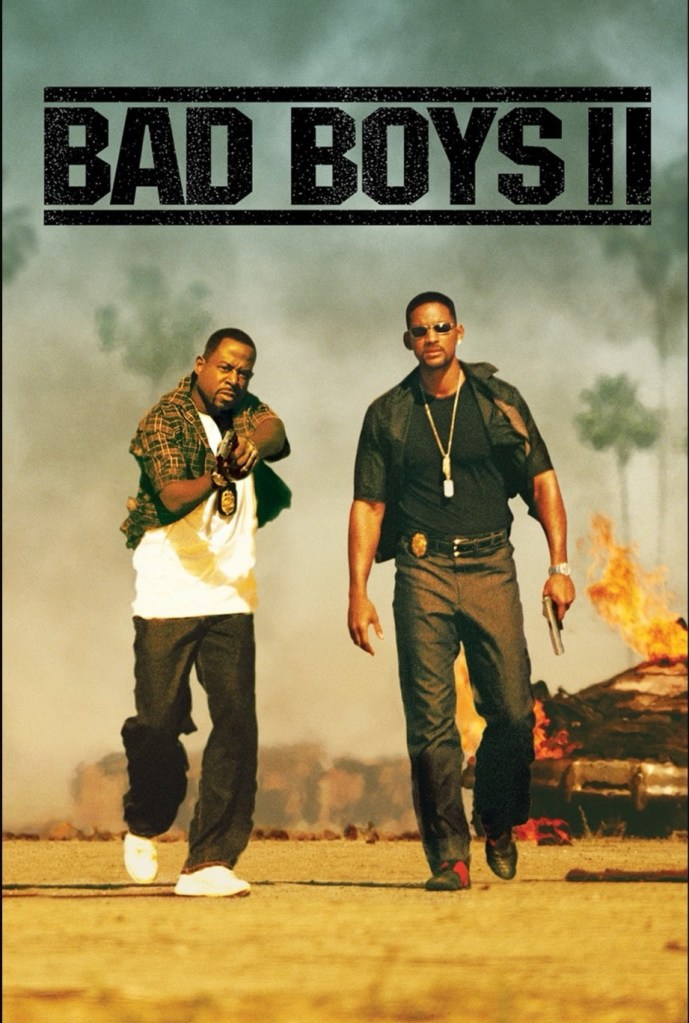
Directed by: Michael Bay
Written by: Ron Shelton and Jerry Stahl
Starring: Will Smith, Martin Lawrence, Jordi Mollà, Gabrielle Union, Peter Stormare, Theresa Randle and Joe Pantoliano
Music by: Trevor Rabin
Rated: 15
Eight years after defeating Fouchet, Miami detectives Mike Lowrey (Will Smith) and Marcus Burnett (Martin Lawrence)’s friendship comes to a rift when Mike accidentally injures Marcus during a raid on a KKK clan. However, things get even crazier when, during a mission to take down the new head of Miami’s drug cartel, Hector Juan Carlos “Johnny” Tapia (Jordi Mollà), they discover that Marcus’s younger sister, Syd (Gabrielle Union), is an undercover agent working to take Tapia down as well…
Even more explosive, violent and as swear-filled as you can expect from the first Bad Boys sequel, Bad Boys II may offer a lot of the comedic moments that comes naturally for Will Smith and Martin Lawrence’s double cop comedy. However, this film gets far too complicated to follow, even for causal viewers looking for mindless action, especially in how the war on drugs in Miami, unlike the first film’s tight simplicity in how it motivated the characters, is just used as an excuse for endless exposition.
Although this film shares a lot of similarities with another 2003 action sequel, 2 Fast 2 Furious, what make this version of two cops taking on Miami’s criminal underworld not work, is the overlong running time and endless subplots that go nowhere.
Overall, Bad Boys II should entertain both fans of this franchise and lovers of Michael Bay’s love of mayhem. However, this mission for the titular bad boys, needed a lot more planning before execution.
Rating: 2.5/5
The Bourne Supremacy (2004)
Directed by: Paul Greengrass
Written by: Tony Gilroy
Starring: Matt Damon, Franka Potente, Brian Cox, Julia Stiles, Gabriel Mann, Karl Urban and Joan Allen
Music by: John Powell
Rated: 12
Two years after escaping the CIA’s eyes after learning the truth about Treadstone, former assassin Jason Bourne (Matt Damon) is dragged back into action after Marie Kreutz (Franka Potente), is murdered by an unknown killer. As Bourne struggles to cope with this loss, he is soon forced to make an alliance with the new director of the CIA, Pamela Landy (Joan Allen), in order to find the killer and learn more about more secrets from his past…
The one where the cinematography came in last place in favour of absolutely everything else, The Bourne Supremacy would tell a much more darker and more interesting story about the inner workings of assassin operations and the consequences of vengeance. Matt Damon gives a much stronger performance and Tony Giilroy (the future writer of Rogue One and Andor), knows how to make this type of story work, even though this was the point where the franchise would completely ignore the Robert Ludlum books.
While the likes of Brian Cox, Julia Stiles (who would get even more screentime) and Gabriel Mann from the first film are great to see again and Joan Allen and Karl Urban make for interesting new characters, the film almost completely falls apart due to the infamous shakey cam cinematography, starting off one of the worst trends in action cinema history, that would take a decade to get rid of.
Overall, despite kicking off a terrible filmmaking trend, The Bourne Supremacy is a very well made sequel and takes Jason Bourne in interesting new directions, that would inspire another assassin with the same first letters in his name and surname, to reinvent itself.
Rating: 4/5
The Sound of Music (1965)
Directed by: Robert Wise
Written by: Ernest Lehman
Starring: Julie Andrews, Christopher Plummer, Richard Haydn, Peggy Wood, Charmian Carr and Eleanor Parker
Music by: Richard Rogers
Rated: U
In late 1930s Austria, a young nun-in-training named Maria (Julie Andrews) is sent to become the new governess for Captain Georg Von Trapp (Christopher Plummer)’s seven children. As Maria bonds with the children and helps out with their problems, an idea for the kids to become a singing group, Maria falling in love with the Captain and the shadow of the Nazis across Austria, will soon lead the family to make a difficult choice…
Widely regarded as one of the best examples of the last days of the Golden Age of Hollywood musicals and the CinemaScope widescreen epics, Robert Wise’s 1965 film adaptation of the last musical collaboration between songwriters Richard Rodgers and Oscar Hammerstein II, The Sound of Music, is still a joyful and heartwarming film for the whole family.
Despite the last forty minutes feeling like a completely different film due to the real life events regarding the Von Trapp Singers’s role in history, which does slightly slow the pacing down, the songs, dancing and the cementing of Julie Andrews as a major star, even after Mary Poppins, is why people still keep coming back to this.
With incredible cinematography, a much more emotional subtle message about how beauty and innocence can be ruined by facist beliefs, and career best performances from Andrews, Christopher Plummer, Eleanor Parker and Peggy Wood, the hills will always be alive with The Sound of Music, until the end of time…
Rating: 5/5
Die Hard 2 (1990)
Directed by: Renny Harlin
Written by: Steven E. de Souza and Doug Richardson
Starring: Bruce Willis, Bonnie Bedelia, William Sadler, William Atherton, Franco Nero, John Amos and Reginald VelJohnson
Music by: Michael Kamen
Rated: 15
Two years after his heroic victory over Hans Gruber, John McClane (Bruce Willis), is now a successful LAPD lieutenant, and in a happy relationship with his wife, Holly (Bonnie Bedelia) again. While waiting for her at Washington Dulles Airport, John discovers that a traitorous U.S. Colonel named William Stuart (William Sadler), is planning to hijack the airport and hold numerous planes in the air hostage, to set free a captured dictator , General Esperanza (Franco Nero). It is just another crazy Christmas Eve for McClane, as he sets out to save the day again..
While lacking some of the originality that made the original film such a memorable holiday tradition, Die Hard 2 does manage to be another action-packed good time with Bruce Willis’s John McClane, only set in an airport this time. Even though some of the optical effects could have been improved, especially with some of the model shots, Director Renny Harlin and the late composer, Michael Kamen, combine their skills to make the new action sequences, as tense and memorable as the first film’s famous scenes.
Even though they lack the memorable moments that the late Alan Rickman brought to Hans in the first film, both William Sadler and Franco Nero make an impression as the most sadistic villains of the franchise, with the infamous plane crash scene being incredibly heartbreaking and terrifying. While Bruce himself does sometimes look unmotivated in some scenes, his iconic humour and his likeable personality, makes him worth rooting for again.
Overall, despite the similarities to the original film, Die Hard 2 is another action-packed fight fest for lovers of action cinema and for anyone looking for a Christmas movie with as much violence as the first Die Hard.
Rating: 3.5/5
The Rocky Horror Picture Show (1975)
Directed by: Jim Sharman
Written by: Richard O’Brien and Jim Sharman
Starring: Tim Curry, Susan Sarandon, Barry Bostwick, Richard O’Brien, Nell Campbell, Patricia Quinn, Meat Loaf, Peter Hinwood, Jonathan Adams and Charles Grey
Music by: Richard Hartley
Rated: 12A
In the confines of a science fiction double feature, and as told by a mysterious Criminologist (Charles Grey), a young couple named Brad Majors (Barry Bostwick) and Janet Weiss (Susan Sarandon), end up taking refuge in a castle after getting a flat tire. It just so happens that this particular castle is hosting one of the wildest parties on Earth, attended by a group of humanoid aliens, and hosted by Dr. Frank-N-Furter (Tim Curry), their transvestite mad scientist leader. As he invites them to witness the birth of his latest invention, a huge blond man named Rocky Horror (Peter Hinwood), Brad and Janet’s strange night is set to get even more insane…
Considered as the crown jewel of cult cinema and having one of the best ever debuts for a new actor in film history, The Rocky Horror Picture Show, adapted from Richard O’Brien’s 1973 West End masterpiece , The Rocky Horror Show, is a fantastic parody and celebration of the wackiness of 1950s science fiction films, Hammer Horror and of the rising 1970s U.K. punk movement.
From the opening number with the iconic disembodied lips setting the mood, to Tim Curry’s fantastic performance as the lovable villain Dr. Frank, The Rocky Horror Picture Show, while being a gleefully horny take on Frankenstein with human aliens, also is a wonderful celebration of LGBTQ culture and audience participation, that seeing this with a crowd is like a rite of passage for anyone interested in how much this film changed the world.
Overall, there is nothing else left to say about The Rocky Horror Picture Show, a film with fantastic songs, unapologetic love of all things weird and horny and Tim Curry’s fantastic debut as one of the most lovable actors of all time, aside from “Let’s do the Time Warp Again!”
Rating: 5/5
Billy Elliot (2000)
Directed by: Stephen Daldry
Written by: Lee Hall
Starring: Jamie Bell, Julie Walters, Gary Lewis, Jamie Draven and Adam Cooper
Music by: Stephen Warbeck
Rated: 15
During the mid-1980s, the small town of Everington, County Durham, is the site of one of the largest miner’s strikes that are taking place across the United Kingdom, against the Margaret Thatcher government, for their role in the closures. In the midst of this, one of the town’s most prominent miners, Jackie Elliot (Gary Lewis), has a younger son named Billy (Jamie Bell and Adam Cooper as an adult), who secretly loves dancing. While taking secret ballet lessons from the sarcastic Sandra Wilkinson (Julie Walters), Billy soon gets a major opportunity, which clashes with his father and older brother, Tony (Jamie Draven), and their desires for the rights of the miners…
While The Full Monty started the British subgenre of films about taboo subjects, which also have powerful subtext behind them, which was further developed in Calender Girls and Kinky Boots, it was Stephen Daldry’s Billy Elliot, that stood apart from the rest, thanks to the incredible characters and powerful, bittersweet story about an older generation having to come to terms with ending their way of life, so that a newer method can survive.
Jamie Bell is absolutely fantastic in his debut performance as the flawed, yet dedicated Billy, Julie Walters steals the show as his kind, yet brutally honest dance teacher, and while they can come across as unlikable at first, both Gary Lewis and Jamie Draven do manage to get across the tragedy of Billy’s working-class father and older brother trying in vain to save their way of life, which will relate to more and more people as time goes on.
Overall, while some side characters could have been developed further, Billy Elliot is a fantastic and emotional film that deserves the love it has got, especially with the West End musical that Elton John produced, half a decade later.
Rating: 4.5/5
Aliens (1986)
Directed by: James Cameron
Written by: James Cameron
Starring: Sigourney Weaver, Michael Biehn, Paul Raiser, Lance Henriksen, Carrie Henn and Bill Paxton
Music by: James Horner
Rated: 15
After finally being rescued from her escape shuttle, the lone survivor of the Nostromo incident, Ellen Ripley (Sigourney Weaver) learns that fifty-seven years have passed on Earth since she left, and that the planet where the xenomorph came from, now renamed “LV-462”, has become the site of human terraforming communities. When the corporation that sent her on her mission, Weyland-Yutani, loses contact with the planet colony, Ripley is hired to go back, along with an army of colonial marine soldiers, in order to investigate…
Aliens may lack the horror vibes and the atmosphere of Ridley Scott’s film with its change in sub-genre from sci-fi horror to sci-fi action/adventure, but The Terminator director, James Cameron, brings his traits such as themes of maternal love, present in the sweet relationship between Ripley and Newt (Carrie Henn), his blue-tinged cinematography, which helps in giving the abandoned colony cities strong vibes to the future ruled by Skynet in his previous film, and the amazing use of practical effects coming from the late Stan Winston, such as the massive Alien Queen puppet and the impressive blend of miniatures and matte paintings, to one of the best sequels in history.
With a cast of memorable marines such as Michael Biehn’s likeable Hicks, Lance Henrikson’s much more heroic android Bishop, and the late great Bill Paxton as “Game Over, man!” Hudson, Aliens is an overall triumph in scope, action and practical production design, even if Syd Mead does lack some of the creepiness of H.R. Giger’s nightmarish designs. However, the Alien Queen is still a massive accomplishment in monster creation in cinema and Sigourney Weaver’s award nominated performance is something to celebrate, especially for a sci-fi/action/horror film.
Rating: 4.5/5
GoldenEye (1995)
Directed by: Martin Campbell
Written by: Jeffrey Caine and Bruce Feirstein
Starring: Pierce Brosnan, Sean Bean, Izabella Scorupco, Famke Janssen, Joe Don Baker, Robbie Coltrane, Samantha Bond and Judi Dench
Music by: Éric Serra
Rated: 15
The world has changed for MI6 Commander James Bond (Pierce Bronsan). The Cold War has ended, the Soviet Union has been disbanded and as the years have passed, MI6 has recently got a new, sterner and female M (Judi Dench) who has even less tolerance for 007’s womanising ways. However, when Alec Trevelyan (Sean Bean),a former 006 Agent is revealed to be masterminding an elaborate plot involving a satellite named GoldenEye, Bond and his new allies Natalya Simonova (Izabella Scorupco) and CIA Agent Jack Wade (Joe Don Baker) must find a way to stop Trevelyan from causing London’s extinction…
An extremely long delay between Licence to Kill and this film was caused by MGM’s legal troubles at the time, the departures and deaths of franchise veterans Richard Maibaum and Maurice Binder, the fact that there were barely any Ian Fleming books to adapt and most importantly, the reason for Bond’s existence was no longer relevant. The fall of the Berlin Wall and the end of the Cold War made people wonder if James Bond was finally going to hang up his suit and gun for good, along with changing attitudes in the 1990s towards gender representation making his womaniser ways look really outdated.
However, Albert Broccoli’s daughter, Barbara Broccoli was appointed as the new head of EON Productions after her father retired due to illness and she decided that 007 would be worth saving after all! Although Timothy Dalton would not return due to him refusing a multiple picture contract, Pierce Bronsan would finally become the next Bond and while GoldenEye would go back to some of the goofiness of the Roger Moore era, it does have the best balance in tone in this era of the franchise.
Beloved by people who grew up in the 1990s decade for reintroducing 007 to a new generation of fans and the amazing tie-in video game that even outlasted the film in terms of popularity, GoldenEye is one of the most satisfying experiences of the franchise, even if the CGI looks terrible.
Judi Dench instantly makes her mark in her debut as the best M ever put on screen, Pierce Bronson makes for a good combination of Sean Connery’s dangerous side and Timothy Dalton’s compassion and although some of the twists are very easy to guess, both Sean Bean and Famke Janssen make for highly entertaining villains.
Overall, GoldenEye may have caused the Bronson era to peak just as it began, but its great action, memorable characters and great attempts at bringing Bond into today’s culture makes it one of the franchise’s most iconic films!
Rating: 4/5
American Psycho (2000)

Directed by: Mary Harron
Written by: Mary Harron and Guinevere Turner
Starring: Christian Bale, Willem Dafoe, Jared Leto, Josh Lucas, Samantha Mathis, Matt Ross, Bill Sage, Chloë Sevigny, Cara Seymour, Justin Theroux, Guinevere Turner and Reese Witherspoon
Music by: John Cale
Rated: 18
By day, Patrick Bateman (Christian Bale) works as a New York City investment banker, while attending numerous social eve. By night, he murders anyone who he runs into. When Patrick gets extremely annoyed by one of his fellow bankers, Paul Allen (Jared Leto) and beats him to death with an axe, his mind slowly starts to unravel, as both everyone and his environment, drives him completely insane…
Before he played Batman in Christopher Nolan’s Dark Knight trilogy, Christian Bale finally managed to break out of his boyish image that was present in Empire of the Sun and Disney’s Pocahontas, with this dark, twisted adaptation of Bret Easton Ellis’s already controversial novel, American Psycho.
Combining the slasher subgenre with the real cruelty of 1980s capitalism from the Wall Street films, Mary Harron doesn’t shy away from depicting the cruelty of Bale’s Patrick Bateman, while also making him incredibly funny at the same time, thanks to Bale’s insane performance. While the decision to have this adaptation also have themes of heightened reality and the idea of Bateman being an unreliable narrator, does lead to some confusion regarding the plot twists, the story still manages to be as brutally satirical as the source material.
Overall, with great supporting roles from Willem Dafoe, Reece Witherspoon, Josh Lucas and Justin Theroux, Bale’s intense leading performance and a tragically more believable story compared to how the world is nowadays, American Psycho is a completely different type of horror film that is difficult to forget about, no matter how, much like how Bateman tries to cover for crimes, one tries to hide it.
Rating: 4/5
The Witch (2015)
Directed by: Robert Eggers
Written by: Robert Eggers
Starring: Anya Taylor-Joy, Ralph Ineson, Kate Dickie, Harvey Scrimshaw, Ellie Grainger, Lucas Dawson and Bathsheba Garnett
Music by: Mark Korvan
Rated: 15
In seventeenth century Colonial America, a family finds themselves banished from their Puritan community and are forced to fend for themselves. When their eldest child, Thomasin (Anya Taylor-Joy) accidentally loses her youngest sibling to a mysterious witch (Bathsheba Garnett), her mother, Katherine (Kate Dickie), starts losing her sanity and accuses her of witchcraft…
Having one of the best directional debuts for modern horror cinema in years, Robert Eggers, best known for his atmospheric gothic style in films such as The Lighthouse and The Northman, brings his childhood fascination with 1600s witchcraft accounts and accusations, to life with one of the best horror films of the 2010s.
Setting the mood with the use of no lighting apart from candles and the old English language that the characters speak,Eggers’s film uses the natural environment and the gothic atmosphere to create a chilling tale about how superstation and extremism can tear families apart, with the ultimate downfall of this family being ironically more chilling than anything the titular character does, apart from eating a baby and killing innocent animals.
In her debut mainstream performance, Anya Taylor-Joy is fantastic as the young woman who doesn’t belong in a world dominated by Puritans, while Ralph Ineson and Kate Dickie also get fine moments as parents driven to do terrible things due to their religious beliefs. As a skill that he would build to higher success later, Eggers’s production design of 1600s America and attention to detail in every prop on screen, is stunning to look at.
Overall, despite definitely not being for everyone, The Witch is a chilling and powerful fable that would establish Eggers as one of the best auteur directors in the horror genre.
Rating: 4.5/5
Corpse Bride (2005)

Directed by: Mike Johnson and Tim Burton
Written by: John August, Caroline Thompson and Pamela Pettler
Starring: Johnny Depp, Helena Bonham Carter, Emily Watson, Tracey Ullman, Paul Whitehouse, Joanna Lumley, Albert Finney, Michael Gough, Richard E. Grant, Enn Reital, Jane Horrocks, Deep Roy, Danny Elfman and Christopher Lee
Music by: Danny Elfman
Rated: PG
Set in a miserable Victorian era town, Victor Van Dort (Johnny Depp) is an awkward young man, who is set to be married to Victoria Everglot (Emily Watson), the abused daughter of the socially high (yet bankrupt) aristocrats, Lady and Lord Everglot (Joanna Lumley and Albert Finney). When Victor accidentally screws up the rehearsal, he is sent to practice his vows alone, where, after placing his ring on a branch, he finally says his vows correctly. However, the “branch” turns out to be the finger of Emily (Helena Bonham Carter), an undead young woman dressed as a bride, who takes Victor to the lively Land of the Dead to celebrate their “marriage”…
While not as iconic as the much more well known The Nightmare Before Christmas, Corpse Bride, based on a 17th century Jewish folktale that was introduced to Tim Burton as the former was wrapping up production, is notable as the director’s first animated film that he actually directed (along with Mike Johnson), rather than just produced or wrote.
As expected from a Tim Burton film, the production design and the Gothic look of this fable are absolutely stunning to witness. The contrasting differences between the dreary land of the living and the party-filled land of the dead, is a clear love letter to Burton’s ideas about the beauty of death and being an outcast. Even though some details of the third act could have been given more time to develop, the love story between the three leads is bittersweet, yet beautifully told, with Emily, the titular Corpse Bride, being one of the best characters that Helena Bonham Carter has ever done.
Overall, with horror movie in-jokes (Love that Peter Lorre maggot), great Danny Elfman songs and a touching story about the meaning of love, Corpse Bride is one of Tim Burton’s most underrated and beautifully told films.
Rating: 4/5
The Fog (1980)
Directed by: John Carpenter
Written by: John Carpenter and Debra Hill
Starring: Adrienne Barbeau, Tom Atikins, Jamie Lee Curtis, Janet Leigh, John Houseman and Hal Holbrook
Music by: John Carpenter
Rated: 15
The population of Antonio Bay, a small coastal town in North California, including radio broadcaster, Stevie Wayne (Adrienne Barbeau), are preparing to celebrate the upcoming centennial events. However, when town priest, Father Patrick Malone (Hal Holbrook) discovers a dark truth about Antonio Bay’s founders, a mysterious fog starts enveloping the place, where the ghosts of vengeful sailors, are seeking revenge on the descendants of the people who betrayed them…
Coming out two years after John Carpenter’s third film, Halloween, established him into the mainstream as the inventor of the slasher subgenre, The Fog is a much more atmospheric and slower paced ghost story, despite coming from nearly the entire crew from Halloween, including Jamie Lee Curtis in a supporting role.
Although Carpenter himself has not been fond of this film in the years that followed its release, the creepy atmosphere and premise of a town being isolated from the world by a fog bank, is used to full effect in the cinematography and pacing alone. Adrienne Barbeau’s reporter mother, John Houseman’s memorable sailor narrator and Hal Holbrook’s guilt-ridden priest, all manage to be interesting characters for this type of horror film, although Jamie Lee Curtis’s character does admittedly feel like stunt casting, as apart from one moment in the final act, she doesn’t have a lot to do.
Overall, while not one of Carpenter’s best films, The Fog is one of his most underrated works, thanks to the creepy tone, chilling message on the sins of the past and Carpenter’s score, being as memorable as his Halloween material.
Rating: 3.5/5
Constantine (2005)

Directed by: Francis Lawrence
Written by: Kevin Brodbin and Frank Cappello
Starring: Keanu Reeves, Rachel Weisz, Shia LaBeouf, Tilda Swinton, Pruitt Taylor Vince, Djimon Hounsou, Gavin Rossdale and Peter Stormare
Music by: Brian Tyler and Klaus Badelt
Rated: 15
John Constantine (Keanu Reeves) is a smoking, sarcastic and powerful super-powered exorcist who is trying to capture as many demons as possible, to redeem himself for damnation to hell after a failed suicide attempt in his youth. When a young detective named Angela Dodson (Rachel Weisz), finds herself being stalked by demons while investigating the death of her twin sister (Also Rachel Weisz), Constantine soon discovers that the circumstances are part of a secret plot from Lucifer’s own family…
While not doing well critically at the time of its release due to being completely overshadowed by the other 2005 DC Comics film, Batman Begins from Christopher Nolan, Constantine has slowly managed to gain a cult following large enough, that as of 2025, a direct sequel is being planned to join Matt Reeves’s The Batman series, as part of DC’s non-Cinematic Universe projects, DC Elseworlds.
Based on a character from Alan Moore’s run on The Saga of Swamp Thing comics, before getting his own series, Hellblazer in 1988, John Constantine’s first big screen adaptation may lack his iconic Liverpool accent and wit, but Keanu does manage to make this take on one of DC’s lesser-known characters, memorable in his own right.
While the CGI is sometimes laughably bad, even by mid-2000s standards, Constantine’s worldbuilding of secret societies of human angels and demons living among humanity, and John’s methods of dispatching his enemies, makes this stand out from the likes of The Matrix or Underworld films. This is especially seen with the memorable supporting cast, including Tilda Swinton and Peter Stormare’s unique takes on Gabriel and Lucifer, and Djimon Hounsou’s scene-stealing neutral supernatural bartender , Papa Midnite, though the less said about Shia LaBeouf‘s cab driver, the better.
Overall, despite some odd moments, poor effects and a slow pace, Constantine is one of DC’s most underrated film adaptations, which offers a world of warring angels and demons, far removed from the tone of traditional superhero cinema.
Rating: 3.5/5
ParaNorman (2012)
Directed by: Sam Fell and Chris Butler
Written by: Chris Butler
Starring: Kodi Smit-McPhee, Tucker Albrizzi, Anna Kendrick, Casey Affleck, Christopher Mintz-Plasse, Leslie Mann, Jeff Garlin, Elaine Stritch, Bernard Hill, Jodelle Ferland, Tempestt Bledsoe, Alex Borstein and John Goodman
Music by: Jon Brion
Rated: PG
Norman Babcock (Kodi Smit-McPhee) is a young outcast from the witch-obsessed town of Blithe Hallow, who has an ability to speak with the dead. When his recently deceased Uncle Prenderghast (John Goodman) gives him a task to stop a witch’s curse, Norman, along with his best friend Neil (Tucker Albrizzi), his older sister Courtney (Anna Kendrick), Neil’s older brother, Mitch (Casey Affleck) and the dim-witted bully, Alvin (Christopher Mintz-Plasse) find their whole town overrun by zombies….
Although it may not be as fresh as Coraline in terms of character depth, ParaNorman is still a visual treat to look at, with a surprising twist warning of the dangers of prejudice, but not in the way you may expect with the zombies.
The throwbacks to 1980s slasher films, such as being set in a town out of touch from the rest of the world and having a cast mostly consisting of teenage stereotypes are mostly a hit or miss. Although there are funny moments that come from this such as the Purtian zombie’s reaction to the modern world or a majority of the townsfolk being represented as even more crazy and bloodthirsty than the zombies, a lot of the humour is very low-brow and mostly goes for the east route of stereotype humor, although both the characters of Mitch and Alvin get their moments from time to time.
What this film does better than Coraline is having a much more stylized art style and character designs of the humans ,due to technological advancements in stop-motion and 3D printing allowing for more complex facial expressions for the characters with the most impressive being Aggie the witch, presented in all three animation forms, with stop-motion for her body, CGI for her hair and hand-drawn animation for her lighting bolts.
Overall ParaNorman is brilliant to look at, has a strong message about the consequences of prejudice and wonderful stop-motion animation to keep horror fans entertained for weeks.
Rating: 4/5
Casper (1995)
Directed by: Brad Silberling
Written by: Sherri Stoner and Deanna Oliver
Starring: Malachi Pearson, Christina Ricci, Bill Pullman, Cathy Moriarty, Joe Nipote, Joe Alaskey, Brad Garrett and Eric Idle
Music by: James Horner
Rated: 12A
Casper (Malachi Pearson) a friendly young ghost, lives a lonely life in a mansion with his three mischievous uncle poltergeists , Stretch (Joe Nipote), Stinkie (Joe Alaskey) and Fatso (Brad Garrett). When the angry heiress Carrigan Crittenden (Cathy Moriarty) and her assistant Dibs (Eric Idle), hire paranormal expert Dr. Harvey (Bill Pullman) to get the ghosts out of the mansion, Casper falls in love with his teenage daughter Kat (Christina Ricci), but soon discovers that there might be a way to bring him back to life again….
Notable as being the first motion picture to have a CGI character as one of the main characters in a live-action film, Casper the Friendly Ghost’s big screen debut goes back to the tone of the characters more emotional roots found in the original 1940’s animated shorts. It also addresses the overlooked fact that Casper is a ghost of a deceased child and finally addresses questions people have had about the character when he was alive, which is where the film is at its strongest.
The CGI on Casper and the Ghostly Trio looks really impressive in 1995 standards and the cartoony character animation on these characters was the right decision for the Trio’s antics and how limited CGI was at the time.
However, aside from Bill Pullman, the always funny Eric Idle and the voice acting of the Ghosts themselves, a lot of the acting coming from the likes of Christina Ricci, Cathy Moriarty and the kids from the school is just terrible and although funny sometimes, a lot of the Trio’s pop-culture gags can get really annoying.
Overall, Casper is a sweet, emotional film that captures the heart of the Friendly Ghost’s heyday, if one is willing to overlook some of the acting and lines like, “I feel like Oprah on hiatus!”
Rating: 3.5/5
A Nightmare on Elm Street 2: Freddy’s Revenge (1985)
Directed by: Jack Sholder
Written by: David Chaskin
Starring: Mark Patton, Kim Myers, Robert Rusler, Clu Gulager, Hope Lange and Robert Englund
Music by: Christopher Young
Rated: 18
Five years after his attacks on Nancy Thompson, Freddy Krueger (Robert Englund), has started appearing again in the dreams of the newest resident of Nancy’s former home, a teenage boy named Jesse Walsh (Mark Patton). However, not being content with just killing him in his sleep, Freddy has a much more elaborate plan to return to life, possessing him and to ruin his life as much as possible…
Originally planned as a homage to Rosemary’s Baby which would have involved Freddy Krueger trying to uses his powers to control an unborn baby, which ended up reserved for the fifth film after a pregnant higher up at New Line Cinema found it too insensitive, the first sequel to Wes Craven’s 1984 horror classic, A Nightmare on Elm Street, ended up going with a simple possession story, albeit with loads of homoerotic subtext, including a scene where Freddy whips a nude victim in a shower, before killing him.
While this caused lifelong tension between writer David Chaskin and star Mark Patton (who himself is gay) due to how the film ousted the latter during the heights of the mid to late 1980s misinformation campaign that wrongly connected LGBTQ lifestyles with the AIDS epidemic, Freddy’s Revenge has since found new popularity with the LGBTQ community, even if it is still a downgrade when compared to the dream like atmosphere of the first film.
Overall, despite having some clever ideas, interesting subtext and Robert Englund still being great as ever, A Nightmare on Elm Street 2: Freddy’s Revenge loses a lot of the chilling atmosphere that Craven brought to the original, with a few scenes, such as the infamous exploding birds, come across as way too silly, even for a franchise with an evil scarecrow-like man with magic dream powers and knife fingers.
Rating: 3/5
Scream (1996)

Directed by: Wes Craven
Written by: Kevin Williamson
Starring: Neve Campbell, David Arquette, Courteney Cox, Matthew Lillard, Rose McGowan, Skeet Ulrich and Drew Barrymore
Music by: Marco Beltrami
Rated: 18
A day after the brutal murder of Casey Becker (Drew Barrymore), a teenage girl who in any other horror film, would have survived, a mysterious murderer dressed as the Grim Reaper targets Sidney Prescott (Neve Campbell), a grieving young woman mourning the loss of her mother. Although she and most of her friends are aware of horror film cliches, Ghostface (Roger L. Jackson) seems to possess the same level of knowledge to outwit them at every turn…
By the 1990s, aside from 1994’s New Nightmare, the diminishing qualities of the numerous sequels to the likes of Halloween, Friday the 13th and Nightmare on Elm Street was close to getting the slasher genre shut down forever. However, the late Wes Craven finally decided to make them more interesting again with Scream, a darkly funny, yet emotionally intense new take on the slasher formula.
Shocking the audience by killing a character who would have definitely have survived in any other horror film in the first ten minutes, Scream stands out as one of Wes Craven’s best films by perfectly balancing comedy and horror, with the infamous rules scene being one of the best scenes to introduce everyone to slasher cliches as stated by Jamie Kennedy’s Randy.
Overall, with a great script, characters that defy the tropes by adding more dimensions to their archetypes such as the stoners, the tabloid reporters, the teachers and the victims being a lot more sympathetic than in other horror films and Marco Beltrami’s excellent debut score, Scream is one of the best films of the 1990s and deserves its status as one of the best slashers ever made.
Rating: 5/5
Back to the Future (1985)

Directed by: Robert Zemeckis
Written by: Robert Zemeckis and Bob Gale
Starring: Michael J. Fox, Christopher Lloyd, Lea Thompson, Crispin Glover and Thomas F. Wilson
Music by: Alan Silvestri
Rated: PG
Marty McFly (Michael J. Fox) a cool, but kind-hearted Hill Valley teenager spends his time trying to live life in 1985 while helping his best friend, an eccentric scientist named Doc Brown (Christopher Lloyd) with his experiments. Shortly after witnessing Doc get murdered by a group of terrorists, Marty escapes with the help of Brown’s greatest invention, a time-travelling DeLorean that takes him back three decades to 1955. Being stranded there due to a lack of plutonium to charge up the powerless car, Marty is forced to team up with a younger version of Doc to work on a plan to get him back to his own time. But things get even more complicated when Marty accidentally screws up the fateful meeting between his parents Lorraine (Lea Thompson) and George (Crispin Glover), and the former ends up falling for her own son…
Starting off as an idea from writer Bob Gale about the possibilities of whether a time-travelling teenager would end up befriending younger versions of his own parents, what would eventually become one of the best time-travel films alongside Bill and Ted’s Excellent Adventure, went through a period of rejections from Columbia, Disney and 20th Century Fox and having to reshoot a majority of the film due to the unpopularity of Marty’s actor at the time, Eric Stoltz, with Michael J. Fox taking over, before finally becoming the highest grossing film of 1985.
Despite the complications of the time-travel sub-genre being almost impossible to be believable in it’s plot, the use of comedy in the writing and the skill of the excellent Michael J. Fox and Christopher Lloyd is what makes Back to the Future so enjoyable to watch. Bob Gale’s intentions of the premise of a young man befriending his young parents is taken in the right direction in spite of it’s creepy premise.
Overall, with Alan Silvestri’s best score in his entire career, fantastic use of comedy and it’s heartwarming story, Back to the Future is an incredible thrill-ride that will never be replicated in terms of clever ideas and use of comedy.
Rating: 5/5
Heat (1995)
Directed by: Michael Mann
Written by: Michael Mann
Starring: Al Pacino, Robert De Niro, Tom Sizemore, Diane Venora, Amy Brenneman, Ashley Judd, Mykelti Williamson, Wes Studi, Ted Levine, Jon Voight and Val Kilmer
Music by: Elliot Goldenthal
Rated: 15
In the streets of Los Angeles, two troubled men, a professional criminal named Neil McCauley (Robert De Niro), that is having trouble controlling his crew, and LAPD Robbery Homicide Detective Lt. Vincent Hanna (Al Pacino), who has a strained relationship with his family, are brought together via the latter’s investigation of the former’s crimes. As McCauley plans one final heist, a fateful meeting between him and Hanna at a coffee shop, will set off a rivalry, that will end with certain death…
Based on the true story of the fall of American gangster Neil McCauley and how Detective Chuck Adamson managed to finally bring him down in 1964, Heat started life as a television pilot called L.A. Takedown in 1989, before being remade by the film’s director, Michael Mann as a feature film.
Although this film has been regarded as a modern classic in the crime genre, with Christopher Nolan using the depiction of Los Angeles in this film as a major influence on The Dark Knight’s Gotham City, Heat’s numerous subplots and lack of depth for anyone who isn’t Al Pacino, Robert De Niro or the late Val Kilmer, does prevent this reviewer from enjoying it fully.
However, the action sequences, including the iconic scenes of gun battles between criminals and the police and the tragic arcs of both Pacino’s Lt. Hanna and De Niro’s take on McCauley, does manage to make this film worth checking out.
Overall, while this reviewer does appreciate what Heat did for action and crime cinema, and is looking forward to what Michael Mann is planning for the long delayed sequel, the incredibly slow pace, huge amount of characters that add unnecessary bloating and the lack of focus, does prevent it from being anything more than good.
Rating: 3/5
Kill Bill: The Whole Bloody Affair (2006)
Directed by: Quentin Tarantino
Written by: Quentin Tarantino
Starring: Uma Thurman, Lucy Liu, Vivica A. Fox, Daryl Hannah, Michael Madsen, Sonny Chiba, Julie Dreyfus, Chiaki Kuriyama, Gordon Liu, Michael Parks and David Carradine
Music by: RZA and Robert Rodriguez
Rated: 18
A former assassin known only as “The Bride” (Uma Thurman) is attacked at her wedding by her former boss and lover, Bill (David Carradine) and a group of killers called the Deadly Viper Assassination Squad. With her child seemingly dead and her life ruined, The Bride sets out to kill the likes of O-Ren Ishii (Lucy Liu), Vernita Green (Vivica A. Fox), Budd (Michael Madsen) and the one-eyed Elle Driver (Daryl Hannah), with the help of her trusty samurai skills. But Bill has a surprise of his own…
Released as two films between 2003 and 2004, Kill Bill was a welcome change of pace in Quentin Tarantino’s filmography at that point in time. After directing Reservoir Dogs, Pulp Fiction and Jackie Brown, three crime genre films that relied heavily on dialogue, it was refreshing to see a samurai epic that was less reliant on snappy lines, yet still felt like a Tarantino film thanks to the use of fast editing and a soundtrack of existing songs, that are essential tropes of Tarantino.
Speaking of the samurai setting, this aspect is most prevalent during the first part in which several setpieces including the brawl at O-Ren’s lair and the new anime sequence, fully embraces the strengths of Japanese cinema. Although the second part doesn’t match the visual heights of the first part, it’s still really impressive on its own terms.
Each assassin antagonist has depth and motivation in their arcs and their relationship to the Bride. Uma Thurman’s acting is at it’s strongest here and her arc revolving around her motivations and lust for revenge makes her one of Tarantino’s greatest protagonists.
Overall, Kill Bill is a visual masterpiece and is a great example as both a pure showcase of Quentin Tarantino’s skill at adapting his filmmaking style, and of his love of martial arts cinema.
Rating: 5/5
The Holiday (2006)
Directed by: Nancy Meyers
Written by: Nancy Meyers
Starring: Cameron Diaz, Kate Winslet, Jude Law, Jack Black, Eli Wallach, Edward Burns and Rufus Sewell
Music by: Hans Zimmer
Rated: 12A
Two women from opposite sides of the Atlantic Ocean, a British columnist for The Daily Telegraph, Iris Simpkins (Kate Winslet) and an American owner of a production company that designs film trailers, Amanda Woods (Cameron Diaz), are both having troubles with breakups and misery in their lives. After learning about a home exchange holiday program, Iris and Amanda set out to Los Angeles and the Surrey countryside, to spend two weeks living in the other’s home. While there, Amanda falls in love with Iris’s brother, Graham (Jude Law), and Iris strikes up a friendship with Amanda’s elderly neighbour, Arthur Abbot (Eli Wallach), and after learning about his past as one of the writers of the Golden Age of Hollywood, sets out to arrange a special tribute to his work, while also bonding with a friendly composer named Miles Dumont (Jack Black).
While not as well regarded as Love Actually, due to its very long running time of two hours and fifteen minutes, a very slow pace for a romantic comedy, The Holiday is a much smaller and more interesting look into the themes of love, even if it can get incredibly sappy at times.
The strongest aspect of this film is Iris’s character arc, where, through her friendship with a golden age Hollywood writer, she learns to take control of her life after being introduced to how well written characters from these films solved their problems. Being a lover of film, this does hit a positive note for me, and although Cameron Diaz’s arc of a city girl learning to love a simple life in the countryside, does head into very predictable directions, the running gag of Hal Douglas’s trailer voice getting into her head, always gets huge laughs from me.
Both Jude Law and an against type Jack Black are both fantastic as well, with the latter’s previous work in School of Rock and Peter Jackson’s King Kong, getting full credit to making his role as a friendly, yet mature adult whose romance arc with Iris gets the sweetest moments.
Overall, while being a bit too long for a rom-com and having a slight abrupt ending, The Holiday is, personally to me, a much more sweet and wholesome Christmas romance when compared to Love Actually, and doesn’t rely on the clichés that often sink these types of films, to get its point across.
Rating: 4/5
 Chaz’s Cinematic Odyssey