Marvel Films from 20th Century Fox (2000-2024)
X-Men (2000)

Although the X-Men, a group of people with supernatural abilities fighting against human prejudice and radicals within their own ranks, had been around since 1963 as created by Stan Lee and Jack Kirby, it wasn’t until the highly successful 1992 animated series from Fox Kids, that made the likes of Wolverine, Magneto, Professor X and Jean Grey, household names on par with Superman, Batman and Spider-Man. While attempts has been made to bring Marvel’s “Merry Mutants” to the big screen since the 1980s, from Kathryn Bigelow, James Cameron and Joss Whedon, it wasn’t until the success of Blade that made 20th Century Fox reconsider the potential of reviving the superhero subgenre, and, along with Sam Raimi’s Spider-Man, the first X-Men film is credited for kickstarting the superhero domination of twenty first century cinema.
Since the dawn of mankind, a secret section of humanity, ones that have additional abilities when compared to regular humans, have come to be known as “mutants” and are constantly mistreated by bigotry and violence. In modern times, the mistreatment of mutant kind has gotten so bad, that they have divided themselves into two groups under two of the most powerful members of their kind. The X-Men, led by Professor Charles Xavier (Patrick Stewart), seek to protect and educate humans to accept them, while The Brotherhood, led by Xavier’s former ally, Magneto (Ian McKellen), seek to eliminate humanity in revenge. When two recently discovered mutants, a young girl named Marie/Rogue (Anna Paquin) with the ability to absorb life forces, and a gruff ageless brawler named Logan/Wolverine (Hugh Jackman) who has retractable metal claws and a healing factor, catch the attention of Magneto, it is up for the likes of Cyclops (James Marsden), Jean Grey (Famke Janssen) and Storm (Halle Berry), to help them find their purpose in life,,,
In spite of the huge deviations from the source material, including the infamous black leather outfits, downplaying important characters such as Cyclops and Sabretooth (Tyler Mane) and the character of Rogue being her, but in name only when compared to the animated counterpart, the latter does make sense for the story’s theme of isolation, given that her ability to suck the life out of everything she touches.
The rest of the casting, aside from a bored looking James Marsden and a completely miscast Halle Berry as Storm, is absolutely spot on. Both Patrick Stewart and Ian McKellen are absolutely show-stealing as two bitter enemies with opposing viewpoints, but deep down, they deeply respect and care for each other. However, it is Hugh Jackman’s Wolverine that is truly the best thing about this film. While a lot less crass than his animated counterpart, Hugh manages to get the gruff, violent and funny aspects of this Canadian brawler with metal claws, completely right, leading to an incredibly powerful career.
Overall, X-Men has not aged well in a lot of places, especially given the limited scope, the dated CGI effects and the awkward rushed script. However, as one of the most important films in the history of Super Hero cinema, it deserves a lot of respect for its legacy alone, even if the sex offender director doesn’t deserve any recognition.Although the X-Men, a group of people with supernatural abilities fighting against human prejudice and radicals within their own ranks, had been around since 1963 as created by Stan Lee and Jack Kirby, it wasn’t until the highly successful 1992 animated series from Fox Kids, that made the likes of Wolverine, Magneto, Professor X and Jean Grey, household names on par with Superman, Batman and Spider-Man. While attempts has been made to bring Marvel’s “Merry Mutants” to the big screen since the 1980s, from Kathryn Bigelow, James Cameron and Joss Whedon, it wasn’t until the success of Blade that made 20th Century Fox reconsider the potential of reviving the superhero subgenre, and, along with Sam Raimi’s Spider-Man, the first X-Men film is credited for kickstarting the superhero domination of twenty first century cinema.
In spite of the huge deviations from the source material, including the infamous black leather outfits, downplaying important characters such as Cyclops and Sabretooth (Tyler Mane) and the character of Rogue being her, but in name only when compared to the animated counterpart, the latter does make sense for the story’s theme of isolation, given that her ability to suck the life out of everything she touches.
The rest of the casting, aside from a bored looking James Marsden and a completely miscast Halle Berry as Storm, is absolutely spot on. Both Patrick Stewart and Ian McKellen are absolutely show-stealing as two bitter enemies with opposing viewpoints, but deep down, they deeply respect and care for each other. However, it is Hugh Jackman’s Wolverine that is truly the best thing about this film. While a lot less crass than his animated counterpart, Hugh manages to get the gruff, violent and funny aspects of this Canadian brawler with metal claws, completely right, leading to an incredibly powerful career.
Overall, X-Men has not aged well in a lot of places, especially given the limited scope, the dated CGI effects and the awkward rushed script. However, as one of the most important films in the history of Super Hero cinema, it deserves a lot of respect for its legacy alone, even if the sex offender director doesn’t deserve any recognition.
Daredevil (2003)
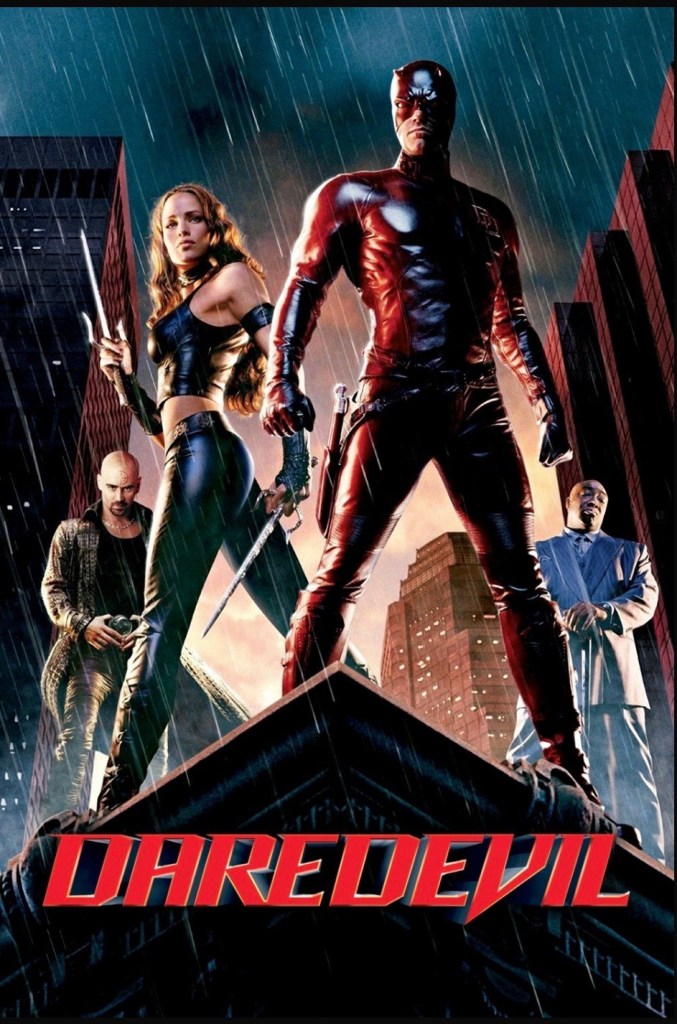
In the streets of Hell’s Kitchen, New York, Matt Murdock (Ben Affleck), a lawyer blinded in an accident during his childhood, defends the innocent in the courtroom by day and punishes the guilty by night, as the masked vigilante, Daredevil. When a mysterious woman named Elektra (Jennifer Garner) enters his life, Matt becomes torn between pursuing her or committing to his duty, but the actions of criminal overlord, The Kingpin (Michael Clarke Duncan) and a deadly assassin named Bullseye (Colin Farrell), threatens to destroy all they hold dear…
Created in 1964 by Stan Lee and Bill Everett as a way of giving blind people their own superhero, Daredevil quickly became one of Marvel’s most popular characters, appearing in numerous 90s animated shows and the 1989 television film, The Trail of the Incredible Hulk as a guest character. For his first big screen debut, it took a few trade offs between 20th Century Fox and Sony Pictures, before one was finally greenlit in response to the success of Sam Raimi’s Spider-Man.
While most of its best elements can be found in the superior director’s cut, Daredevil is still not that bad as an origin story for the Man without Fear. While the second act’s depiction of the Elektra and Bullseye Sagas from the source material is very rushed, the actors, such as Ben Affleck’s Matt Murdock, Jon Favreau’s entertaining Foggy Nelson and the late Michael Clarke Duncan’s take on the Kingpin, are all really great, with the best actor being Colin Farrell’s insane performance as Bullseye.
While the CGI is still not very good even by early 2000s standards, Daredevil, even if it has been completely overshadowed by the 2015 Netflix series reboot, is an overall, underrated experience that doesn’t deserve the fate it got. The spin-off, on the other hand…
X2: X-Men United (2003)
When an attack on the White House by an unknown mutant (Alan Cumming), reignites hate against mutantkind from humans, the President of the United States (Cotter Smith), hires the scientist, William Stryker (Brian Cox), to launch a raid on Professor Xavier (Patrick Stewart) and his School for Gifted Youngsters. With Xavier and Cyclops (James Marsden) kidnapped, the remaining X-Men split into two groups: Storm (Halle Berry) and Jean Grey (Famke Janssen) will find the mutant, identified as Nightcrawler, while Wolverine (Hugh Jackman), Rogue (Anna Paquin), Iceman (Shawn Ashmore) and Pyro (Aaron Stanford), will make an alliance with Magneto (Ian McKellen) and Mystique (Rebecca Romijn), to rescue the kidnapped mutants. However, things get complicated when it is revealed that Stryker was the one responsible for Wolverine’s creation…
Upping the ante in every single way from the first film, X2: X-Men United may still lack some of the intensity and epic scope of the animated series’s best moments. However, for this more realism-based approach to Marvel’s Merry Mutants, it does work in greater expansion of the themes of genocide and prejudice, which is greatly shown with William Stryker being one of the cruelest and most sadistic characters of this series, in spite of him not having mutant abilities, with Brain Cox giving such a great performance.
While it is disappointing that Patrick Stewart doesn’t get a lot to do, being a prisoner for a majority of the running time, it is almost comical how badly treated Cyclops was treated in these films. Thankfully, the rest of the cast, old and new, all get their chance to shine. Hugh Jackman’s Wolverine finally comes to terms with his origins, Rogue and Iceman, the latter a minor character in the first film, get really interesting arcs, especially in the heartbreaking scenes where he gets rejected by his parents for being a mutant and Ian McKellen and Rebecca Romijn make for an entertaining double act as Magneto and Mystique. Alan Cumming makes for a great Nightcrawler and Aaron Stanford’s Pyro gets an interesting arc of him falling for Magneto’s philosophy.
Overall, while still having some questionable CGI and some questionable treatment of certain characters, X2: X-Men United is a fantastic improvement on the first film’s limited scope and uses it’s more human story to its full advantage, in showing how far humans and mutants are willing to go.
Elektra (2005)
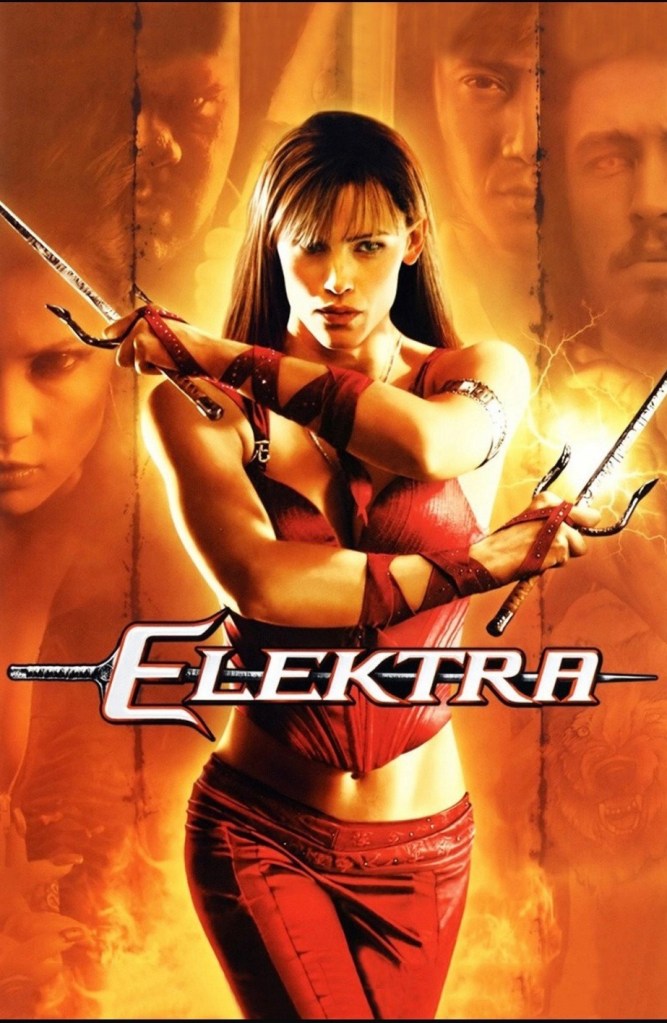
Elektra Natchios (Jennifer Garner), previously Daredevil’s girlfriend and thought to have been assassinated by Bullseye, has been brought back to life, by a martial arts master named Stick (Terence Stamp). While she has flunked in his training and now works as a bounty hunter, Elektra has a change of heart when she ends up befriending the targets of her next assignment, a girl named Abby Miller (Kirsten Prout) and her father, Mark (Goran Višnjić). This action soon attracts the attention of her employers, an evil organisation of ninjas known as “The Hand”…
Regarded, along with DC’s Catwoman, as one of the reasons why female led superhero films have had such a hard time taking off until 2017’s Wonder Woman, this spin-off of 20th Century Fox’s 2002 Daredevil film, had a lot of potential in bringing Frank Miller’s iconic take on Elektra in his 1980s stories, to life. While Jennifer Garner, returning from the 2002 film, is trying her best with the material given to her, Elektra’s poor script and pacing issues are some of the worst of the 2000s era of superhero cinema.
In spite of the obvious whitewashing, Terence Stamp does a good job as fan-favourite character, Stick, even if his connection to Daredevil is not present. The same can not be said for Kristen Prout and Goran Višnjić‘s bland supporting roles, and despite the fact that the Hand is one of the most popular villain groups in Marvel history, the likes of Cary-Hiroyuki Tagawa, are given almost nothing to do, despite Will Yun Lee’s Kirigi, making for a potentially interesting character.
Overall, Elektra is slightly saved from being labelled as one of the worst comic book films ever made, by the performances and some of the action. Everything else, is a cut too far, even when done with ninja weapons.
Fantastic Four (2005)
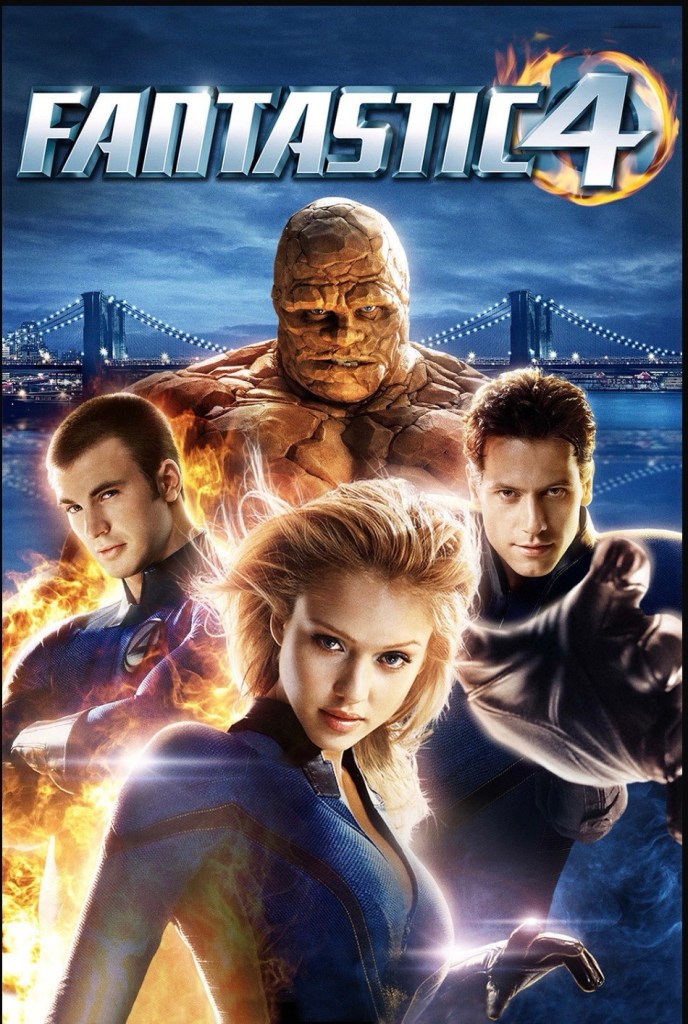
Dr. Reed Richards (Ioan Gruffudd) and his best friend and bodyguard, Ben Grimm (Michael Chiklis) convince the uptight CEO of Vom Doom Industries, Victor (Julian McMahon), to fund an ambitious mission to his space station and study cosmic energy, While on the station however, a freak accident with cosmic rays, transforms Reed, Ben. Victor’s chief researcher, Sue Storm (Jessica Alba), and her little brother, the reckless Johnny Storm (Chris Evans), into superpowered beings. With Reed gaining the ability to stretch his body, Sue getting invisibility, Johnny becoming a living Human Torch and Ben permanently becoming a giant grumpy rock monster, the former tries to find a cure for them. This is made more complicated when the public starts treating them as superheroes and Victor slowly starts to transform himself into a ruthless steel monster named Doctor Doom…
After the infamous 1994 Roger Corman film that never got officially released, and a few false starts from Chris Columbus and Raja Gosnell, a film adaptation of Marvel’s 1961 team that started their domination in this decade as one of the best superhero companies in the world, The Fantastic Four, was finally released in 2005. While this would start a cycle of a new version of the team being released in every decade, Tim Story’s Fantastic Four would be successful enough to have a sequel, and a cult following.
This film may not be as unbearable as the 2015 disaster due it being really entertaining at times, the impressive prosthetics of The Thing looks amazing and a great score from X-Men veteran, John Ottman. While their performances are mixed, all four of the main characters do manage to capture the dysfunctional, but caring family aspects that Stan Lee and Jack Kirby envisioned, with Michael Chiklis being a perfect match for the grumpy, yet lovable Thing and an absolutely hilarious in hindsight Chris Evans as the immature Human Torch.
But Tim Story’s adaptation of Marvel’s first Golden Age heroes is short from being “fantastic” due to an unfocused narrative that should have been a bit longer, and the terrible depiction of Marvel’s most infamous villain, Doctor Doom.
X-Men: The Last Stand (2006)
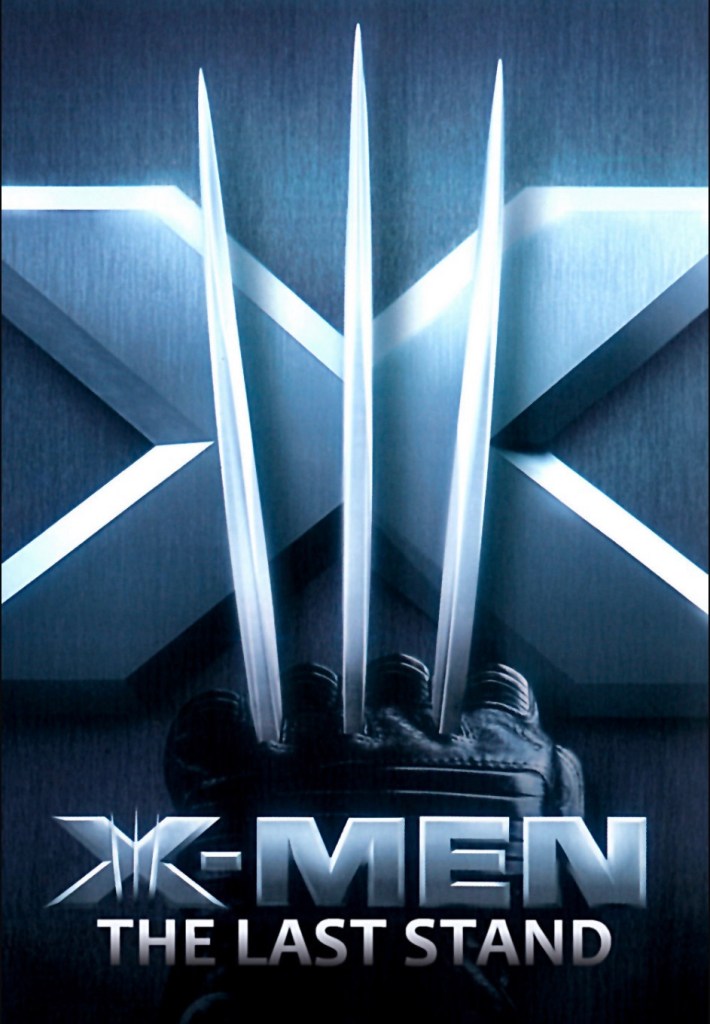
When a cure is discovered for the mutant gene, Magneto (Ian McKellen) uses this as the ultimate justification for declaring war on humanity. Things get worse when Jean Grey (Famke Janssen), previously thought to be dead, is reborn as the deadly Phoenix, kills Cyclops (James Marsden) and even Charles Xavier (Patrick Stewart) and joins Magneto against the likes of Wolverine (Hugh Jackman), Storm (Halle Berry), Beast (Kelsey Grammer) and Iceman (Shawn Ashmore) to destroy the cure…
Despite having great acting and some really impressive sequences, X-Men: The Last Stand is a rushed mess of an ending to the first X-Men trilogy. With Sex Offender director number one, Bryan Singer, leaving to do Superman Returns for Warner Bros and DC, The Last Stand was left in the hands of Sex Offender number two, Brett Ratner, which made the production very toxic for everyone working on it.
Kelsey Grammer is perfectly cast as Beast and the final battle sequence between Wolverine and Storm’s X-Men and Magneto’s even larger Brotherhood looks amazing. However, the decision to cram both Chris Claremont’s The Dark Phoenix Saga and Joss Whedon’s Gifted into a 104-minute narrative, result in one of the most disjointed comic book films ever made. While Famke Janssen does a great job in depicting the insanity of the Phoenix persona, she is given barely any room to breathe alongside Magneto’s aims, and other characters such as Rogue (Anna Paquin) and Mystique (Rebecca Romijn), are given really anti-climactic send-offs.
Overall, X-Men: The Last Stand is a disappointing end for the original trilogy, despite its positives.
Fantastic Four: Rise of the Silver Surfer (2007)
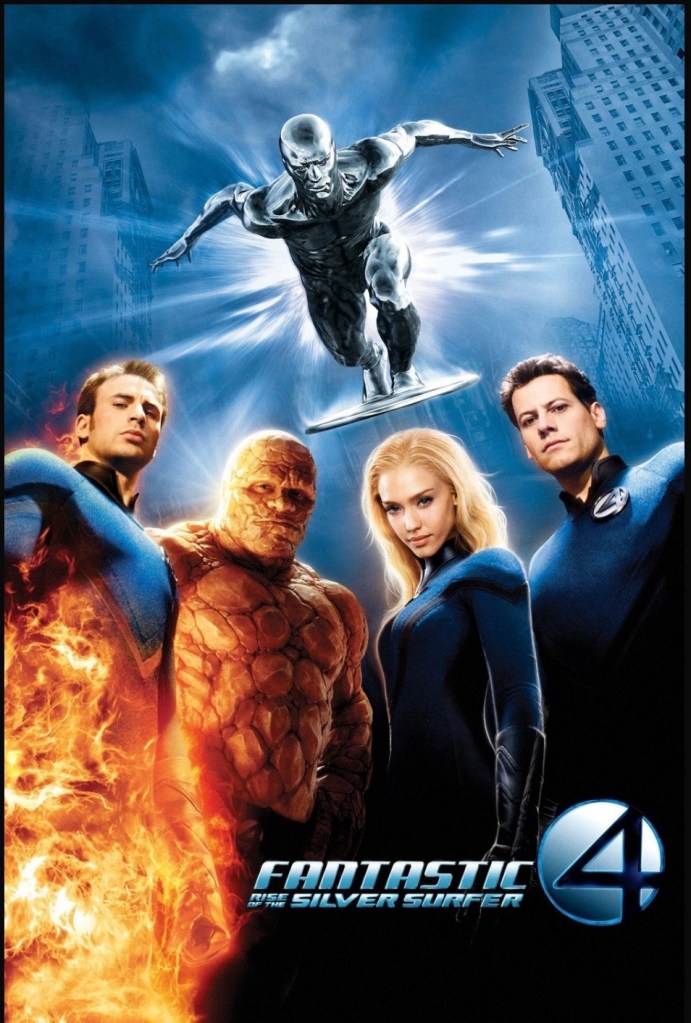
Reed Richards/ Mr. Fantastic (Ioan Gruffudd) and Sue Storm/ Invisible Woman (Jessica Alba) of the Fantastic Four, are finally getting married. However, when a mysterious humanoid alien named The Silver Surfer (Doug Jones and voiced by Laurence Fishburne), arrives on Earth to seek a suitable planet for his master to devour, Reed and Sue, along with Johnny Storm/ Human Torch (Chris Evans) and Ben Grimm/ The Thing (Michael Chiklis), must delay their event in order to save the world, even if it also means forming an alliance with their enemy, Doctor Doom (Julian McMahon)….
Much like its 2005 predecessor, Fantastic Four: Rise of the Silver Surfer does successfully manage to get the main characters’s personalities absolutely right. Much to the original intentions of creators Stan Lee and Jack Kirby by creating a group of superheroes that act like a real family, much of the film’s enjoyment comes from seeing Reed, Sue, Johnny and Ben work off each other, with Chris Evans’s Johnny and Michael Chiklis’s Ben, getting the funniest moments in their love-hate relationship.
However, much like the last Marvel film that 20th Century Fox had released at the time, 2006’s X-Men: The Last Stand, Rise of the Silver Surfer does a poor job in recreating the spic scope of Jack Kirby’s Galactus Trilogy, like how Brett Ratner failed in adapting The Dark Pheonix Saga for Last Stand, to the length it needed to make it work, even in a more realistic setting. Doug Jones and Laurence Fishburne do a good job in bringing Silver Surfer to life both physically and vocally, but the decision to depict Galactus, one of the most popular Marvel villains in the source material, as a living cloud, will anger a lot of fans.
Overall, Fantastic Four: Rise of the Silver Surfer does have its moments of charm, but it gets a little too ambitious for its own limitations as a feature film.
X-Men Origins: Wolverine (2009)
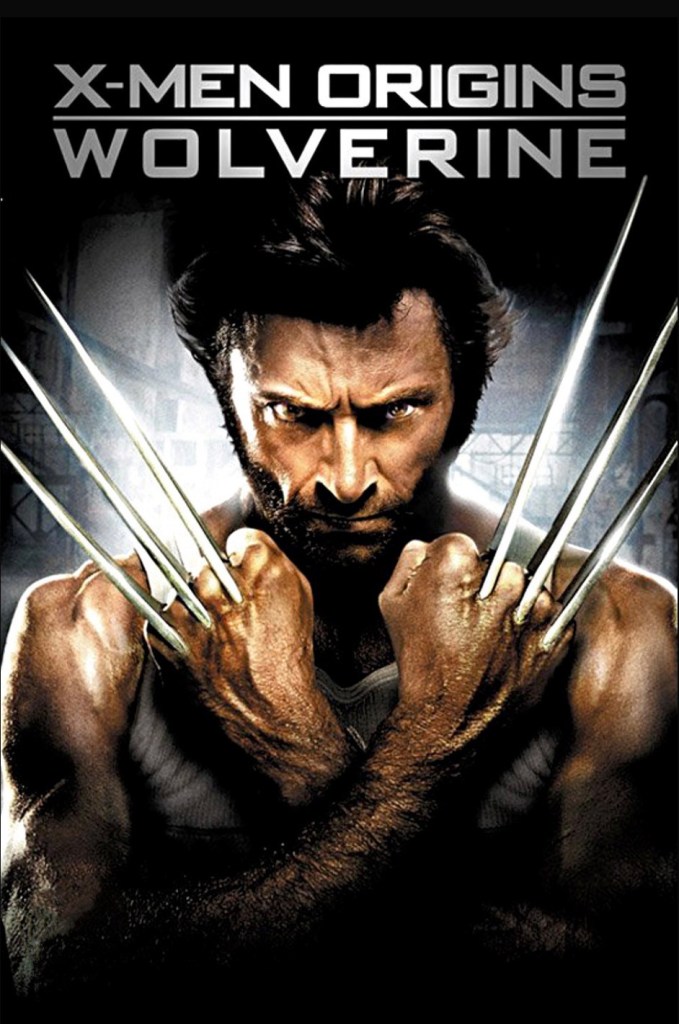
For the last hundred years, James Howlett (Hugh Jackman), the mutant who would later be known as Wolverine, and his half-brother, Victor Creed (Liev Schreiber), the future Sabretooth, have fought together in numerous wars, until they are hired by Major William Stryker (Danny Huston) to participate in the Weapon X program. Although James, renaming himself “Logan”, leaves the group after seeing how violent they are, he ends up going to war with Victor six years later, when the latter seemingly murders his wife, Kayla Silverfox (Lynne Collins). However, after he lets Stryker give him an adamantium skeleton via experimentation, Logan soon learns that Stryker has darker intentions for him and for mutant-kind…
Originally planned as the first of an anthology series of stand-alone spin-offs focusing on different characters, X-Men Origins: Wolverine ended up being the franchise’s worst reviewed entry at the time, and its slight underperformance at the box office due to both bad word of mouth and an infamous leak of a work print copy going onto the Internet, led to the franchise to be heavily reworked for the next film.
While there is potential for a gritty origin story for the most popular character of the X-Men franchise at that time, Wolverine, aside from a few good scenes, Origins is too rushed to be a satisfying story about the rise of everyone’s favourite Canadian bub. Disregarding the massive continuity errors with the previous films, especially the forced cameos of a younger Cyclops (Tim Pocock) and Charles Xaiver (Patrick Stewart), and the infamous treatment of Deadpool (Ryan Reynolds), the rushed steps of Logan’s childhood, wartime adventures, missions with Team X, and his eventual fusion with adamantium, all could have made solid films on their own, instead of being rushed in this one hour and forty-five minute film.
Overall, while some aspects are fine such as Gambit (Taylor Kitsch) finally making an appearance in live-action and Harry Gregson-William’s emotional score, X-Men Origins: Wolverine is a failed experiment in every way.
X-Men: First Class (2011)
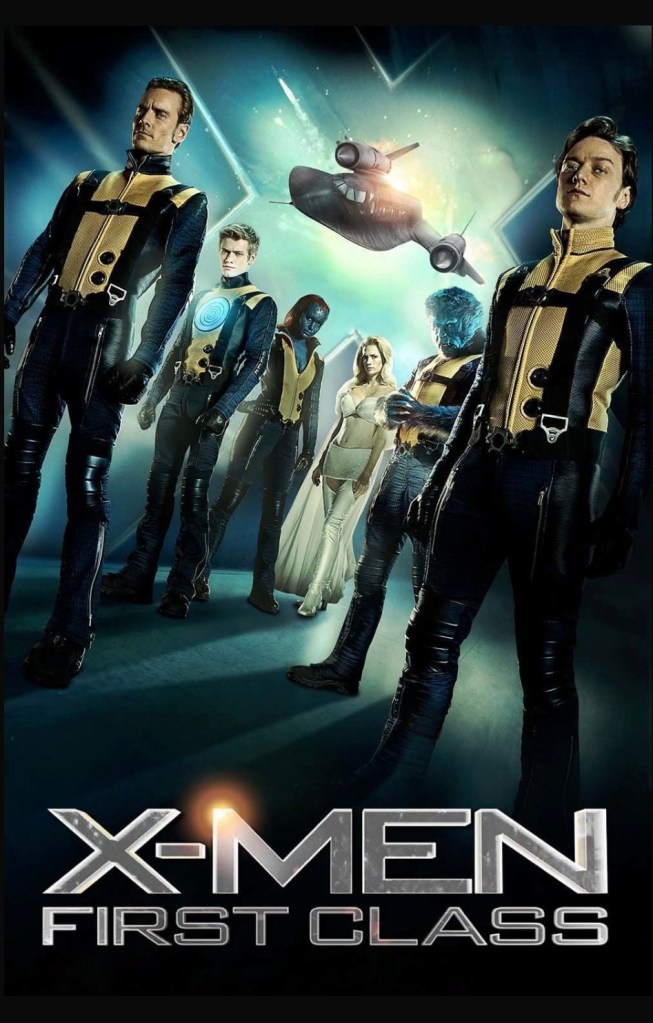
In 1962, thirty-eight years before the events of X-Men, a young mutant telepath named Charles Xavier (James McAvoy) and his adopted sister, Raven (Jennifer Lawrence), are hired by Moria MacTaggert (Rose Byrne) to track down the Hellfire Club, a group of high-class mutants who are plotting to cause World War III. After encountering another mutant named Erik (Michael Fassbender), who has his own personal grudge against the Club’s leader, Sebastian Shaw (Kevin Bacon), a desperate search for other mutants begins as the birth of both the “X-Men” and the “Brotherhood” starts to take place…
Coming the closest to capturing the spirit of the Stan Lee and Jack Kirby comics in terms of visuals alone, X-Men: First Class uses the 1962 setting to its full advantage in this amazing prequel/reboot. Taking inspiration from the early Sean Connery James Bond films, from the set design to the look of the Hellfire Club,including the likes of Emma Frost (January Jones). Matthew Vaughn’s clever use of the Cuban Missile Crisis as one of the major plot-points is an excellent way of staying true to the franchise’s themes of the dangers of paranoia and intolerance, especially in the intense third act.
Despite Nicholas Hoult’s odd take on Beast with the costume looking not as convincing as Kelsey Grammer’s from X-Men: The Last Stand, both James McAvoy and Michael Fassbender are amazing as younger versions of Professor X and Magneto, with the latter giving one of the best performances in his entire career.
Overall, despite knowing how this rebooted film series ended up repeating the same mistakes of the original films, X-Men: First Class is still one of the best examples of how to turn a franchise around, with its unique direction and amazing acting from both McAvoy and Fassbender.
The Wolverine (2013)
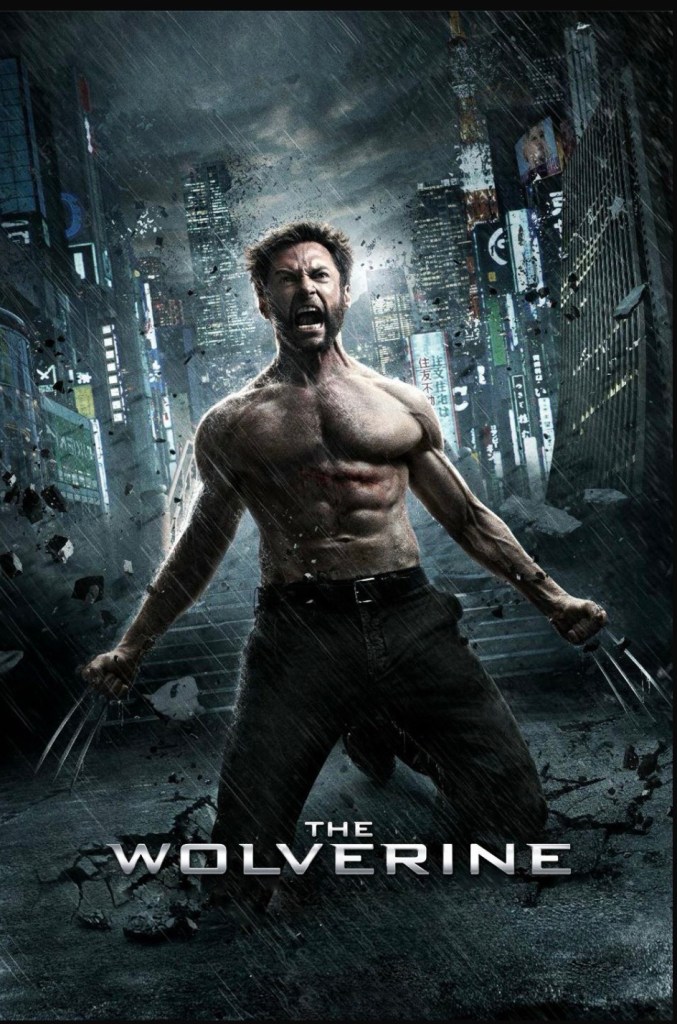
Sometime after the events of X-Men: The Last Stand, Logan/ Wolverine (Hugh Jackman) has retreated from the X-Men to live life as a hermit in the Yukon Mountains, due to his guilt over the death of Jean Grey (Famke Janssen). When Yukio (Rila Fukushima), a Japanese mutant with the ability to foresee deaths, tells Logan that his presence is requested in Tokyo, Japan to say goodbye to Yashida (Haruhiko Yamanouchi and Ken Yamamura as a young man), the elderly head of Japan’s Yashida Industries who was once saved by him during World War II, Wolverine soon finds himself caught up in a battle with the Yakuza, a mysterious mutant named Viper (Svetlana Khodchenkova) and a hulking living suit of armour known as the Silver Samurai, in order to protect Yashida’s granddaughter, Moriko (Tao Okamoto), even when he starts to lose his healing factor…
Before he sent off the character of Logan/ Wolverine with 2017’s excellent Logan, director James Mangold was hired to replace original choice, Darren Aronofsky, to adapt Chris Claremont and Frank Miller’s 1982 Wolverine miniseries, in which everyone’s favourite Canadian mutant went to Japan to find inner peace, as the next solo film for Hugh Jackman’s take on the character.
Even though the last twenty minutes involving the Silver Samurai and a completely silly plot twist does sour the tone that the film was trying to create, The Wolverine is still a massive improvement when compared to 2009’s X-Men Origins: Wolverine. The idea of Logan having to fight without his healing factor does raise the stakes as he struggles to protect his new companions, and Hugh Jackman once again, does bring new depths to him, especially with his arc revolving around his actions in 2006’s The Last Stand. Rila Fukushima makes for a fun new addition as Yukio, even if her future reading abilities could have been explored more.
Overall, with a refreshing change of environment to Japan taking visual inspiration from samurai films, great acting and an interesting character study on the consequences of immortality, The Wolverine is a very unique film, that, like X-Men: First Class before it, isn’t afraid to bring new tones and genres for 20th Century Fox’s X-Men films.
X-Men: Days of Future Past (2014)
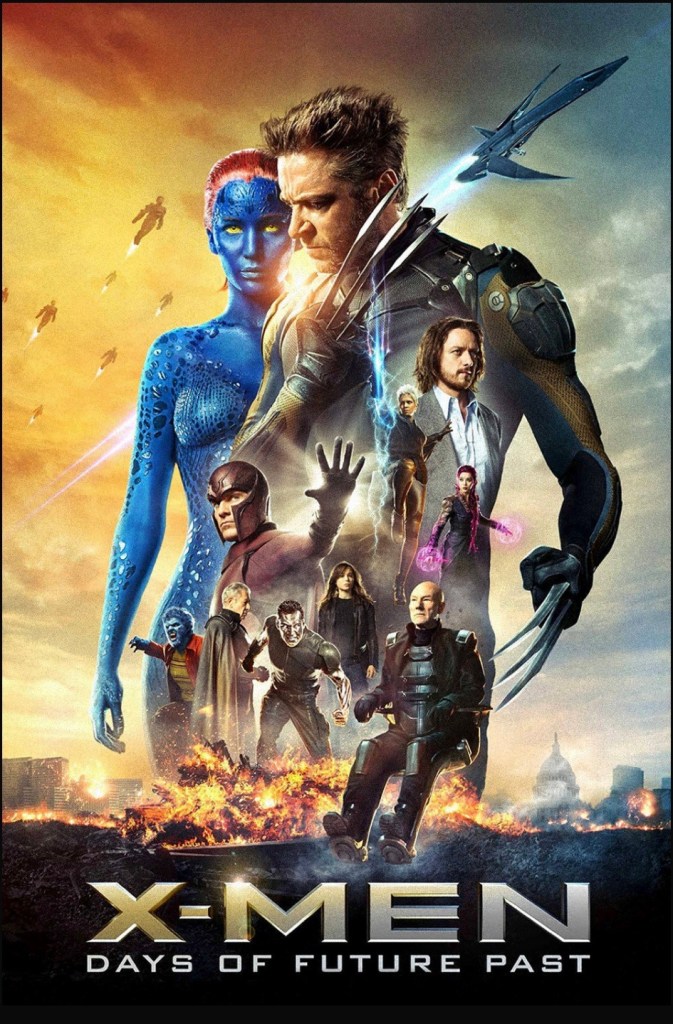
In the far future of 2023, humanity and mutantkind have been almost wiped out by the robotic Sentinels. Both Professor X (Patrick Stewart) and Magneto (Ian McKellen) have gathered the last of the X-Men to undertake a dangerous mission. With the use of Kitty Pryde’s (Elliot Page) power’s, Wolverine (Hugh Jackman) must use time-travel to go back to 1973 and convince the younger versions of Xavier (James McAvoy) and Magneto (Michael Fassbender), to prevent Mystique (Jennifer Lawrence) from assassinating the inventor of the Sentinels, Bolivar Trask (Peter Dinklage), and causing the dystopian future as a result…
Although this attempt to right the wrongs of both X-Men: The Last Stand and X-Men Origins: Wolverine by removing them via time travel may not have gone entirely according to plan, regarding the likes of X-Men: Apocalypse and Dark Pheonix, this emotional (but loose) adaptation of Chris Claremont’s Days of Future Past arc, is still one of the best non-MCU superhero films out there and is X-Men‘s highest peak.
The returning cast from both the original trilogy and X-Men: First Class give some of their best performances, with James McAvoy stealing the show from Hugh Jackman for once, and the scene with him talking with his older self stands out as one of the best scenes in any superhero film.
Much like how X:Men: First Class used the setting of the Cuban Missle crisis to set Xavier and Magneto on their paths as leaders of the X-Men and the Brotherhood, X:Men: Days of Future Past uses the 1970s setting to strengthen the themes of the small overcoming the numerous in regards to Magneto’s motivations and Bolivar’s arc. Although much has been said about Jennifer Lawerence in recent years, her performance as Mystique isn’t that annoying in here.
Overall, X-Men: Days of Future Past may not have launched a grand new era of X-Men films as intended. ( The Deadpool films and Logan stand as their own seperate things.) But this beautiful story about reclaiming hope and one’s humanity is still worth watching.
Fantastic Four (2015)
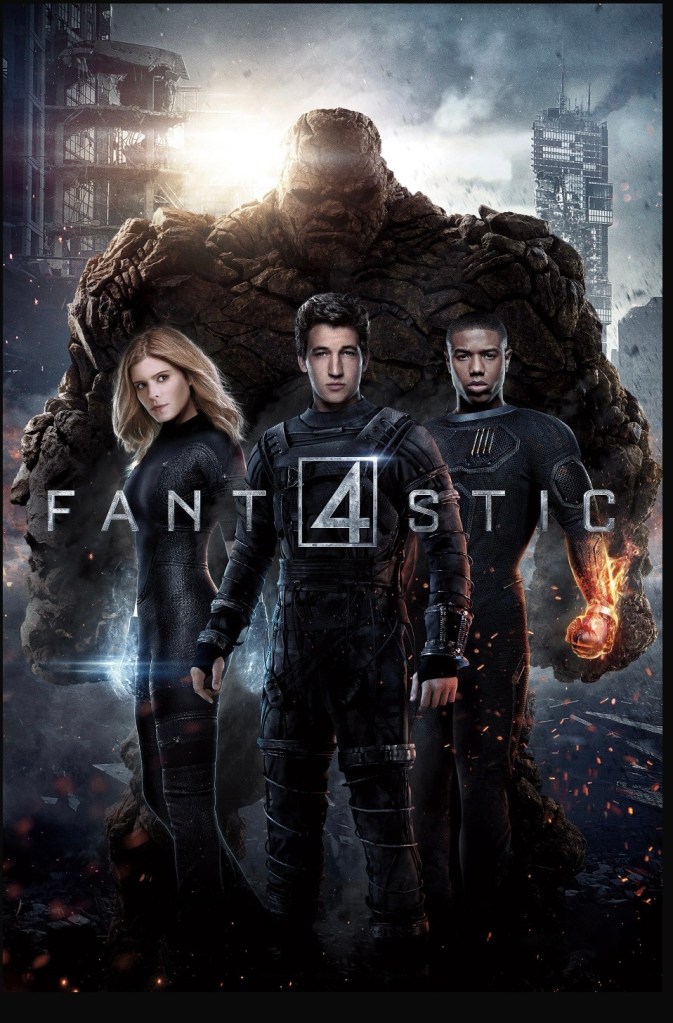
After being hired by the Baxter foundation to work on designing an inter-dimensional portal to another planet, Reed Richards (Miles Teller), Ben Grimm (Jamie Bell), Sue Storm (Kate Mara) and Johnny Storm (Michael B. Jordan) are accidentally transformed into beings with superpowers during their first mission. While the government wants to use them to perform shady missions, another problem arises when another person, Victor Von Doom (Toby Kebbell) thought to have died in the mission, reemerges with sinister motivations…
Despite the failures of the last three attempts to bring Marvel’s first family to the big screen, Josh Trank’s attempts to mix David Cronenberg style Body Horror and Steven Spielberg style fantasy throughout the first hour, does at first seem interesting. Aside from Kebbell’s awful representation of one of the most iconic Marvel Villians of all time, most of the acting is OK to good times, with Jamie Bell and Michael B. Jordan getting the best moments as a more vulnerable take on The Thing and Human Torch respectively.
The moment after Reed escapes from Area 57 however, is a time-skip which completely derails the film’s pacing and ruins Trank’s intentions of making a character driven piece as these last 40 minutes cram in a manhunt, a character death, showing the groups use of their powers, setting up Dr Doom and bringing the characters together to stop him.
Speaking of Doom, the costume design of him is so bad that it puts X-Men Origins’s Deadpool to shame with its resemblance to a metal crash dummy. Although the design of the heroes costumes and Planet Zero itself also look bad in their laziness in originality, it’s a shame that this laughable mess will prevent Doom from being on screen for a loooonng time afterwards.
Overall Fantastic Four has a good film buried deep within it’s terrible editing and rushed pace, but Fox really shouldn’t have turned this interesting take on Marvel’s first family into the almost unwatchable mess like all of its predecessors.
Deadpool (2016)
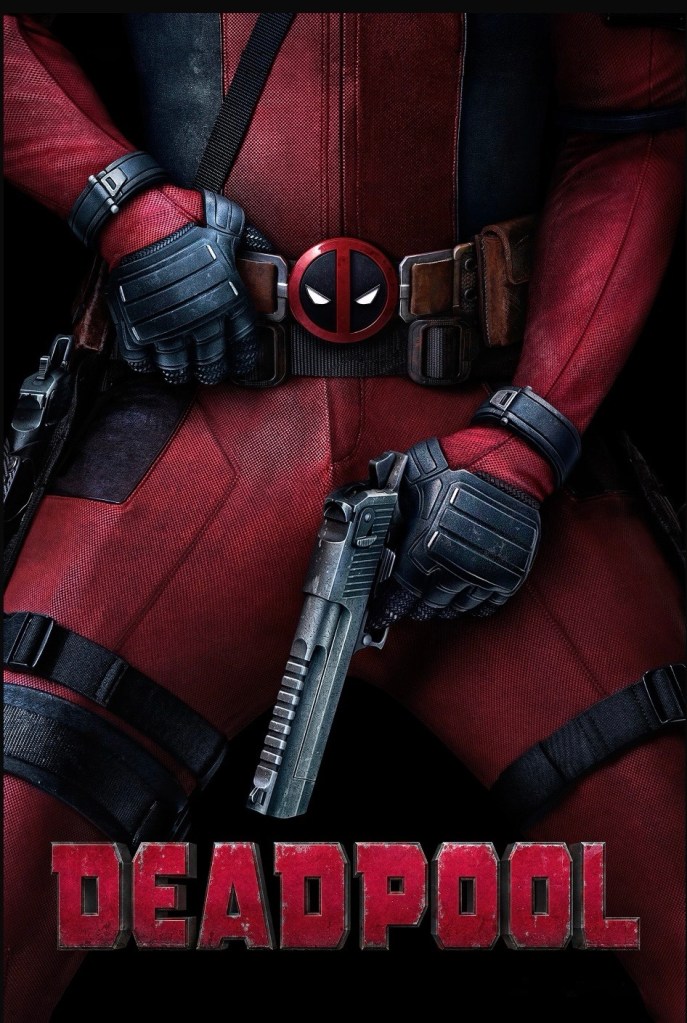
As a result of Logan’s actions in X-Men: Days of Future Past, fates of several characters in the universe of the X-Men films have been changed by the altered history. One of Logan’s former Weapon X teammates, Wade Wilson (Ryan Reynolds), is now an ex-Canadian Military veteran, who works as a mercenary and has a great relationship with his girlfriend, Vanessa (Morena Baccarin). After getting a cancer diagnosis and being transformed into a scarred mutant with a healing factor by the ruthless Ajax (Ed Skrein), Wade becomes the foul-mouthed and cocky anti-hero, Deadpool, who must use all his weapons, wit and fourth wall breaking, in order to force Ajax to change him back…
If you have been to any comic/film convention in the last few years, one of the most cosplayed characters that you would see in these events is the Marvel Comics character, Deadpool. In the early 1990s, this character, created by Rob Liefield and Fabian Nicieza in 1991, was first portrayed as a villainous character who was defined as Marvel’s version of DC’s Deathstroke due to similarities between characters in terms of secret identities and costume design. However as time would pass into the twenty-first century, the character would be re-imagined as an ultra-violent, yet humorous anti-hero, who would constantly break the forth wall while also being portrayed as a lover of popular culture, which has unsurprisingly made him one of the most popular fictional characters of the social network age. After an embarrassing first impression on screen with 2009’s X-Men Origins: Wolverine, Ryan Reynold’s second attempt at bringing “the Merc with the Mouth” to the big screen, is thankfully, a massive improvement.
One thing to mention about the narrative, is that a lot of it revolves around cutting between two stories of Deadpool’s origins in the Weapon X program, and him getting in trouble with the X-Men due to his violent rampage against Ajax. Although it does use several of the tropes that we’ve come to expect from superhero films, the execution of these event is what makes it stand out. For example, even in the extremely funny opening credits, Deadpool’s fourth-wall breaking habit is fully utilised throughout which makes Deadpool one of the funniest movies I’ve seen in years, even though it’s not technically a parody.
Despite having a really small scope of only two large scale action scenes, when compared to other superhero films due it’s $50 million budget, Deadpool succeeds the most in acting and character motivation. Ryan Reynolds is finally allowed to give Deadpool all the wit and dark humour that fans have come to expect from him, while also portraying a strangely sweet side to him, in spite of all the violence he causes throughout the film. T.J Miller and Leslie Uggams do a good job at portraying Weasel and Blind Al and, not forgetting the fact that this film is still technically part of the X-Men universe, both Stefan Kapicac and Brianna Hildebrand as X-men members Colossus and Negasonic Teenage Warhead are welcome additions with the former also being really entertaining due to his patronising nature that serves as the butt of many of Deadpool’s jokes.
Overall, despite a few minor issues such as Ed Skrien’s and Gina Caranos’ characters not being very memorable and a few pacing issues, Deadpool is an amazing adults-only superhero film, in that despite all the violence, sex and jokes, has a twisted, yet sweet side to it which, in a weird way makes it a good date movie. Just don’t expect a lot of super heroics in this one.
X-Men: Apocalypse (2016)
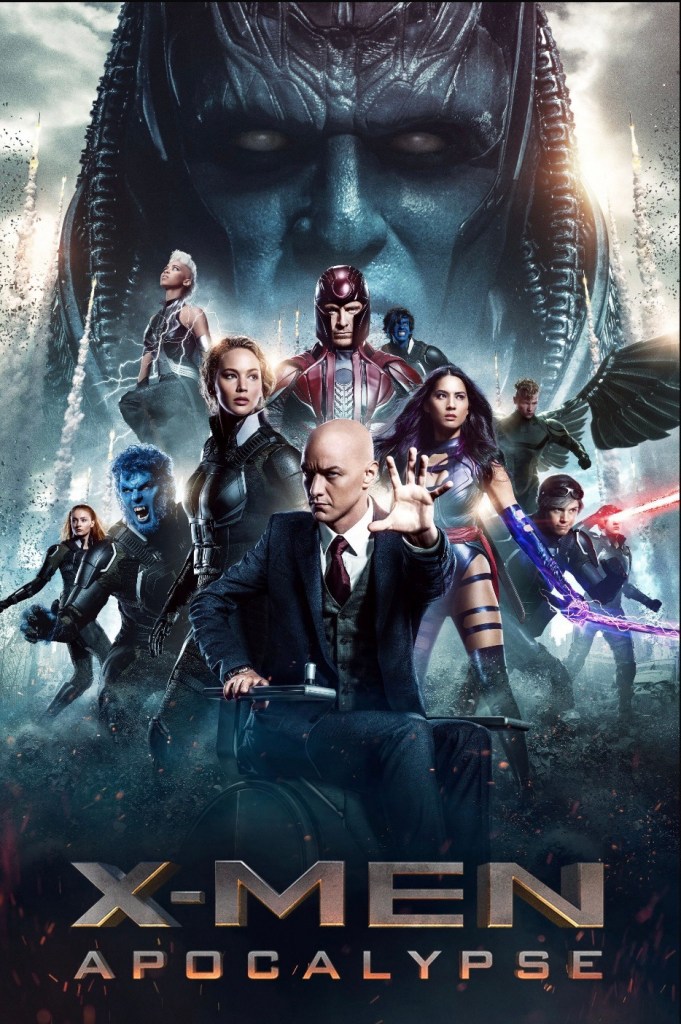
A decade after the events of Days of Future Past, Professor Charles Xaiver (James McAvoy) and Hank McCoy/Beast (Nicholas Hoult), have kept their promise to Logan to reopen the School for Gifted Youngsters, Magneto (Michael Fassbender) has finally retired from his war ambitions and has had a loving family and Raven/Mystique (Jennifer Lawrence) has become a hero to all mutantkind, saving them from trouble from time to time. When Apocalypse (Oscar Isaac), the first mutant to have ever existed, awakens to conquer the world with his chosen Four horsemen, including a grief-stricken Magneto, Xaiver is captured by them, and it is up to Raven to assemble a new generation of mutants, consisting of younger versions of Cyclops (Tye Sheridan), Jean Grey (Sophie Turner) and Nightcrawler (Kodi Smit-McPhee), to take on the mantle of X-Men, and save the world…
When compared to other superhero films of 2016, one of the best years for superhero cinema , such as the genre-spinning Deadpool, or the epic Captain America: Civil War, X-Men:Apocalypse, while not a bad film by any means, falls a bit flat in terms of the narrative as unlike the last two films, Bryan Singer, in his last contribution to the franchise before finally getting sacked for his bad private behaviour, doesn’t really bring anything unique to set it apart from the rest of the series.
This is because events in this film, feel like rehashes of material seen in those films, especially during a massive detour in the second act because X2 and Origins did it. However, it thankfully does manage to be entertaining, even though it’s a bit convoluted with thrilling set-pieces and moments that will make any Marvel fan’s hearts soar. However, much more could have been done with fan-favourite villain, Apocalypse, as his lore would have led to some unique worldbuilding for this film.
The acting, is once again top-notch in these films, with Micheal successfully conveying the tragedy of Magneto’s character in several heartbreaking sequences regarding his constant no-win situations, Kodi-Smit McPhee brings fan-favourite Nightcrawler back in a big way and Even Peters once again steals show as the rib-tickling Quicksilver.
Overall, X-Men: Apocalypse, may not be the best comic-book movie of 2016 and one of the most disappointing films in the franchise , but it’s still worth watching for its outstanding moments and great acting.
Logan (2017)
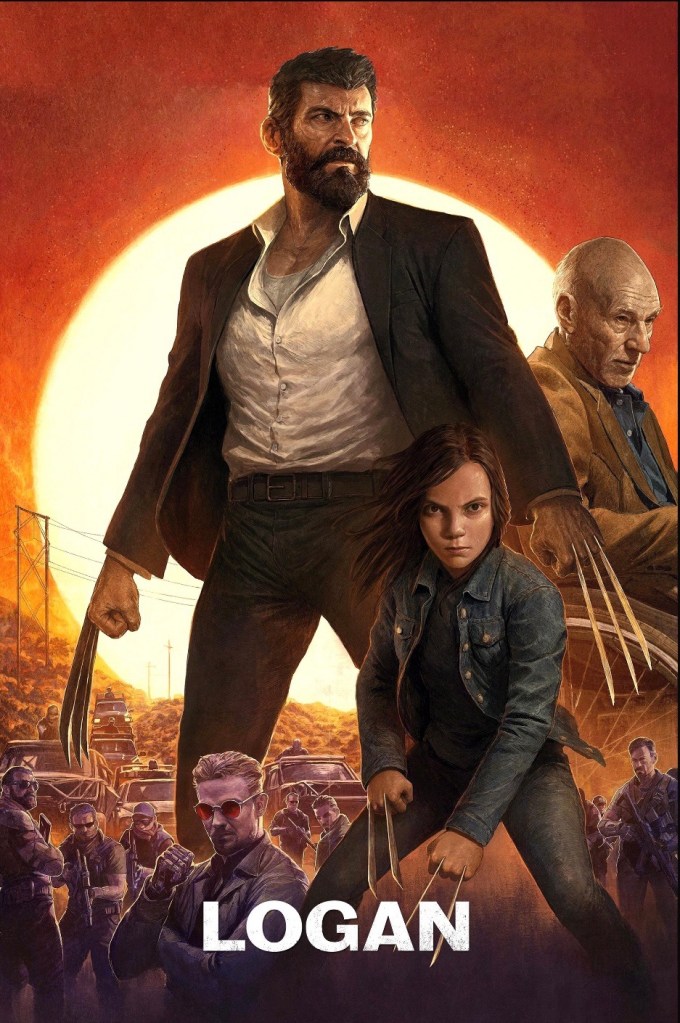
Set in the far future of 2029, Logan/Wolverine (Hugh Jackman), along with an ailing Professor Charles Xaiver (Patrick Stewart), are living alone in exile on the Mexican border, after an accident with Xavier’s degenerative telepathic abilities, led to some of the X-Men being killed. When Laura (Dafne Keen), a young mutant girl with the same abilities as Wolverine, appears into their lives, Xaiver persuades Logan to protect her as she is the first mutant to have been born in decades…
For seventeen years throughout the entire X-Men film series, Hugh Jackman’s protrayal of the character of Logan/Wolverine has become one of the most iconic film characters of the last decade, following him throughout his awful origin story, his battles with the X-Men, his relationship with Jean Grey, and even going back in time to prevent an apocalypse. Logan , the tenth instalment of the longest running superhero franchise, brings his story to a satisfying, yet sad ending to his saga.
Despite not delivering on his promise to give us a Japanese neo-noir with 2013’s OK The Wolverine , James Mangold goes back to his western roots in both the narrative and the production design, by loosely basing the story of an elderly Logan and Xaiver surviving in the wilderness on Old Man Logan by Mark Miller. Like Captain America: Civil War, it expands on the flaws of the source material by introducing the character of X-23 as a source of redemption for Logan’s failure to keep the world safe.
As well as having amazing production design being inspired by both Westerns and Mad Max: Fury Road, the performances of Hugh Jackman and Patrick Stewart as their last (at the time)of both Logan and Charles Xavier are amazing, with the former being the most brutal he has ever been before, and the latter being repressed of his usual knowledgeable role as mentor figure, due to illness. Boyd Holbrook’s Donald Pierce is also quite entertaining, but the standout role has to be given to Dafne Keen’s acting debut as X-23.
Overall despite having a few problems with Richard E. Grant’s Zander Rice and having a few pacing issues, Logan commits to both it’s 15 rating and being a send off for Wolverine, by being one of the most violent, yet emotional superhero films in recent memory.
Deadpool 2 (2018)
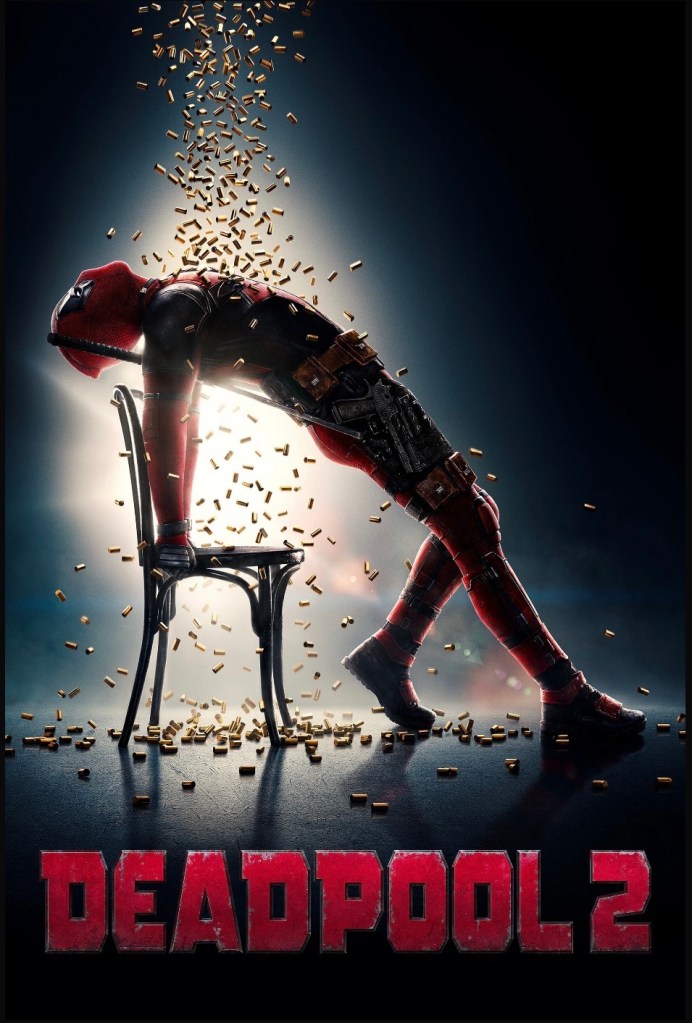
After a tragic incident robs Wade Wilson/Deadpool (Ryan Reynolds) of his purpose in life, The Merc with the Mouth finds himself stuck in a dead-end career with the X-Men and unable to end his suffering, due to his healing abilities. But when Russell (Julian Dennison), a young mutant capable of controlling fire finds himself on the run from Cable (Josh Brolin), a time-travelling mutant soldier who believes that killing Russell will save the world, Deadpool must get his act back together and assemble his own superhero team to stop Cable from making chimichangas out of the young boy…
Ever since the foul-mouthed, fourth-wall breaking Deadpool finally got the film he deserved in 2016 thanks to leaked test footage and the critical backlash coming from his embarrassing debut as an ugly mouth-less in-name only version of Rob Liefeld’s outrageous anti-hero in 2009’s X-Men Origins: Wolverine, the influence of the film’s financial success, despite being an R-Rated film has opened the door for other R-Rated mainstream films such as Logan, IT and Get Out to sit alongside summer blockbusters in terms of financial success. Naturally, being the highest grossing film in the long-running X-Men franchise and being currently the highest grossing R-Rated film of all time, it was inevitable that a sequel would come around and despite a few production issues such as Tim Miller, the director of the first film leaving the production of the sequel due to disagreements with Ryan Reynolds over the direction of the screenplay and the casting of the character of Cable, the tragic death of a stunt-woman during filming and the complications of the presence of T.J Miller’s Weasel character after the actor’s fall from grace, Deadpool 2 easily surpasses the first film, in terms of laughs and thrills.
Like the first film, the biggest strength of the sequel is Ryan Reynolds himself. His skill at keeping the Merc with the Mouth faithful to his fourth-wall breaking, violent and unorthodox comic-book counterpart, while also making him lovable in his quest to regain his purpose in life shows how far Ryan has come since regaining his popularity with the success of the first film. However, with the exceptions of Karan Soni’s Taxi-Driver character Dopinder getting a larger role and the character of Colossus (Stefan Kapicic) undergoing his own arc of learning to be tougher, a lot of the other characters from the first film such as Vanessa (Morena Baccarin), Negasonic Teenage Warhead (Brianna Hildebrand) and Blind Al (Leslie Uggams) don’t get much to do this time round.
Although it’s a jarring change from the look of the first film, replacement director David Leitch’s anime-style use of cinematography and lighting used in his other films such 2017’s Atomic Blonde and the John Wick films, does manage to give this film its own style that matches the darker elements of the Cable story and his cyberpunk background.
Speaking of which, being a character that was created around the same time as Deadpool himself and is one of the most frequent characters in Deadpool’s comic stories, Josh Brolin’s take on Cable, stands alongside his work as Thanos as one of the best comic book film characters of recent years. Special mention should also go to young actor Julian Dennison, who fresh off his success from Hunt of the Wilderpeople is not afraid to give this character the right amount of edge despite his young age and Zazie Beetz as the playful, luck-based mutant, Domino whose good-luck abilities end up being some of the most memorable moments of the film.
Overall, Deadpool 2 delivers on the filthiness, heart and laugh-out loud humor that made the first film such a massive hit to begin with and has the grand honor of having the funniest post-credits scenes in the history of superhero cinema. “Cue the music….”
Dark Phoenix (2019)
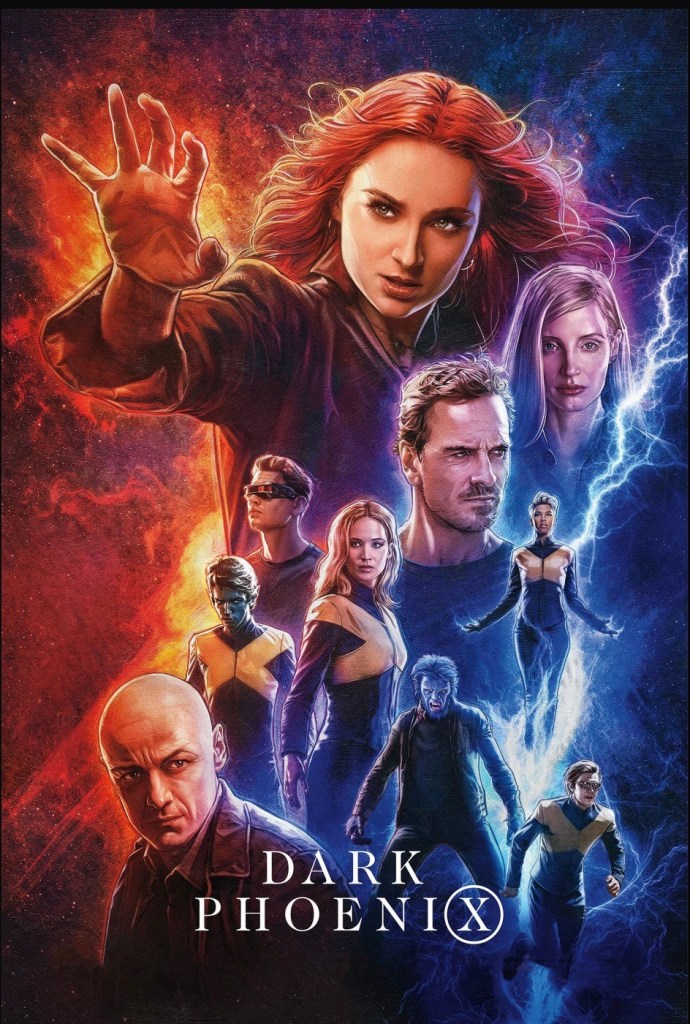
During a space mission to rescue a group of trapped astronauts, the X-Men face a powerful crisis when one of their own members, Jean Grey (Sophie Turner) ends up absorbing a giant solar flare and as a result, gains dangerous psychic powers. When Professor X (James McAvoy) ends up making a fatal mistake in an attempt to calm her down, will even his own students be successful in stopping the “Dark Phoenix”…
Both critics and fans of the superhero genre have had a very complex relationship with 20th Century Fox’s X-Men films. Despite the fact that the first film, directed by the disgraced Bryan Singer in 2000, was one of the most important superhero films along with Blade and Sam Raimi’s first Spider-Man film in getting the superhero genre to where it is now, they have suffered from inconsistent quality and some of the worst continuity errors ever made.
Although the likes of the Deadpool films and Logan have been great examples of the franchise taking bold creative changes in their films after 2014’s X-Men: Days of Future Past reset the timeline, 2016’s X-Men: Apocalypse was a disappointing rehash of old ideas. Now, with the final entry of this nineteen-year-old film series, long-time producer and writer of numerous X-Men films, Simon Kinberg, finally gets to fulfill his wish of a more faithful adaptation of the beloved Dark Pheonix Saga with his directorial debut after 2006’s X-Men: The Last Stand failed to capture the heart of that story and as a result……he has utterly f, ked up the series with the worst X-Men film to date.
Although James McAvoy and Michael Fassbender try their best in giving great performances towards this awful script, the rest of the acting and character arcs are baffling downgrades with Jennifer Lawerence and Nicholas Hoult’s arcs in particular, completely going against everything that was established in the rest of the First Class films.
Overall, the rushed pacing, bland cinematography, bad CGI and Jessica Chastain giving one of the worst acting performances in her entire career, ends the longest running superhero film franchise on a whimper rather than a bang as Dark Phoenix is one of the most plothole-driven films in recent years.
The New Mutants (2020)
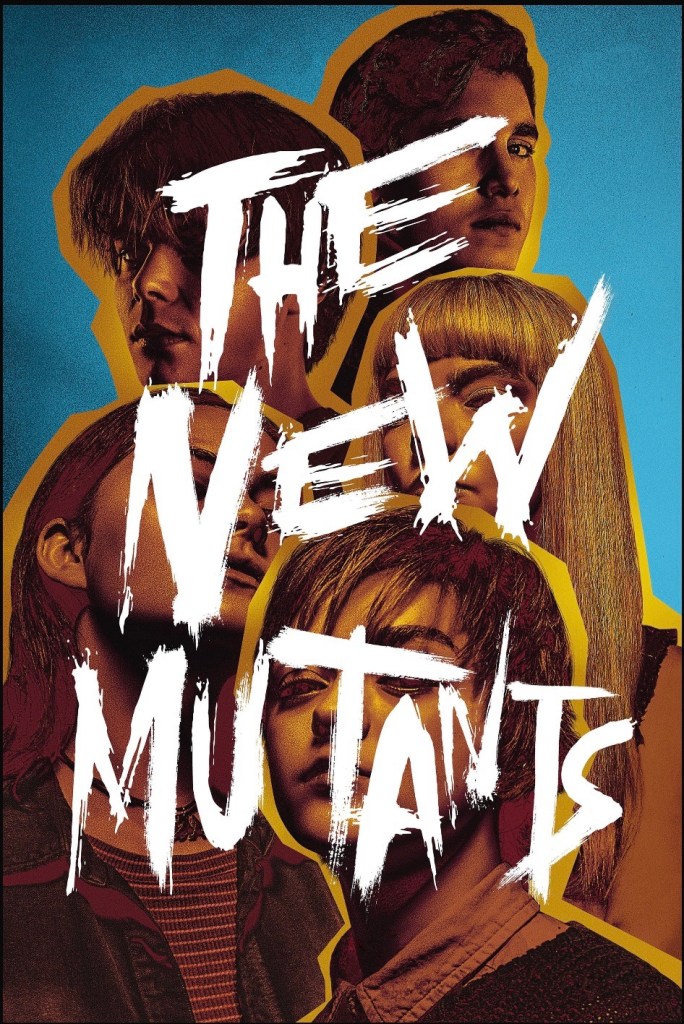
Set within the universe of the X-Men, Dani Moonstar (Blu Hunt), a Native American teenager is taken to a secret government facility, after losing her father to a tragic accident. She is then informed by Dr. Reyes (Alice Braga), that she is a mutant and is asked to remain at the facility until she can control her new powers. When Dani discovers dark secrets about her new home, she must team up with four other teenage mutants, the werewolf Rahne Sinclair (Maisie Williams), the sorceress Illyana Rasputin (Anya Taylor-Joy), the flyer Sam Guthrie (Charlie Heaton), and the (literal) hothead Bobby da Costa (Henry Zaga), in order to escape her uncertain fate…
What was originally planned as another opportunity to branch out 20th Century Fox’s long-running X-Men film franchise in the same vein as Logan and the Deadpool films, ended up being a production nightmare for the studio and director, Josh Boone. Fresh off his success with 2014’s The Fault in Our Stars, Boone, along with screenwriter Knate Lee, had an idea for a new spin-off trilogy that was going to use Chris Claremont and Bob McLeod’s 1982 New Mutants, which told the adventures of a younger subdivision of the X-Men that focused on darker themes such as mysticism and the occult, as its background.
However, in spite of finishing filming in 2017 with a release date set for April 2018, numerous production issues such as executive meddling that took forever to shake off, Disney’s purchase of 20th Century Fox, the poor box-office results of Dark Phoenix and the COVID pandemic of 2020 led The New Mutants to constantly get delayed again and again to the point where it became a joke, which is a shame as the film itself is OK on its own terms.
Functioning as a mix between The Breakfast Club meets It meets The Cabin in the Woods, The New Mutants does have a clear idea of the kind of story it wants to tell of a group of supernatural teenagers coming together, although the original intention of being the first film in a trilogy does clearly shows as most of the characters end up getting underdeveloped as a result.
The acting is surprisingly solid with Anya-Taylor Joy, in particular, stealing the show with her twisted sense of humor while both Blu Hunt and Maisie Williams share adorable chemistry as one of the first mainstream LGBT couples in mainstream superhero films. While Charlie Heaton and Henry Zaga don’t get as much to do as characters, the visualization of their powers are impressive enough for this film’s low budget nature.
Overall, The New Mutants definitely isn’t the best way to close out twenty years worth of X-Men films. But as the intended horror/teen drama stand-alone film that Josh Boone wanted, this film does do its job in a passable way.
 Chaz’s Cinematic Odyssey