The Bikeriders
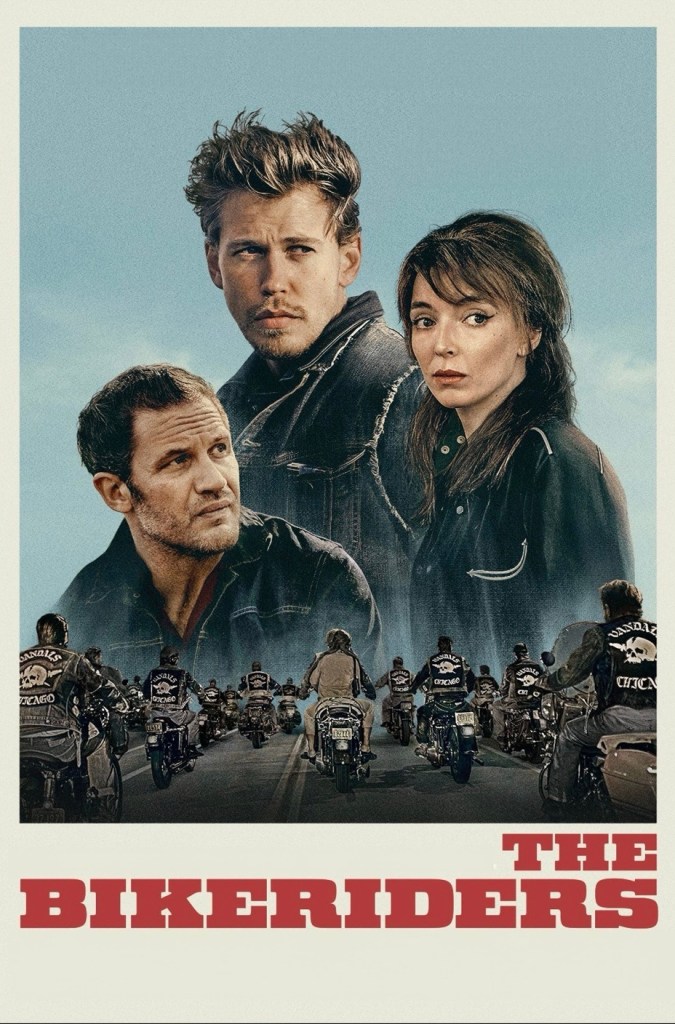
Directed by: Jeff Nichols
Written by: Jeff Nichols
Starring: Jodie Comer, Austin Butler, Tom Hardy, Michael Shannon, Mike Faist and Norman Reedus
Music by: David Wingo
Rated: 15
In 1973, photographer Danny Lyon (Mike Faist), interviews a Midwestern woman named Kathy Bauer (Jodie Comer), for research on biker gang culture for his next book. Kathy then proceeds to tell Danny her ties with the last remaining innocent time periods of the 1960s, where she ends up falling in love with Benny (Austin Butler), who has to balance his new relationship with her, along with his ties to his bike gang members, especially their leader, the intimidating Johnny Davis (Tom Hardy)…
Notable for being one of the more interesting casualties of the SAG-AFTRA 2023 strikes, as despite premiering in August 2023 at the Telluride Film Festival, The Bikeriders ended up getting heavily delayed due to those strikes, and it also lost its original distributor, 20th Century Studios, to Universal’s Focus Features. While these delays may have cost this film some of its award chances, The Bikeriders is still a great throwback to the Post-Hollywood era of biker culture films from that time period such as Easy Rider.
While the film’s semi-autobiographical accounts of Danny Lyon’s 1970s interviews with bikers does feel a bit pointless as a framing device, it is the relationship between the three leads that really work in making this, a great experience. Austin Butler finally ditches the infamous Elvis accent, Jodie Comer has great chemistry with him, but it is Tom Hardy who really sells the role of a gang leader so real, that one can tell that he was born to play this kind of role.
Overall, The Bikeriders may be a bit clumsy on the script side, however, it is the action sequences and acting that makes this film a wonderful celebration of this era in film history.
Rating: 4/5 .
A Quiet Place: Day One
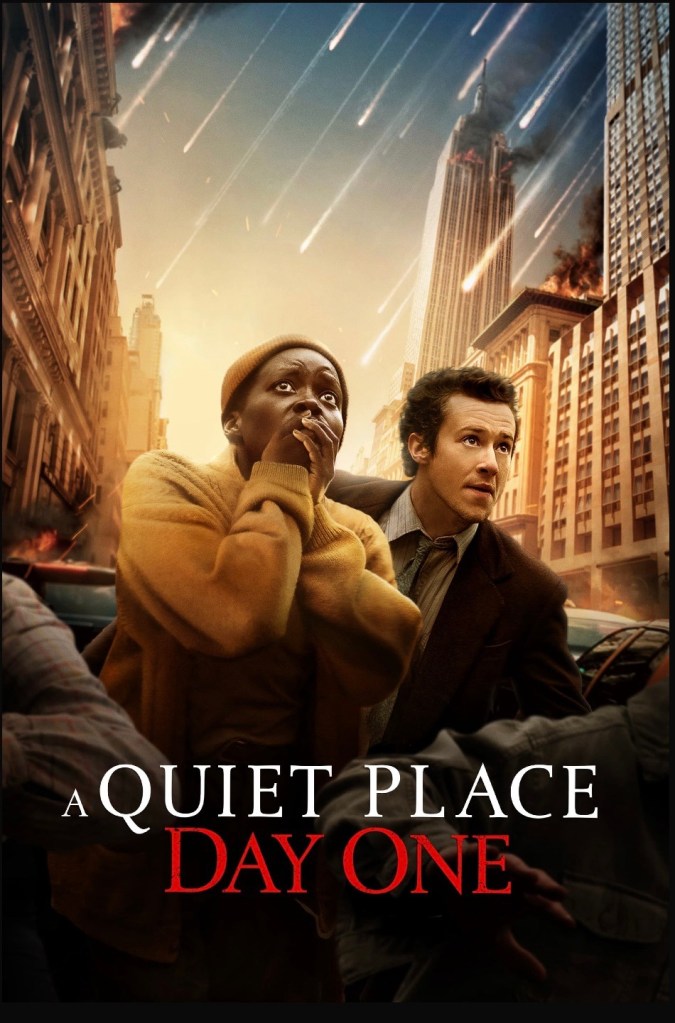
Directed by: Michael Sarnoski
Written by: Michael Sarnoski
Starring: Lupita Nyong’o, Joseph Quinn, Alex Wolff and Djimon Hounsou
Music by: Alexis Grapsas
Rated: 15
Set a year before the events of the first two films, Samira (Lupita Nyong’o) is a terminally ill woman who, along with her beloved cat, Frodo, witnesses the arrival of the sound attracted aliens to New York City. As Samira struggles to survive the beginning of the apocalypse, she soon comes to the realisation that she may have to make a choice to have one last chance to live out her dreams, before both her illness and the aliens can kill her…
With John Krasinski, co-creator and star of Paramount Picture’s and Platinum Dunes’a successful horror-thriller franchise, A Quiet Place, moving away to direct family films, the time has come for this franchise to explore different stories about the humans adapting to silence against the sound-devouring aliens. Starting with Pig Director, Michael Sarnoski, to take over for this prequel.
Telling this untold story about how the aliens came to Earth and how humanity was forced to go silent to survive, is a premise with a lot of potential. However, the decision to focus the story on a terminally ill character witnessing the rise of the aliens, does lead into an even more interesting story, how a character can find optimistic feelings even when ill and in the middle of an alien invasion, leading to an incredibly powerful third act.
However, the elements that fans have loved about this franchise, the sign language of the humans, the gory kills for people who break the rules and the alien attacks, are still well shot and edited and supporting roles such as Joseph Quinn, Alex Wolff and Djimon Hounsou (returning from the second film), all get great performances. But, it is Lupita Nyong’o who owns this film and her loyal cat, Frodo, gets the best moments.
Overall, A Quiet Place: Day One is a great origin story for longtime fans of the franchise, and a surprisingly heartfelt one for newcomers.
Rating: 3.5/5
Inside Out 2
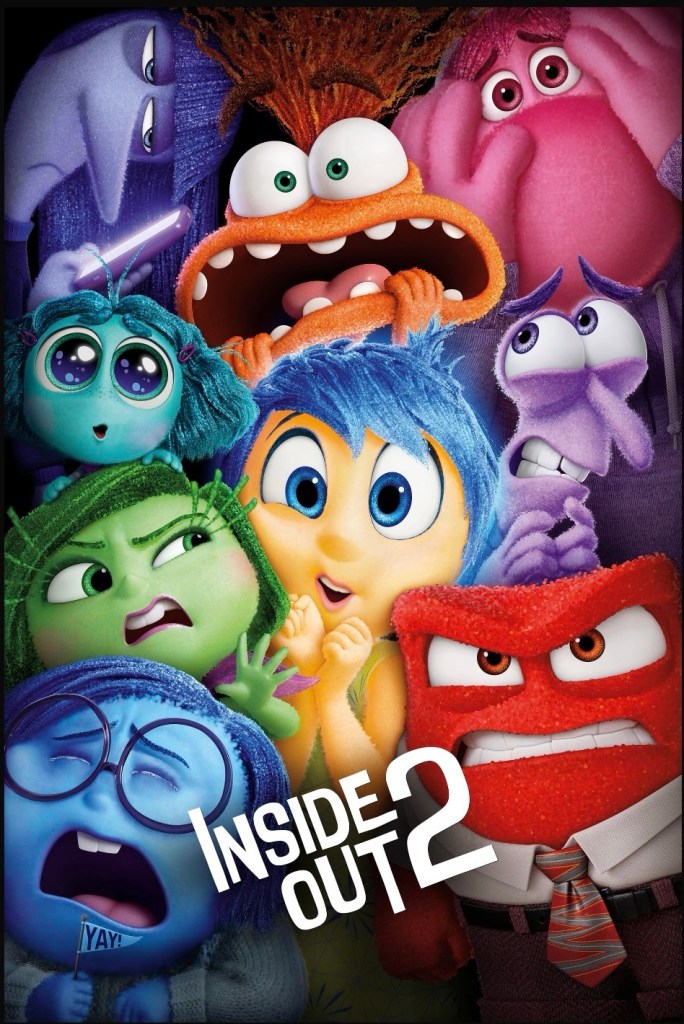
Directed by: Kelsey Mann
Written by: Meg LeFauve and Dave Holstein
Starring: Amy Poehler, Maya Hawke, Phyllis Smith, Lewis Black, Diane Lane, Kyle MacLachlan, Tony Hale, Liza Lapira, Ayo Edebiri, Adele Exarchopoulos, Paul Walter Hauser and Kensington Tallman
Music by: Andrea Datzman
Rated: U
Two years after settling into life in San Francisco, Riley Anderson (Kensington Tallman) is now a teenager, with her emotions, Joy (Amy Poehler), Sadness (Phyllis Smith), Anger (Lewis Black), Fear (Tony Hale) and Disgust (Liza Lapira) ready to guide her throughout the next stage of her life. However, when Riley goes to a hockey camp for the weekend, Joy and her friends are kicked out of headquarters by four new emotions named Anxiety (Maya Hawke), Envy (Ayo Edebiri), Ennui (Adèle Exarchopoulos) and Embarrassment (Paul Walter Hauser), who are convinced that Riley only needs them to get through teenage life. However, Joy and the gang also have to recover Riley’s “sense of self” a device that can influence Riley’s personality, in order to stop her from making bad decisions to fit in…
It is fair to say that both Walt Disney Animation Studios and Pixar Animation Studios have been hit pretty hard by not only the COVID pandemic, but also changing audience tastes as well. While Pixar’s Disney+ trilogy (Soul, Luca and Turning Red) and Disney’s Encanto have been huge successes on the streaming service and 2023’s Elemental ended up being mildly successful at the box office due to excellent financial legs, everything else has been an utter disaster. Lightyear ended up taking the Toy Story franchise in a direction that was extremely divisive, Strange World became one the biggest financial bombs for Walt Disney Animation, and, to make matters worse, their 100th anniversary film, Wish, became one of the biggest disappointments in years for the company.
As a result of this, both Disney and Pixar have decided to go back to something that they previously said they would do less of in the 2020s, sequels. With a two-part third Frozen adventure, Zootopia 2 and even a fifth Toy Story film planned from both studios, the first of these new sequels is thankfully, something that can be interesting, if done right. Out of all of Pixar’s films, the one with the most potential to be expanded is the 2015 hit, Inside Out, a fantastic film that explored the living emotions of a young girl to help her get through life.
Much like how the first film saved Pixar from their first slump in the early 2010s, this sequel does the same thing for helping the studio get out of its current state, by expanding the concepts that Pete Doctor introduced, and, much like Toy Story 2 and 3, made it feel like a natural continuation instead of a rehash. While not as emotionally devastating as the first film, Inside Out 2 does manage to contain the same powerful messages that made the studio’s best films work so well, with Joy’s conflict with new emotion Anxiety, having a powerful moral about staying true to yourself, in spite of having more complex feelings as a teenager.
Amy Poehler, Lewis Black and Phyllis Smith are once again fantastic as Joy, Anger and Sadness, and new voices for Fear and Disgust, Tony Hale (who voiced Forky in Toy Story 4) and Liza Lapira, do good jobs as these lovable characters. However, it’s Maya Hawke’s Anxiety who completely steals the show, complete with an adorable muppet-like character design and a more complex role as an antagonistic, yet well-meaning character. Although there has been a recent trend of animated films depicting panic attacks, Inside Out 2’s take in the concept, may be one of the best examples, with it leading to the emotionally intense third act that people have loved about the best of Pixar’s filmography. However, the film is also very funny in how it depicts concepts such as the “sar-chasm”, two hilarious moments involving new “Bing Bong”-like characters, and another emotion only there for nostalgia jokes.
Overall, with stunning animation. entertaining characters old and new, and an emotional new story about having even more complicated feelings, Inside Out 2 is a step in the right direction for Pixar, that balances the needs for expanding franchises, along with telling a story worth telling.
Rating: 4.5/5
Despicable Me 4
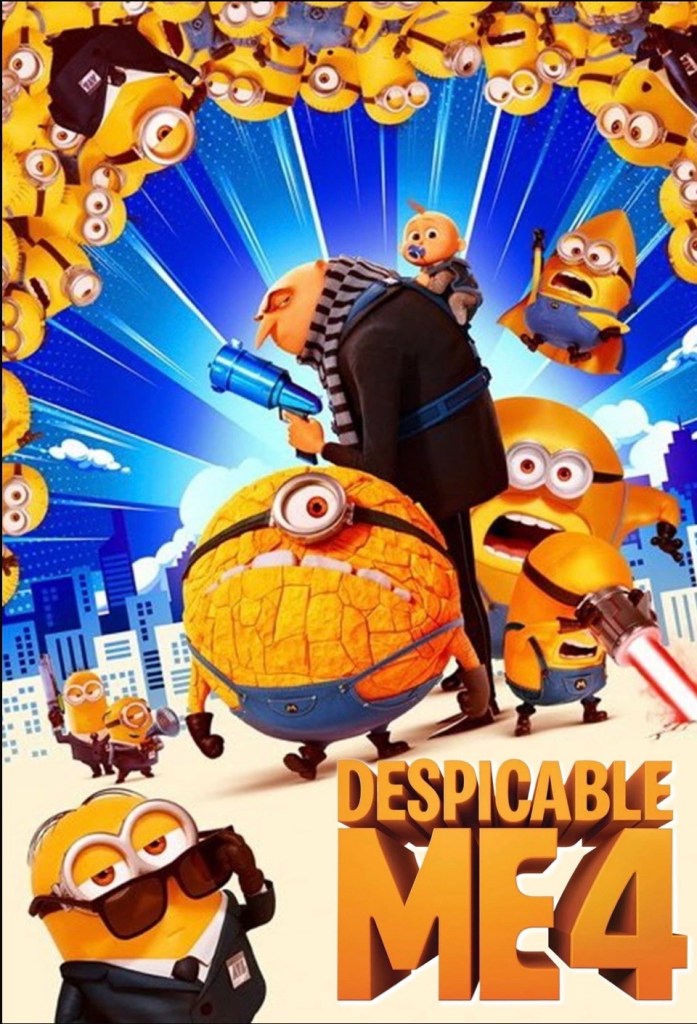
Directed by: Chris Renaud
Written by: Mike White and Ken Daurio
Starring: Steve Carell, Kristen Wiig, Pierre Coffin, Joey King, Miranda Cosgrove, Steve Coogan, Stephen Colbert and Will Ferrell
Music by: Heitor Pereira
Rated: U
Gru (Steve Carell), his adopted daughters, Margo (Miranda Cosgrove), Edith (Dana Gaier) and Agnes (Madison Polan) and his wife, Lucy (Kristen Wiig) have recently welcomed a new baby into their life, Gru Jr. (Tara Strong). However, Silas Ramsbottom (Steve Coogan) and the Anti-Villain League soon inform Gru that he has to move himself and his family out of their home, due to the threats of an escaped former colleague of Gru, a half-human, half-cockroach supervillain named Maxime Le Mal (Will Ferrell). With the Minions (Pierre Coffin) taking residence with the AVL to work as superheroes, Gru and his family struggle to adapt to life in the “normal-looking” town of Mayflower in hiding, which is made more complicated when their new neighbour’s teenage daughter, Poppy Prescott (Joey King), is revealed to be aware of Gru’s true identity and wants him to help her get into his childhood villain school…
With Illumination’s longest running franchise, Despicable Me moving closer to its fifteenth anniversary with a trilogy, numerous short films, two Minions spin-off prequel films and an endless amount of merchandise featuring those mischievous yellow tic-tac Minions, it is no surprise that a fourth film in the main series would soon follow.
While the last entry in this series, 2022’s Minions: The Rise of Gru was a big improvement over the third film by going back to the franchise’s roots of heart, as shown in the relationship that young Gru made with one of his heroes, Despicable Me 4 slightly goes back to the overstuffed narratives of the former film, with the five subplots of Gru vs the new villain, Gru’s family going into hiding, Gru having a new baby, the Minions getting superpowers and Gru helping a teenage fan girl of his career get into villain school, all struggling for attention, without much payoff at the end.
However, fans of this franchise and the Minion-related antics will definitely get great comedy out of this. The voice-acting is still solid, with Steve Carell’s Gru being as funny as ever and Will Ferrell’s Maxime being a solid new addition to the former’s rogue gallery. Even if some jokes still fall flat for anyone over the target audience, the superhero jokes that revolve around the Minions gaining superpowers, do get some of the biggest laughs here.
Overall, while a downgrade when compared to Minions 2, Despicable Me 4 should still give its family demographic and fans of this franchise, all the laughs and charm they have come to expect from Gru and the gang.
Rating: 3/5
Deadpool & Wolverine
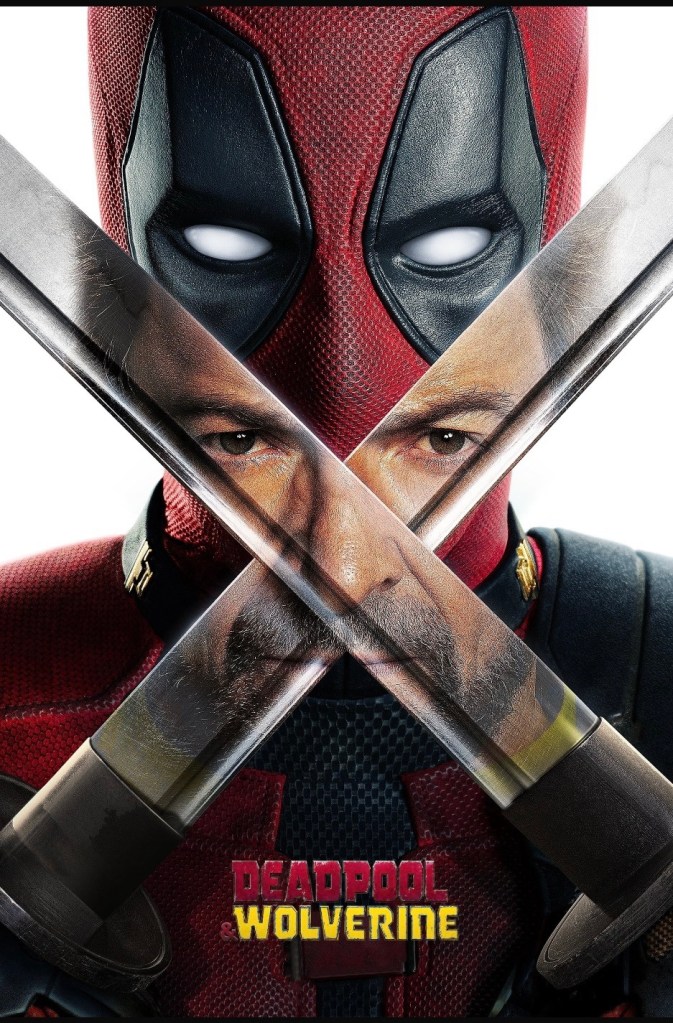
Directed by: Shawn Levy
Written by: Ryan Reynolds, Rhett Reese, Paul Wernick, Zeb Wells and Shawn Levy
Starring: Ryan Reynolds, Hugh Jackman, Emma Corrin, Morena Baccarin, Rob Delaney, Leslie Uggams, Aaron Stanford and Matthew Macfadyen
Music by: Rob Simonsen
Rated: 15
Six years after his antics with Cable’s time-travelling device, Wade Wilson/ Deadpool (Ryan Reynolds), after an unsuccessful attempt to join the Avengers in the MCU’s universe, has given up his career and has broken up with his revived girlfriend, Vanessa (Morena Baccarin). During his surprise birthday party, Wade is captured by the Time Variance Authority organisation (The TVA from the Loki Disney+ series), to inform him that he is finally ready to join the Sacred Timeline (The MCU’s universe), as an Avenger. However, when Wade finds out that it requires his home universe (the one in which the 20th Century Fox X-Men films took place), alongside all his family and friends to die, the Merc with the Mouth instead decides to save his home. The only catch, however, is that his universe requires a version of the most famous mutant in history, Wolverine (Hugh Jackman), to be stabilised, and as Wade’s Wolverine died during the events of Logan, Deadpool must rely on a new, far less successful Wolverine in order to save his companions…
When the Walt Disney Company finalised their purchase of 20th Century Fox in 2019, they finally managed to get back the rights of the Marvel franchises that were in the hands of the latter, X-Men and the Fantastic Four. Despite getting off to a rocky start due to inheriting two already filmed X-Men movies, Dark Phoenix and The New Mutants, which both ended up bombing at the box office, Marvel’s merry mutants finally made a triumphant comeback with 2024’s X-Men ‘97. This excellent Disney+ series , a sequel to the 1992 X-Men: The Animated Series and the first Marvel Studios project to not be connected to the Marvel Cinematic Universe, ended up being the studio’s most critically acclaimed project in years, and with their only live-action film for 2024, the company is set to take another huge step in embracing the legacy of these characters, by finally bringing back the character that no one ever expected to be in a Disney owned project, Deadpool.
Ryan Reynolds’s lovable, yet gleefully sweary and violent chatterbox Merc, finally comes back for a third outing on the big screen, only this time, with the MCU on his sights. For those worrying about his new owners limiting his ability for his style of humour and kills, Deadpool & Wolverine, from the first dance sequence onwards, is still as funny and offensive as ever, with Ryan Reynolds being born to play this character.
However, director Shawn Levy has decided to take a massive risk by bringing back the X-Men film franchise’s most popular character, Logan/Wolverine, despite Hugh Jackman’s iconic take on this beloved mutant, having an incredibly powerful sendoff in 2017’s Logan. Thankfully, from the moment of the (still really funny) opening, they made it very clear that that version of Wolverine is never coming back, giving Hugh Jackman new opportunities to play a different version of the character, that gets a really entertaining arc when teamed up with the insane Deadpool, even if it lacks something that the original character provided.
Even though some of Deadpool’s friends such as Vanessa, Colossus (Stefan Kapičić), Blind Al (Leslie Uggams) and Dopinder (Karan Soni), don’t get a lot to do, a lot of the new characters such as new villains Cassandra Nova (Emma Corrin) and Mr. Paradox (Matthew Macfadyen), do manage to be entertaining threats, with the former being an interesting take on an evil version of Professor X and the latter, being a surprisingly strong allegory for entitled MCU executives who only want to preserve popular characters and delete everything else that doesn’t fit into a “perfect universe”. In many ways, one could consider this film, a Deadpool film of all things, to be one of the more mature takes on the history of superhero cinema and the importance of preserving both the good and bad elements of those, to truly move forward.
Overall, with loads of unexpected cameos, all the swearing, blood and raunchy jokes that people love about these films, and the long-awaited team-up between two of the most popular mutants in history, fifteen years after the previous attempt (2009’s X-Men Origins: Wolverine) ended in disaster, Deadpool & Wolverine is one of the better attempts at the MCU’s recent love for the multiverse and is another excellent example of the grand return of Marvel’s Merry Mutants in their new home, while also being another crazy adventure for Deadpool’s crazy antics.
Rating: 4/5
Harold and the Purple Crayon
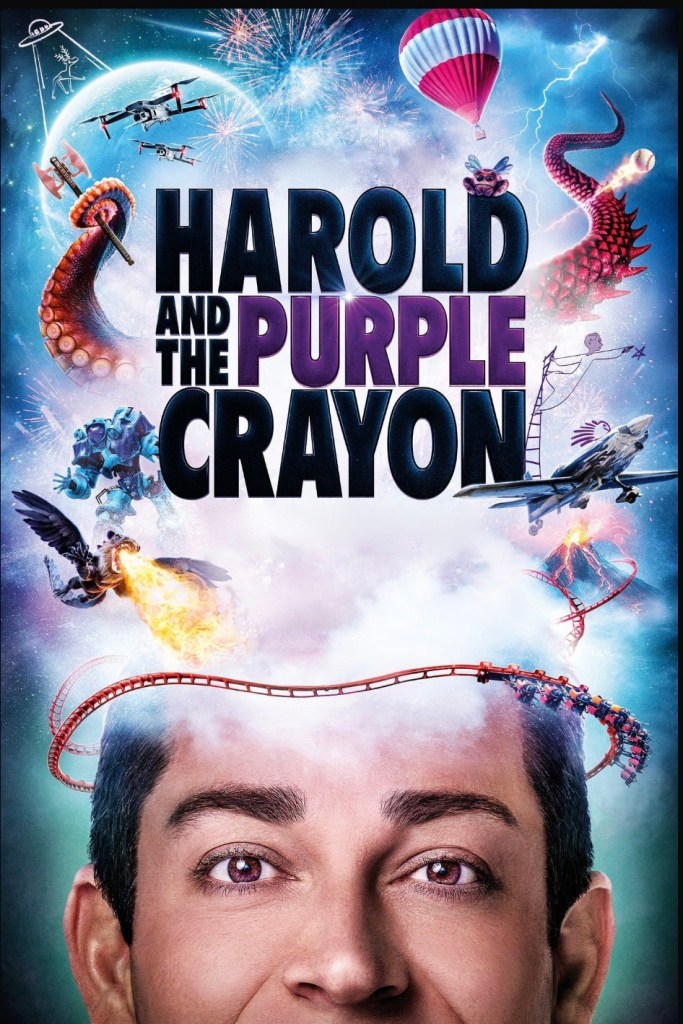
Directed by: Carlos Saldanha
Written by: David Guion and Michael Handelman
Starring: Zachary Levi, Lil Rel Howery, Jemaine Clement, Tanya Reynolds, Alfred Molina and Zooey Deschanel
Music by: Batu Sener
Rated: PG
Ever since he was a child, Harold (Zachary Levi) has spent his life having adventures in an animated living storybook, spending time with his best friends, Moose (Lil Rel Howery) and Porcupine (Tanya Reynolds), and most importantly, being guided by his beloved Narrator (Alfred Molina), about how to use his magical purple crayon to bring drawings to life. When the narrator suddenly disappears, the now-adult Harold decides to draw a door into the real world in order to find him. However, while his purple crayon still manages to work, Harold will soon find that real life is harder than it looks to look for imagination…
Despite being one the most beloved children’s books in America, alongside the likes of Dr. Seuss and Where the Wild Things Are, the 1955 Crockett Johnson classic, Harold and the Purple Crayon, about a young boy bringing things to life with his magic crayon, has had a complicated path to the big screen. With attempts to adapt the story dating back as far as 1992, with the likes of Henry Selick, Spike Jonze, David O’ Russell and even Sony Pictures Animation all being attached to proposed live-action and animated film proposals, it wasn’t until 2021, when a live-action film would finally be greenlit, before being delayed further to 2024, despite being completed in early 2023.
Harold and the Purple Crayon is unfortunately, yet another example of a a property in which the filmmakers have no idea what to do with it, just decide to follow the “fish out of water in the real world” scenario that films such as Enchanted, The Smurfs, Masters of the Universe and Fat Albert, have done to death. While this would have been fine for a mainstream family film, as those audiences love this premise, if anyone other than Zachary Levi had been cast as Harold, this take on Harold and the Purple Crayon would have been passable.
While the story does have some interesting elements such as the creativity of Harold’s living drawings and a surprisingly impactful ending revolving around how the influence of characters and stories can remain alive forever, this version of Harold and the Purple Crayon leaves a lot to be desired, with annoying characters, a wasted opportunity for a more charming take in this material in spite of how short the original story is, and a completely wasted Jemaine Clement desperately needing a new agent.
Rating: 2/5
Twisters
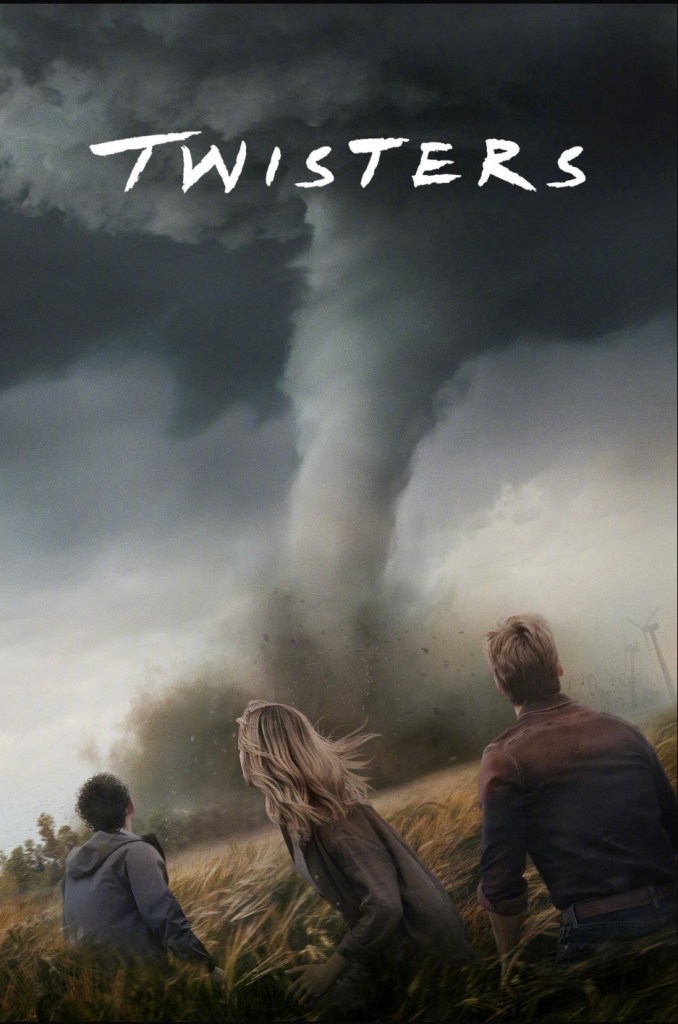
Directed by: Lee Isaac Chung
Written by: Mark L. Smith
Starring: Daisy Edgar-Jones, Glen Powell, Anthony Ramos, Brandon Perea, Maura Tierney and Sasha Lane
Music by: Benjamin Wallfisch
Rated: 12A
Five years after losing nearly all her friends in a freak accident with a tornado, former storm-chaser Kate Cooper (Daisy Edgar-Jones), has resigned herself to a position as a weather data collector. However, when her only surviving friend from the accident, Javi (Anthony Ramos), invites her back to Oklahoma to test a new tracking system, Kate soon starts butting heads with a reckless social media influencer named Tyler Owens (Glen Powell). When they start to bond in spite of their differences, the state is suddenly hit by the worst twisters in decades, and Kate will soon have to fear her fears, in order to make peace with herself…
Out of all the properties and franchises that have been getting legacy sequels over the last few decades, one of the last things anyone was expecting was a follow-up to Twister of all things. While the original 1996 Jan De Bont film, starring Helen Hunt and the late Bill Paxton, was incredibly successful and is considered one of the best examples of the 1990s brief revival of the disaster film subgenre, along with Armageddon, Deep Impact and Dante’s Peak, Twister has not left the same impact that the likes of Titanic or Independence Day, in spite of its charming love story and interesting focus on storm chasing culture.
In spite of the title, Twisters has nearly no connections to the first film, apart from being set in Oklahoma during tornado season and the brief use of the Dorothy system that was prominent in that film. This makes one wonder, whether this was originally intended to be an original movie about the tornado seasons, until both Warner Bros and Universal realised that they had a very similar film, and decided to slightly reshoot it to add connections to the 1996 film.
However, Twisters does manage to take what worked about the first film, and make it even better, with the tornado sequences and devastation sequences of Oklahoma towns being even more intense and thrilling, and the love story between Daisy Edgar-Jones’s traumatised Kate and Glen Powell’s arrogant, yet confident Tyler, being really charming, in spite of some aspects being a bit odd. Even though it is clear that in an earlier draft, Kate may have been intended to be the daughter of Helen Hunt and Bill Paxton’s characters in the first film, she does still have a really compelling arc of having to face her fears against the twisters, which tones back the ludicrous revenge aspect that the first film leaned on with Hunt’s character.
Overall, Twisters offers a very similar experience to the 1996 film, only with better effects and a more interesting love story, even if some might not be blown away by this.
Rating: 3.5/5
Borderlands
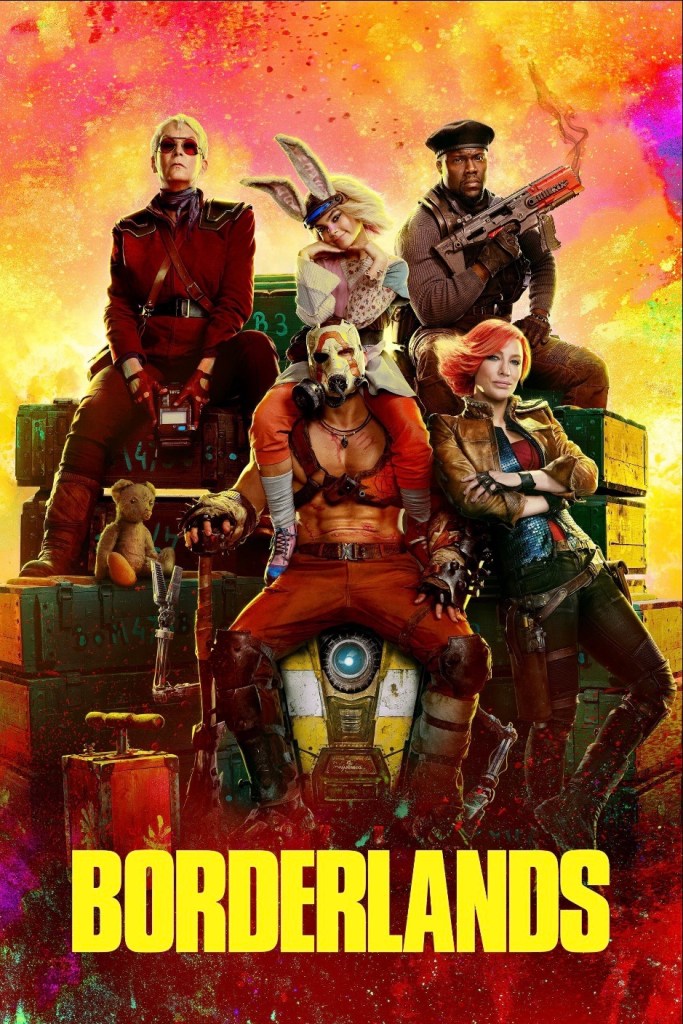
Directed by: Eli Roth
Written by: Eli Roth and Joe Crombie
Starring: Cate Blanchett, Ariana Greenblatt, Kevin Hart, Jack Black, Édgar Ramírez, Florian Munteanu, Gina Gershon and Jamie Lee Curtis
Music by: Steve Jablonsky
Rated: 12A
Set in a more crazier galaxy far, far away, the planet Pandora, a desert landscape populated by criminals, guns and weapons, is where Tiny Tina (Ariana Greenblatt), the teenage daughter of Atlas (Édgar Ramírez), CEO of a massive corporation, has been taken hostage in. When the sarcastic bounty hunter, Lilith (Cate Blanchett) is hired by Atlas to retrieve Tina from Pandora, she soon ends up teaming up with her, along with Roland (Kevin Hart), a mercenary soldier, the annoying robot, Claptrap (Jack Black), Tina’s masked bodyguard, Krieg (Florian Munteanu) and her former mentor, Dr. Patricia Tannis (Jamie Lee Curtis), in order to find a way off the planet..
Described as Star Wars meets Mad Max, Gearbox Software’s Borderlands has become their most successful video game franchise, alongside Brothers in Arms and Duke Nukem. These insane first-person shooter games about bounty hunters getting as much loot from the planet Pandora (no relation to James Cameron’s favourite location), spawned a trilogy, a prequel numerous DLCs and a huge fanbase, which makes the insanely negative reactions to the franchise’s first film adaptation, even more disappointing.
While it seemed that video game adaptations had finally turned a corner with the success of The Super Mario Bros. Movie and the Sonic the Hedgehog films and the Last of Us television series, Borderlands unfortunately, goes back to the mid 2000s Uwe Boll days of being a complete misrepresentation of what the franchise was about. While the games were meant to be hard R-Rated space opera versions of Mad Max, this film is a desperate attempt by Lionsgate to make their own Guardians of the Galaxy franchise, complete with watered down violence for a PG-13/12A rating, something that shouldn’t be still happening in a post-Deadpool environment.
While Cate Blanchett and Jack Black try to work with what they have been given and some fight scenes are well shot, the rest of the cast are boring at best, and extremely annoying at worst. Kevin Hart, in particular, seems completely miscast as a serious soldier character and Ariana Greenblatt’s Tiny Tina, gets really grating, especially in the terrible attempts at comedy.
Overall, despite having a colourful look in the production design and being mercifully not too long, Borderlands is still an incredibly misguided experience of Lionsgate’s desperation for new franchises, without considering why the games have a huge fanbase in the first place.
Rating: 1.5/5
It Ends with Us

Directed by: Justin Baldoni
Written by: Christy Hall
Starring: Blake Lively, Justin Baldoni, Jenny Slate, Hasan Minhaj, Brandon Sklenar, Amy Morton and Kevin McKidd
Music by: Rob Simonsen and Duncan Blickenstaff
Rated: 15
Shortly after her abusive father (Kevin McKidd) dies, a young woman named Lily Bloom (Blake Lively and Isabela Ferrer as a teenager) moves to Boston to open her own flower shop. After falling in love with neurosurgeon Ryle Kincaid (Justin Baldoni), and befriending his sister, Allysa (Jenny Slate), Lily suddenly gets torn when Atlas Corrigan (Brandon Sklenar and Alex Neustaedter as a teenager), a kind-hearted person who she once dated, suddenly reappears into her life. To make matters worse, Ryle starts showing signs of being even worse than Lily’s father…
Although it was published in 2016 as being based on the difficult relationship between her parents, Colleen Hoover’s It Ends with Us became a massive success when several TikTok users launched a #Booktok movement on social media to promote this story, leading this and Hoover’s other books to gain the attention of Hollywood.
While containing the amount of cliches that one comes to expect from modern romance novels, this film adaptation of It Ends with Us, does shine the best with its message and its themes of abusive relationships with generational cycles. Basically serving as the anti-Fifty Shades of Grey or After romance story, the love story between Blake Lively’s Lily and (also the director), Justin Baldoni’s Ryle, is not someone that one should be rooting for, and despite having a tragic background, Ryle is made clear that he is not a good person. As Baldoni has proven himself with the likes of Jane the Virgin and Clouds in telling deeply personal human. Stories, he manages to make the scenes and his character both sad and terrifying at the same time.
Overall, despite most of the usual slopfest that comes from these types of love stories, one has to admire It Ends with Us for being a much more mature version of those high school romances you see on bookshelves , as well as being a great showcase for Blake Lively’s talents as an actress.
Rating: 3/5
Ozi: Voice of the Forest
Directed by: Tim Harper
Written by: Ricky Roxburgh
Starring: Amandla Stenberg, Dean-Charles Chapman, Djimon Hounsou, Laura Dern, Hugh Bonneville, Urzila Carlson, RuPaul and Donald Sutherland
Music by: Richard Harvey and Elwin Hendrijanto
Rated: PG
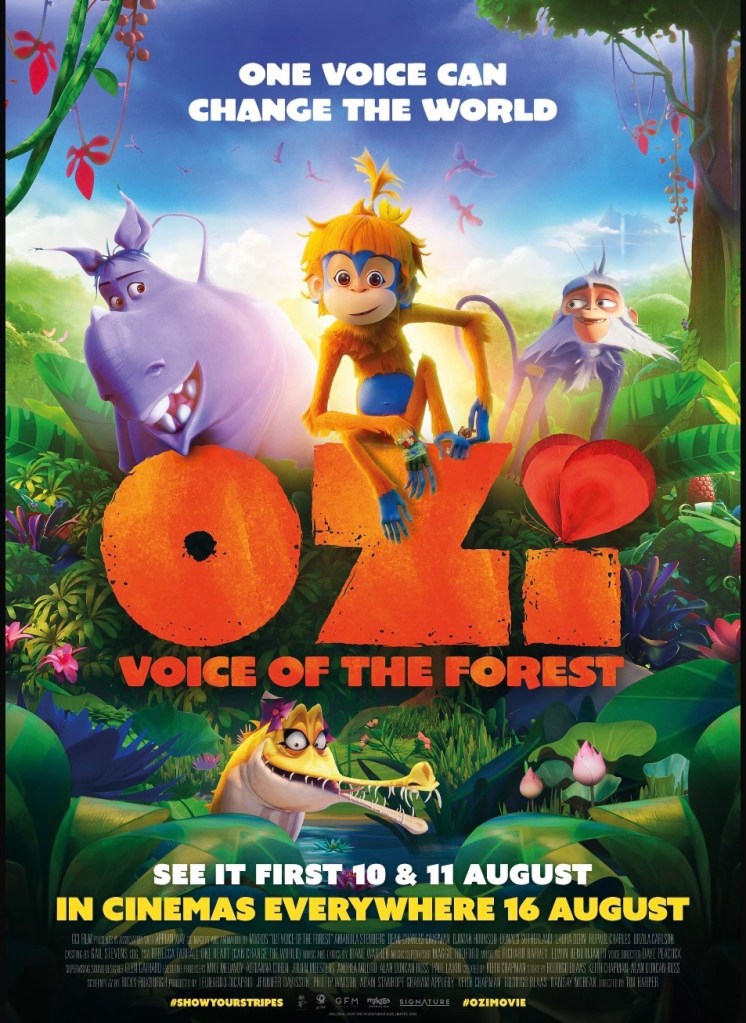
Ever since being separated from her mother (Laura Dern) and father (Djimon Hounsou) as a baby, Ozi (Amandla Stenberg), a young orangutan, has spent her life being raised by kind humans and has learnt how to become an influencer. When an encounter with Chance (Dean-Charles Chapman), a freedom loving monkey and a brave young rhino named Honkus (Urzila Carlson) opens Ozi’s eyes to her habitat’s destruction, she sets out to find her parents and to find a way to save the rainforest…
Despite being a steady provider of outsourced animation for studios such as DreamWorks Animation, Netflix and Nickelodeon’s lower budgeted films such as Captain Underpants: The First Epic Movie, The SpongeBob Movie: Sponge on the Run and Teenage Mutant Ninja Turtles: Mutant Mayhem, French-Canadian studios, Mikros Animation, has rarely made their own films, aside from the likes of Mune: Guardian of the Moon and Sgt. Stubby.
Ozi: Voice of the Forest, the latest attempt from this studio to produce their own content, is a charming and cute film about the importance of nature preservation. Despite being an independent film, the amount of names attached, such as Leonardo DiCaprio as one of the producers and the likes of Amandla Stenberg, Djimon Hounsou, Hugh Bonneville, Laura Dern and even the late Donald Sutherland in one of his last performances in the cast, does make this one of Mikro’s most ambitious projects in years.
While being a bit too simplistic in spite of its good intentions, and the usual cringy moments that revolve around a protagonist obsessed with social media, one has to give Director Tim Harper credit for calling out the actions of companies that exploit climate awareness for profit, being just as bad as the corrupt loggers that destroy those environments, a brave move in this climate.
Overall, Ozi: Voice of the Forest may lack the impact of other films that revolve around this subject matter, but the good acting and cute moments does make this an impressive film that should give Mikros confidence to promote more of their own animation work.
Rating: 3/5
Alien: Romulus
Directed by: Fede Álvarez
Written by: Fede Álvarez and Rodo Sayagues
Starring: Cailee Spaeny, David Jonsson, Archie Renaux, Isabela Merced, Spike Fearn and Aileen Wu
Music by: Benjamin Wallfisch
Rated: 15
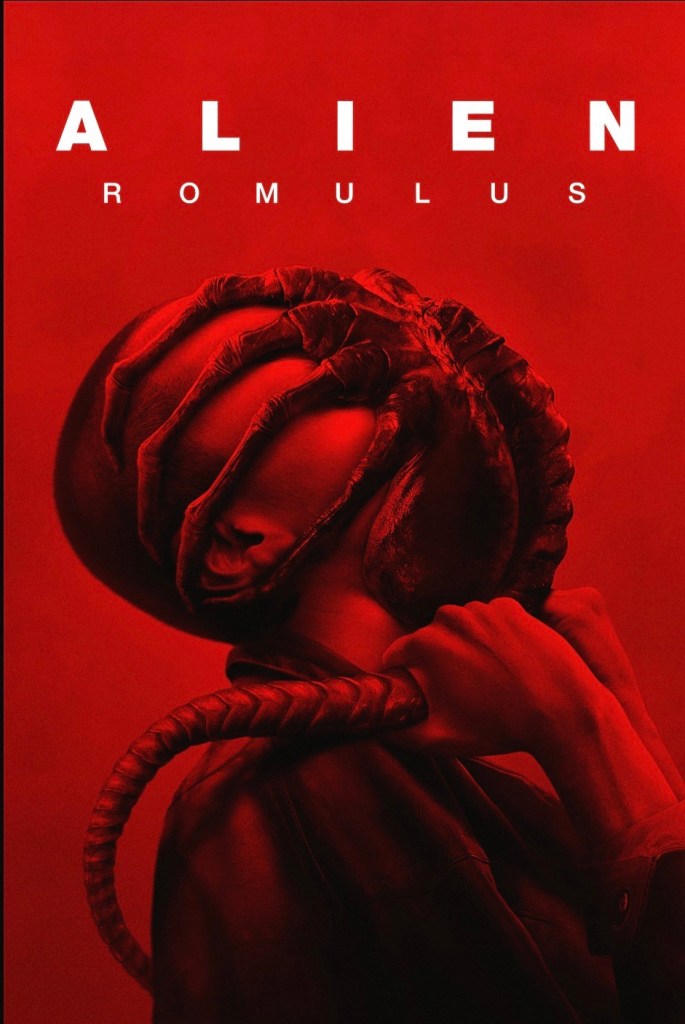
Set during the fifty-seven year time period between Alien and Aliens, a young miner named Rain Carradine (Cailee Spaeny), along with her best friend, a friendly android named Andy (David Jonsson), decide to break into an abandoned Weyland-Yutani spacecraft to find a way off their planet. However, Rain, Andy and a group of other companions accidentally unleash several frozen facehuggers, setting them up for a terrifying encounter with the Xenomorphs that Weyland-Yutani desperately wants to turn into weapons…
Under their new ownership from the Walt Disney Company, one aspect of 20th Century Fox’s that has seen success is with their iconic sci-fi franchises. Prey, a prequel to the Predator films ended up becoming one of the most streamed films in Disney+’s history, Avatar: The Way of Water repeated the original film’s huge financial success at the box office and Kingdom of the Planet of the Apes managed to continue the story of Ceaser’s apes with great enthusiasm.
Finally, there is the Alien franchise to consider, with the last film in the Xenomorph’s collection, 2017’s Alien: Covenant, being both a money loser and extremely divisive among fans and critics of Ridley Scott’s work. While the franchise has found success in the beloved Alien: Isolation video game and an upcoming television series is bringing the Aliens to Earth for the first time that isn’t a crossover with Predator, this latest film, is a much smaller story when compared to the epic scope of Ridley Scott’s last two prequels, being originally conceived as a streaming film.
While much has been said about the shameless cameo of that character that will not be named for spoilers, the rest of Alien: Romulus does manage to be have a great, back-to-basics approach in its story. Director Fede Álvarez of Don’t Breathe and the Evil Dead remake fame, is a great choice in showcasing the franchise’s love of horror and the likes of Cailee Spaeny, David Jonsson and Isabela Mercad, all make for likeable new characters.
Overall, with impressive practical effects and lovable new leads, particularly David Jonsson’s new android character, Alien: Romulus is a slight improvement over the last four films in this franchise, even if it does feel like a “Greatest Hits” film.
Rating: 3.5/5
Beetlejuice Beetlejuice

Directed by: Tim Burton
Written by: Alfred Gough and Miles Millar
Starring: Michael Keaton, Winona Ryder, Catherine O’Hara, Jenna Ortega, Justin Theroux, Monica Bellucci and Willem Dafoe
Music by: Danny Elfman
Rated: 12A
Over thirty-five years after her encounter with the perverted poltergeist, Betelgeuse (Michael Keaton), Lydia Deetz (Winona Ryder) is now a successful supernatural talk show host, although her recent relationship with her new boyfriend, Rory (Justin Theroux), has caused her to become estranged from her teenage daughter, Astrid (Jenna Ortega). When Lydia, her stepmother Delia (Catherine O’Hara) and Astrid return to the Maitland’s home to attend her father’s (played by Jeffery Jones in the first film) funeral, Astrid is tricked into getting trapped into the Neitherworld. With the Maitlands having moved on to the afterlife, Lydia is forced to rely on the help of Betelgeuse in order to save her daughter, while the latter is trying to escape the wrath of his ex-wife, Delores (Monica Bellucci)..
With its zany humour, outstanding use of practical set design and stop-motion, and a completely insane performance from Michael Keaton, Tim Burton’s second film, the 1988 comedy-horror Beetlejuice, was the film that kickstarted his huge success as one of the most popular auteur directors of the 1980s and 1990s with the likes of Edward Scissorhands, Ed Wood, and his Batman films. While Burton hasn’t directed a sequel since 1992’s Batman Returns, he never forget the influence of everyone’s favourite bio-exorcist, and after several failed attempts to bring Betelgeuse back in a Hawaiian, Wild West and Paris setting over the last three decades, he was finally successful with Beetlejuice Beetlejuice, his most energetic film since 2005’s Corpse Bride and best since 2014’s Big Eyes.
Unlike most of Burton’s CGI-heavy reimaginings of the likes of Alice in Wonderland, Dumbo and Dark Shadows, the direction to go back to the iconic German Expression production design that made him such a beloved director, is a welcome one. With the land of the dead looking as great as ever, the costumes, make-up and even the stop-motion sand worms, are all absolutely fantastic, and, complete with a Danny Elfman score, this film feels the closest in years to Burton’s heyday,
Michael Keaton, as expected, is a riot as the unhinged Betelgeuse and Winona Ryder and Catherine O’Hara both make fun returns as Lydia and Delia Deetz. Even if some of the new characters could have been fleshed out better, including ones that set up several subplots that doesn’t have time to be developed, the likes of Jenna Ortega, Monica Bellucci and even Willem Defoe as an undead cop, are all welcome new additions to the showtime.
Overall, despite having a story stuffed with more padding than even Betelgeuse can fit into his bag of mischief, Beetlejuice Beetlejuice is one of Tim Burton’s most entertaining films in years and is a gleefully demented good time at the cinema.
Rating: 3.5/5
The Critic
Directed by: Anand Tucker
Written by: Patrick Marber
Starring: Ian McKellen, Gemma Arterton, Mark Strong, Ben Barnes, Alfred Enoch, Romala Garai and Lesley Manville
Music by: Craig Armstrong
Rated: 15
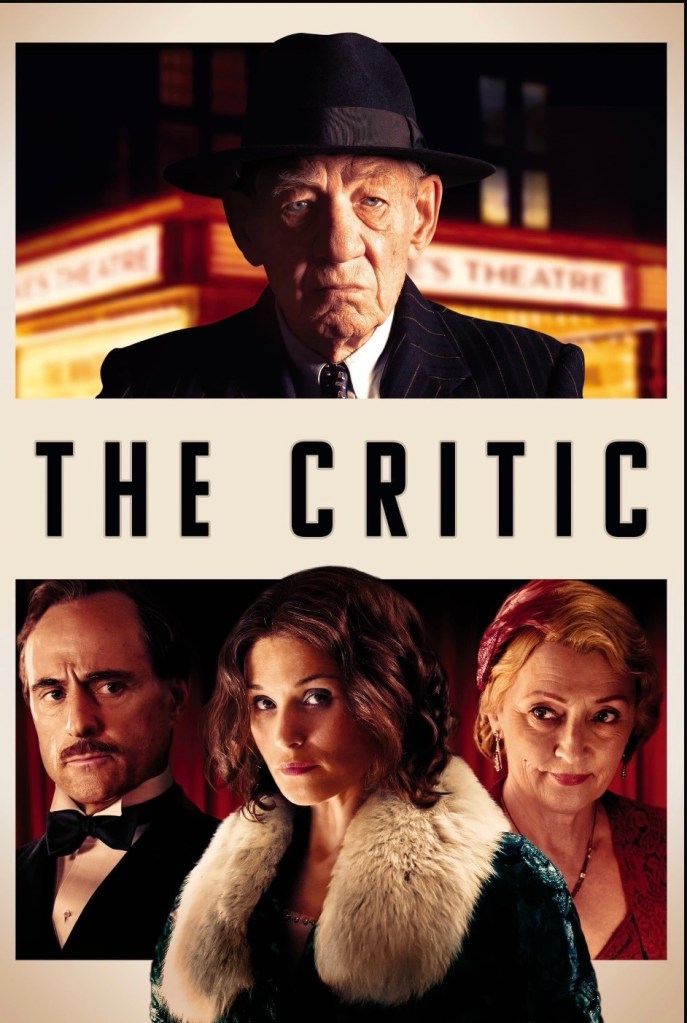
Set in 1930s London, Jimmy Erskine (Ian McKellen), is one of the harshest theatre critics in the whole city, giving a young actress named Nina Land (Gemma Arterton), a scathing critique after her debut performance on stage. When David Brooke (Mark Strong), the new editor of Erksine’s paper, The London Chronicle, fires him over his harsh remarks, Erskine convinces Nina to seduce him, in exchange for positive feedback…
While critics have never been given flattering portrayals in films and television shows that feature them as characters (apart from Anton Ego in Pixar’s Ratatouille), the premise of The Critic, based on a 2015 murder mystery novel by Anthony Quinn about a manipulative theatre critic taking control of an actress’s life, sounds like the perfect opportunity for any director or writer, to give one the treatment that they (in their opinion), deserve.
Although The Critic does fully embrace its 1930s setting and Agatha Christie-style approach to how the titular character manages to manipulate everyone around him, more could have been done with director Anand Tucker‘s premise and it is clear that some aspects of the ending could have been improved. However, the acting, led by a deliciously slimy Ian McKellen, is what makes this a lot of fun to watch, with Gemma Arterton’s suffering actress and Nikesh Patel‘s long-suffering assistant to McKellen’s character, getting some of the best moments.
Overall, while The Critic doesn’t fully capture the exciting premise of a pulp detective story with a psychotic critic as the antagonist, The acting, production design and Craig Armstrong’s haunting score, is what makes this interesting story, worth watching.
Rating: 3.5/5
Speak No Evil (2024)
Directed by: James Watkins
Written by: James Watkins
Starring: James McAvoy, Mackenzie Davis, Scoot McNairy, Alix West Lefler, Dan Hough and Aisling Franciosi
Music by: Danny Bensi and Saunder Jurrianns
Rated: 15
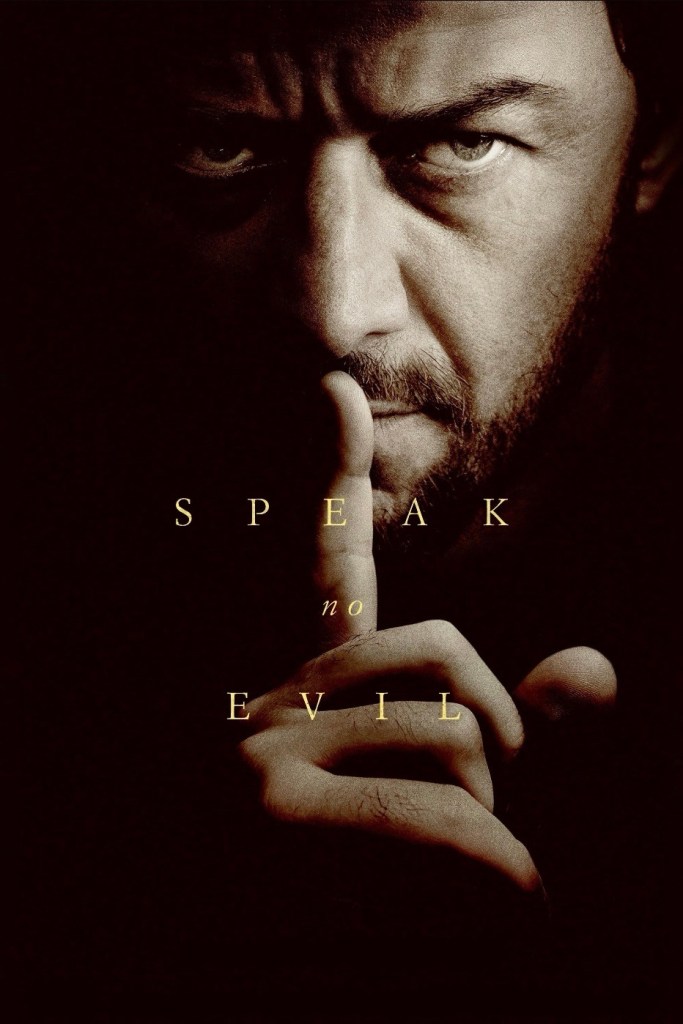
During their vacation to Italy, an American couple named Louise (Mackenzie Davis) and Ben Dalton (Scoot McNairy), along with their daughter, Agnes (Alix West Lefler), meet and befriend Paddy (James McAvoy), a British doctor and his wife, Ciara (Aisling Franciosi) and their mute son, Ant (Dan Hough). When they arrive back in England, Paddy invites the Daltons over for a weekend getaway at his country house. However, they soon realise that Paddy is not what he claims to be…
Regarded as one of the most disturbing Danish films of the last few years, Christian Tafdrup‘s 2022 film, Speak No Evil, used social commentary about the dangers of being too polite to abusive hosts, to tell a haunting fable with an incredibly dark premise. While this American remake, coming from The Woman In Black and Eden Lake director, James Watkins, does tone down a lot of the mean spirited nature of the source material, it does still keep the unsettling tone and the sheer cruelty of the main antagonists
James McAvoy once again shines as an incredibly demented character, as he did in M.Night Shyamalan’s Split and Glass, while both Mackenzie Davis and Scoot McNairy, go through a much more realistic arc, when compared to the utter madness of the couple’s passiveness from the original film. Even though some would argue that the changed ending does take away some of the powerful elements of the original’s satire, it still has a lot of violent and disturbing moments, especially in its depiction of child abuse.
Overall, the American remake of Speak No Evil, in spite of the different ending, is not anywhere near the same level as the remake of The Vanishing, as it still has the same atmosphere, great performances and still encourages people to realise that rudeness can sometimes save your life.
Rating: 3.5/5
Lee

Directed by: Ellen Kuras
Written by: Liz Hannah, John Collee and Marion Hume
Starring: Kate Winslet, Marion Cotillard, Andrea Riseborough, Josh O’ Connor, Andy Samberg, Noémie Merlant and Alexander Skarsgård
Music by: Alexandre Desplat
Rated: 15
In 1977, retired war photographer Lee Miller (Kate Winslet) is interviewed by a young man (Josh O’ Connor), regarding the meaning behind her photos. She then goes on to tell him about her life as a young model, her relationship with her partner, Roland Penrose (Alexander Skarsgård), her career at Vogue magazine and, when World War II breaks out, the truth behind where her photography came from, when she and another photographer named David Scherman (Andy Samberg), are assigned to the European front lines…
Regarded as the real life inspiration behind Kirsten Dunst’s photographer character in Alex Garland’s Civil War, Lee Miller’s life story revolving around her career in the war and the fight she had to go through to get her photos published, was a story that had been a passion project for Kate Winslet and Ellen Kuras, one of the most successful female cinematographers in recent history, whose work on Eternal Sunshine of the Spotless Mind, has made her one of the best in the industry.
While Lee, Ellen’s feature directorial debut, does go through all the tropes one would expect for a WWII set biopic, it does manage to go beyond the expectations for a Sky Cinema release, with Kate Winslet giving an incredible performance as this overlooked figure in WWII history and even Andy Samberg does manage to give one of his best performances as her assistant, David Scherman. Even if the framing device revolving around the last few days of Lee’s life in 1977 does feel a bit unnecessary in spite of the great makeup work, the final twist does justify its inclusion, given the source of this film’s content.
Overall, while lacking the lighting and editing required to give war films the edge that the
likes of 1917 and Saving Private Ryan have provided, Lee is a powerful example of the impact of war photography and the importance of keeping the public aware of the truth of warfare and the atrocities of some aspects of humanity.
Rating: 3.5/5
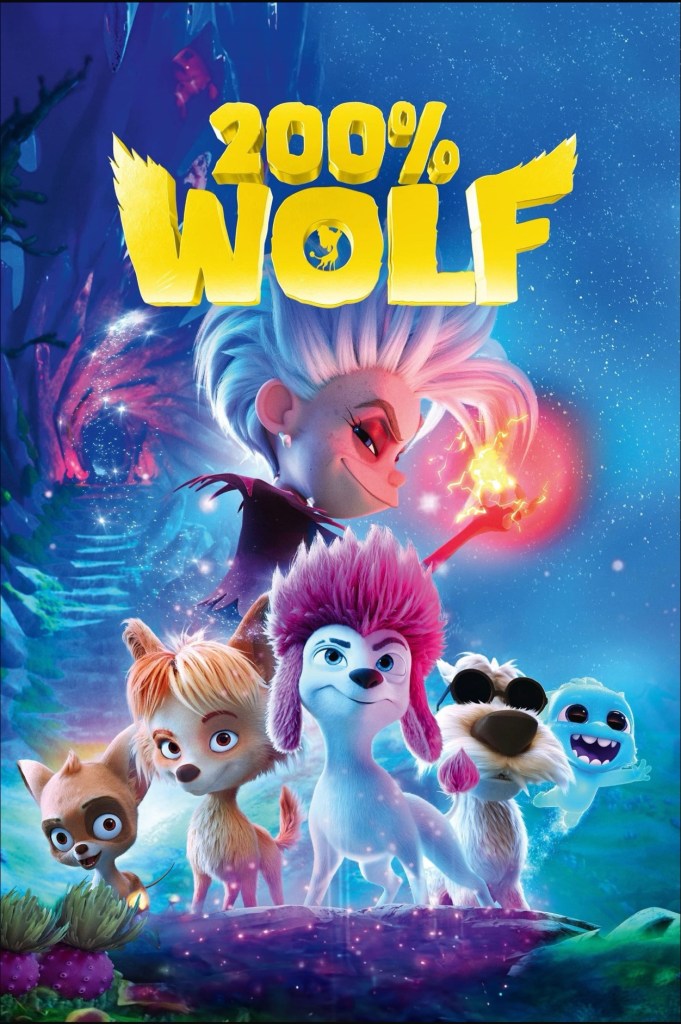
200% Wolf
Directed by: Alexs Stadermann
Written by: Fin Edquist
Starring: Ilai Swindells, Jennifer Saunders, Samara Weaving, Janice Petersen, Heather Mitchell and Sarah Harper
Music by: Emily Brown
Rated: U
Despite helping his Werewolf superhero family to accept dogs as friends, Freddy Lupin (Ilai Swindells), is still not taken seriously as his pack leader due to his were-poodle form. When Freddy is finally given a werewolf form after asking the moon spirits for advice, his joy is short-lived when he discovers a baby moon spirit has accidentally fallen to Earth. With his best friend, Batty the dog (Samara Weaving), Freddy goes on a journey to find the only other were-person capable of making a portal spell to send the baby spirit home, an evil sorceress named Max (Jennifer Saunders)…
Apparently, the 2020 Australian animated film, 100% Wolf, despite being released at a time when a pandemic was disrupting the world’s film schedule, was a big financial success in several countries, with an animated series and now, a sequel to continue the story of the Werepoodle and friends.
While the first film wasn’t awful, this sequel, despite having some nice animation, ups the annoying side characters, unfunny comedy and desperate attempts to be cool, to extremely high levels. Even though some of the voice-acting, especially from Samara Weaving’s Batty and Jennifer Saunders as new villain, Max, does have its moments, the rest, especially Freddy himself, are all really irritating for anyone over the age of nine.
Overall, despite some good animation, 200% Wolf is yet another example of whether everything has to be a franchise nowadays, though in a world where Norm of the North and The Swan Princess can get endless sequels, this is not surprising.
Rating: 2/5
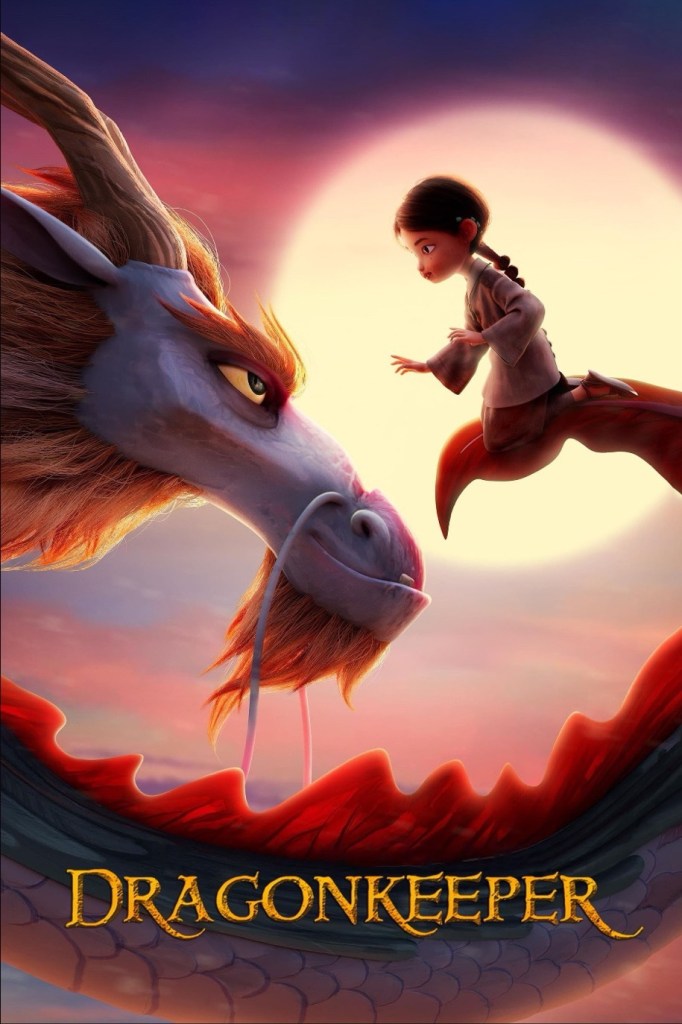
Dragonkeeper
Directed by: Salvador Simó and Li Jianping
Written by: Carole Wilkinson, Pablo Castrillo, Ignacio Ferreras and Rosanna Checcini
Starring: Mayalinee Griffiths, Bill Nighy, Bill Bailey and Anthony Howell
Music by: Arturo Cardelús
Rated: PG
Set in Ancient China’s Han Dynasty, an enslaved girl named Ping (Mayalinee Griffiths), is chosen by a dragon named Long Danzi (Bill Nighy) as a “Dragonkeeper”, a being with mystical powers that has the power to protect dragons. With the guidance of Danzi and the help of her pet rat, Hua, Ping must journey across China in order to rescue a dragon egg from Imperial forces and deliver it to the ocean to hatch…
This Spanish-Chinese animated Co-production, is another example of recent animated films trying to recapture the essence of Dreamworks Animation’s How to Train Your Dragon films. Much like Toothless’s adventures, Dragonkeeper is based on a series of fantasy novels by Australian writer Carole Wilkinson, and follows the hero’s journey narrative to every beat.
However, despite some stiffness in the character animation, the background animation of Han-Era China and the magic sequences are really well animated, and there is a lot of comedy to be found in a child teaming up with a dragon voiced by the always entertaining Bill Nighy.
Overall, Dragonkeeper is a cute and action-packed animated film, in spite of the shortcomings.
Rated: 3/5
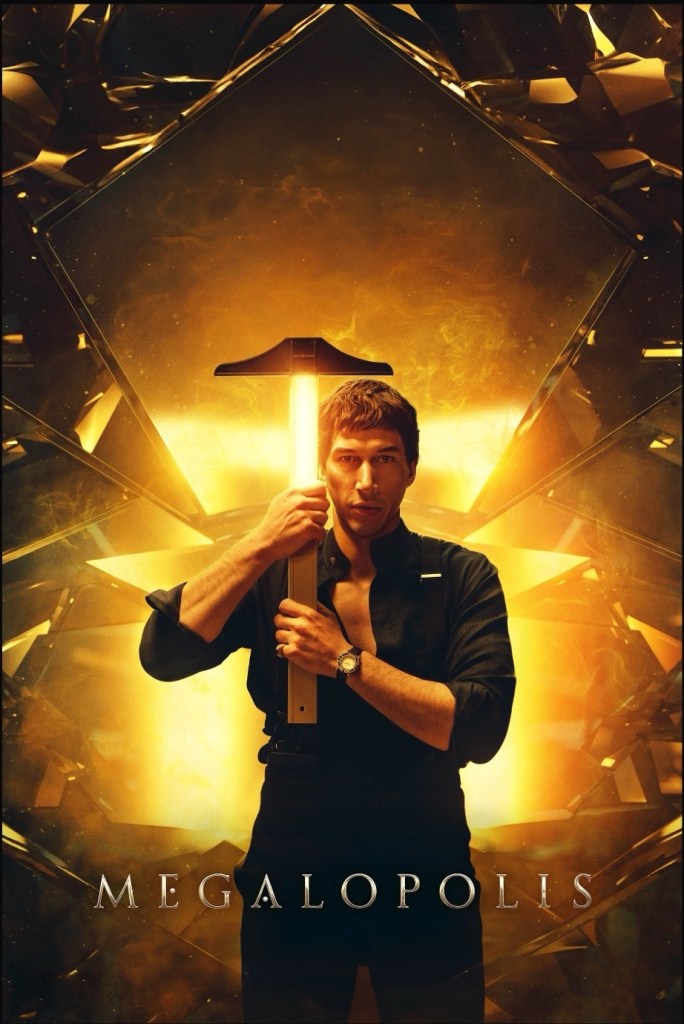
Francis Ford Coppola’s Megalopolis
Directed by: Francis Ford Coppola
Written by: Francis Ford Coppola
Starring: Adam Driver, Giancarlo Esposito, Nathalie Emmanuel, Aubrey Plaza, Shia LaBeouf, Jon Voight, Laurence Fishburne, Kathryn Hunter and Dustin Hoffman
Music by: Osvaldo Golijov
Rated: 15
Set in an alternate modern day universe, in which Ancient Rome became the equivalent of America’s New York City, an ambitious futurist architect named Cesar Catilina (Adam Driver) clashes with the mayor of “New Rome”, Franklyn Cicero (Giancarlo Esposito), over their opposing views of the former’s dream project for the city, to use a newly discovered bio-adaptive material to construct a new city, Megalopolis. As the project’s development moves further along, Caser faces many obstacles to his goal, including his fascist cousin , Clodio Pulcher (Shia LaBeouf), his ambitious ex-mistress, Wow Platinum (Aubrey Plaza) and his unexpected romance with Cicero’s daughter, Julia (Nathalie Emmanuel)…
Despite being one of the “Big Four” directors (and film classmates) that dominated the history of cinema throughout the 1970s and 1980s along with Steven Spielberg, George Lucas and Martin Scorsese, Francis Ford Coppola, much like Ridley Scott, has had a more hit and miss career when compared to the other three. While Coppola has directed classics such as The Rain People, The Conversation, Apocalypse Now and the first two Godfather films, he has also directed loads of unimpressive movies such as Jack, Garden of Stone and The Godfather Part III.
After a thirteen year long hiatus following 2011’s Twixt, Coppola has finally came back with a passion project of this that has been in some form of development for the last five decades. Coming from his fascination with Ancient Rome and the science fiction films, Metropolis and Things to Come, Megalopolis had some of the worst luck to come from a production even when compared to the infamous production of Apocalypse Now. Two attempts in 1989 and 2001 were cancelled due to Coppola having to steady his career after several box office bombs for the former, and due to a major event in the script having an eerie resemblance to the 9/11 attacks in the latter, Coppola then lost faith in the studio system and sold some of his wine businesses to fund the project, COVID delayed the next attempt to film and even when the production was finally completed in late 2023, misconduct allegations, a disastrous trailer that was generated through AI and a polarising response at the Cannes Film Festival, threatened to sink this ambitious film.
While Megalopolis is definitely not his worst film, as the ideas regarding the world-building of an Ancient Roman city that kept evolving through modern times to become a version of New York City, has fantastic potential and the idealogical clash between a dreamer and a mayor to build a utopian city does have its merits , Coppola’s vision is not going to appeal to much audiences, outside of die-hard sci-fi fans or cinephiles looking more ambitious films than what is typical of Hollywood today.
While Coppola’s choice to keep hiring problematic actors such as Jon Voight, Shia LaBeouf and (to a lesser extent) Dustin Hoffman is questionable, as the middle gives one of the worst performances in years, the rest, such as Adam Driver’s ambitious architect, Giancarlo Esposito‘s sceptical mayor, and Laurence Fishburne’s butler narrator, all manage to give great performances. Even though the design of both New Rome and Megalopolis itself all manage to give fantastic art-deco looks, the more confusing aspects of the world-building, such as Driver’s character’s unexpected ability to stop time, raises tonnes of questions and despite the long runtime, the pacing feels like a chore to sit through.
Overall, even though this film may not be suited to modern audience tastes, there is an interesting area of film fandom that will find something to appreciate about this ambitious idea. Like the city itself, Megalopolis is an interesting idea that needed a lot more attention, even after its extremely long production cycle.
Rated: 2.5/5
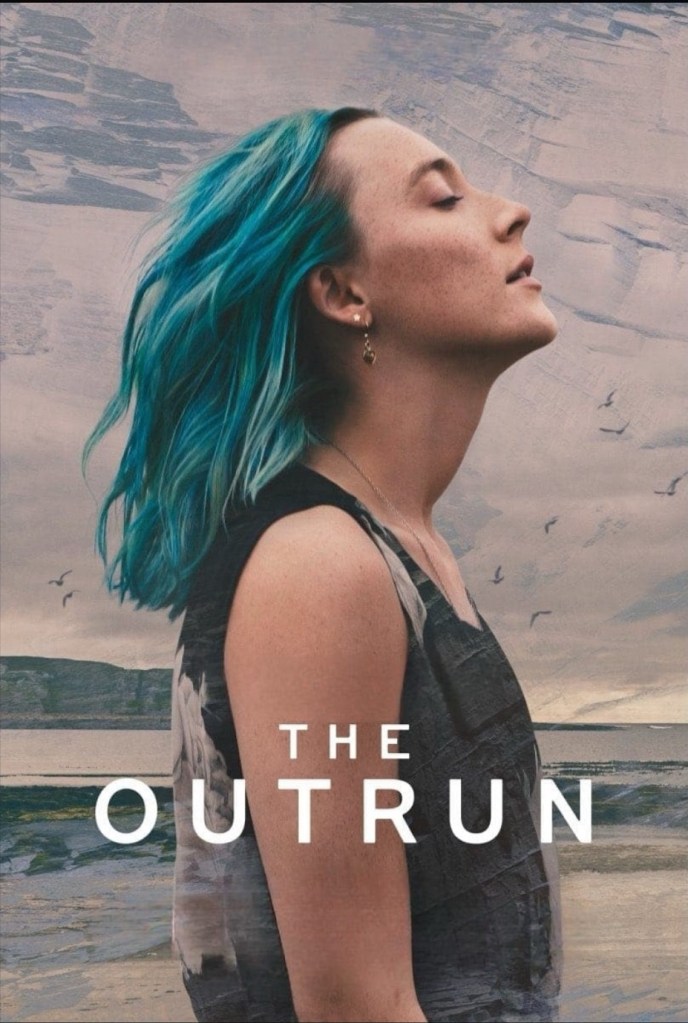
The Outrun
Directed by: Nora Fingscheidt
Written by: Nora Fingscheidt and Amy Liptrot
Starring: Saoirse Ronan, Paapa Essiesdu, Nabil Elouahabi, Izuka Hoyle, Lauren Lyle, Saskia Reeves and Stephen Dillane
Music by: John Gürtler and Jan Miserre
Rated: 15
After finishing a rehab program for her alcoholism, a troubled young woman named Nona (Saoirse Ronan) goes to visit her parents, Annie (Saskia Reeves) and Andrew (Stephen Dillane) in the Orkney Islands. While getting a part-time job to monitor the island’s corncrake birds and seals, Nona’s inner demons threaten her hard-won soberisim…
Much like her two previous films regarding honest takes on the problems women face, German director Nora Fingscheidt‘s The Outrun, based on the written memoirs of journalist (and Co-writer of the script), Amy Liptrot‘s move to Orkney and struggles with maintaining her sobriety from alcoholism, is an emotionally honest story about the hard aspects of giving up addictions.
Also throwing in a bit of celebration for the people and myths of Orkney, in which some aspects of Nora’s story is told via dialogue metaphors of Scottish culture and history, The Outrun is carried to higher levels of emotional weight thanks to Saoirse Ronan‘s fantastic performance. Yunus Roy Imer‘s incredibly beautiful cinematography of the Orkney Islands, as well as Stephan Bechinger‘s great editing of both flashbacks and flash forwards, truly give this story, the right amount of attention this needs.
Overall, while slightly different when compared to most biopics based on memoirs, The Outrun is a beautifully shot and well-acted take on a young woman’s struggle to stick to being sober, as well as a emotional love letter to the islands of Orkney.
Rating: 3.5/5
Joker: Folie à Deux
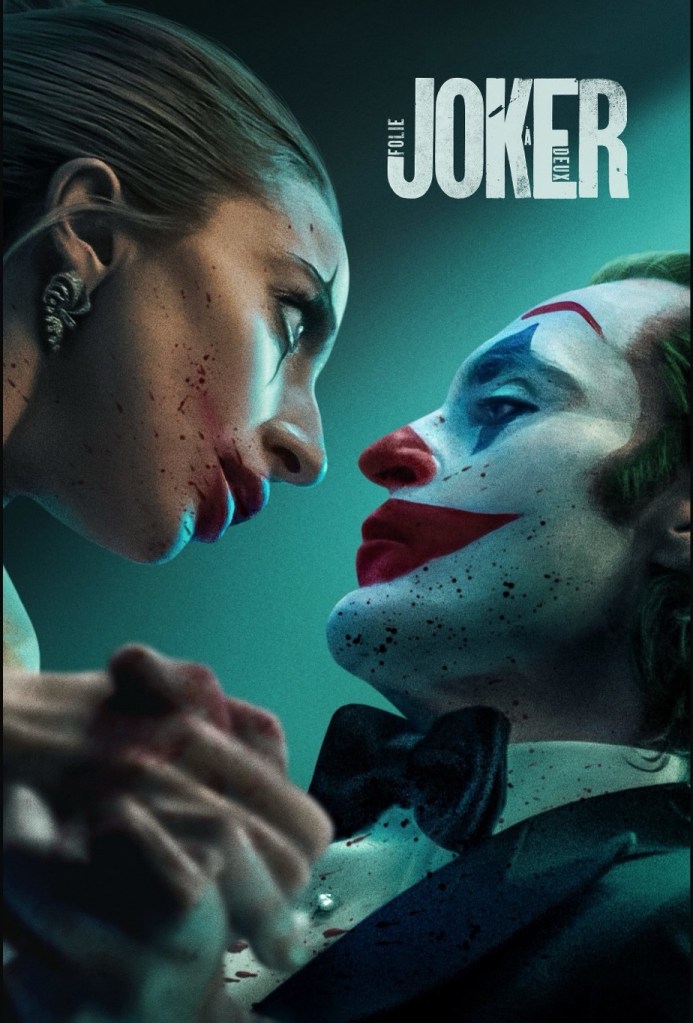
Directed by: Todd Phillips
Written by: Scott Silver and Todd Phillips
Starring: Joaquin Pheonix, Lady Gaga, Brendan Gleeson, Catherine Keener, Steve Coogan, Harry Lawtey and Zazie Beetz
Music by: Hildur Guðnadóttir
Rated: 15
Two years after he killed Murray Franklin on live television and caused numerous riots in Gotham City as the criminal Joker, Arthur Fleck (Joaquin Phoenix) has been held in Arkham Asylum to await his trial. While there, Arthur meets and falls in love with fellow inmate, Lee Quinzel (Lady Gaga), who encourages him to embrace his Joker persona, even if it leads to even more chaos and mayhem for the city…
Despite being a very unconventional take on DC Comics’s most iconic Batman antagonist with the tone of 1970s-1980s Martin Scorsese films and giving the Clown Prince of Crime a much more realistic origin story, Todd Phillips’s 2019 film, Joker, ended up becoming the most financially successful R-Rated film of all time, with numerous awards for Joaquin Phoenix’s performance as the titular character in spite of mixed reviews for the film and a controversial marketing campaign.
Although Phillips has said that Joker was always meant to be a standalone film, the huge success led to him coming back for an encore, along with Matt Reeves’s The Batman franchise as the only two DC projects allowed to remain in production while the rest of DC’s future films are set to be handled by James Gunn and Peter Safran.
Much like how the first film subverted expectations by completely changing Joker’s fantastical origin story to the style of a gritty New Hollywood crime-drama, the sequel once again defies expectations by changing genres to a Golden era Hollywood style musical, in how it depicts the love story between Joker and Harley Quinn.
Being the first live-action version of the Joker’s love interest that is not played by Margot Robbie, Lady Gaga does a fine job as this much more cruel version of Harley designed to fit into Todd Phillips’s much more nihilistic take on Gotham City. Phoenix himself once again does manage to steal everyone’s attention as this much more tragic take on the clown, even if a lot of his character development is taken in a direction that does feel like backpedaling for the sake of it.
Speaking of backpedaling, while the first film had its problems in how it depicted mental health and motivations for serial killers, Joker: Folie à Deux falls apart completely in the third act and the much-publicised musical numbers, while well staged and shot, feel really boring and repetitive.
Overall, while Gaga and Phoenix are great as their characters and the Make-up and production design effects are still really impressive, Joker: Folie à Deux is too much of a disappointment to recommend for anyone who doesn’t enjoy either musicals, the actors or cinephiles looking for more unique takes on popular comic-book characters.
Rated: 2.5/5
Buffalo Kids
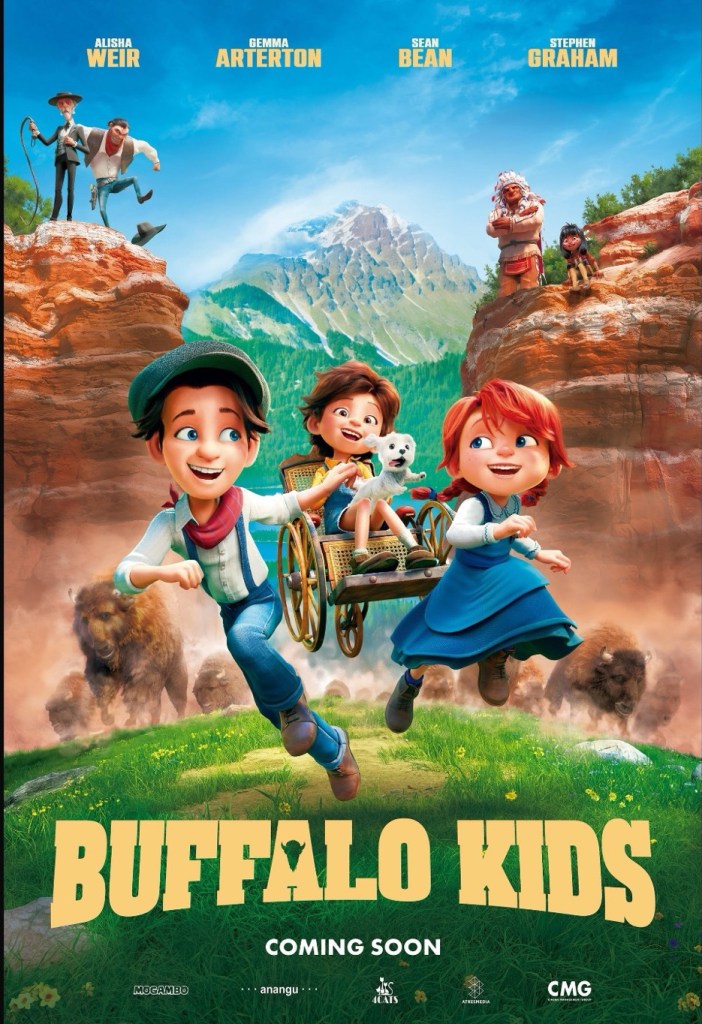
Directed by: Pedro Solís García and Juan Jesús García Galocha
Written by: Jordi Gasull and Javier Barreira
Starring: Alisha Weir, Conor MacNeill, Sean Bean, Gemma Arterton and Stephen Graham
Music by: Fernando Velázquez
Rated: PG
In late nineteenth century America, two orphaned Irish children named Mary (Alisha Weir) and her older brother, Tom (Conor Macneill), board an train from New York to California in order to meet up with their uncle Niall (Stephen Graham). During their cross-county journey across America with a group of orphans , Mary and Tom befriend a kind-hearted paraplegic boy named Nick, and when the three of them end up separated from the rest of the passengers, Mary, Tom and Nick must do all they can to save them, when the passengers get kidnapped by a group of bandits…
After 2023’s Mummies ended up being a better than expected international hit, the two Spanish animation companies 4 Cats Pictures and C.O.R.E Animation have teamed up again for their most interesting project in terms of inspiration and genre. While animated Western films have mostly been limited to DreamWorks Animation’s Spirit franchise, Disney Animation’s Home on the Range, Amblin’s An American Tail: Fieval Goes West and Paramount’s Rango, this project is also a loose feature-length remake of co-director Pedro Solís García‘s 2013 short film, Strings, only with the Western setting, a lot more characters, and a happier ending.
Much like Mummies, a lot of the humour does tend to be hit or miss, especially with an out of nowhere Taxi Driver gag. However, Buffalo Kids does manage to be an entertaining Western adventure for children, with stunning backgrounds and charming characters. The biggest emotional moments, much like the short film that this was based on, revolve around the children’s relationship with Nick.
As this character was based on Pedro’s late son, the subtext of a director giving his child one last adventure in which he is free to have the happiest ending, is a beautiful one. While the only other thing taken from the short is a dancing dream sequence, the heart still remains in his relationship with his new friends.
Overall, in spite of having some moments that are a bit too on the nose (especially with how easily some dark aspects of colonialism are easily resolved, much like Disney’s Pocahontas), Buffalo Kids is an overall better than average kid’s Western and a heartwarming story told from the heart of a father.
Rated: 3.5/5
Transformers One
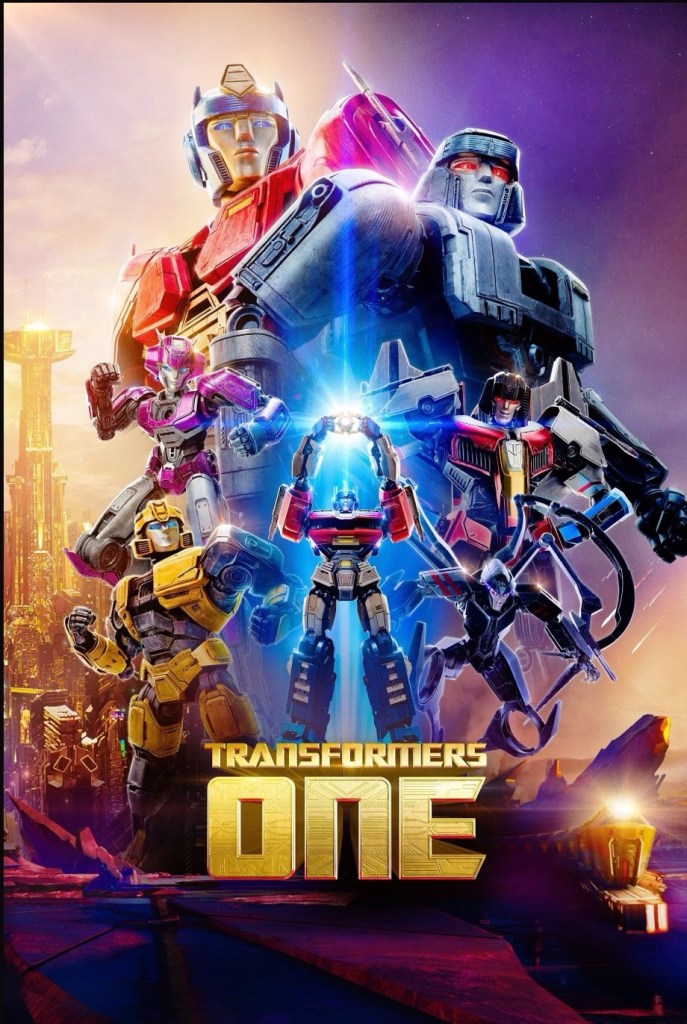
Directed by: Josh Cooley
Written by: Eric Pearson, Andrew Barrer and Gabriel Ferrari
Starring: Chris Hemsworth, Brian Tyree Henry, Scarlett Johansson, Keegan-Michael Key, Steve Buscemi, Laurence Fishburne and Jon Hamm
Music by: Brian Tyler
Rated: PG
Millions of years before coming to Earth, the Transformers, despite not being able to transform, lived on the planet Cybertron, where two young miners, Orion Pax (Chris Hemsworth) and D-16 (Brian Tyree Henry), worked together as best friends to mine an energy source called Energon. After escaping to the planet’s surface along with the no-nonsense Elita-1 (Scarlett Johansson) and the fun-loving “Bee” (Keegan-Michael Key), Orion and D-16 learn a devastating truth from an elderly Prime named Alpha Trion (Laurence Fishburne). While the four young robots gain the ability to save their world, D-16 and Orion start disagreeing over how to do it, leading them to be transformed into both the most infamous and famous leaders in the history of the universe…
Forty years after Hasbro’s Transformers toy franchise expanded to the animated series and comics, Transformers One seeks to go back to the franchise’s cartoon roots of the 1980s, the first animated feature since 1986’s The Transformers: The Movie, and after seven live-action films.
Fresh off of directing a story about toys with Pixar’s Toy Story 4, Josh Cooley completely reinvents what people know about these characters, by setting the film completely on Cybertron with no human characters, to tell the origin stories of both the heroic Optimus Prime and the evil Megatron. Despite sharing a lot of similarities with Darth Vader’s arc in the Star Wars prequels and with the relationship between Professor X and Magneto in X-Men: First Class, the tragic story of Optimus and Megatron’s early life, leads to Transformers One being the most emotional story that the franchise has made, thanks to how surprisingly good Chris Hemsworth and Brian Tyree Henry are in voicing younger versions of these two foes.
While the animation does fall a bit short when compared to the Spider-Verse films that some are comparing it to, the character designs, action sequences and backgrounds look absolutely stunning, as if the 1980s series and Blade Runner’s cyberpunk aesthetic was blended together to create this more utopian take on the home of these robots. In spite of Keegan-Michael Key’s more talkative take on Bumblebee, the rest of the characters, such as Scarlett Johansson’s easily annoyed Elita-1, Steve Buscemi’s perfect casting as Starscream and Jon Hamm’s intimidating take on Sentinel Prime, are all very entertaining, along with numerous cameos that fans will love.
Overall, Transformers One is easily the franchise’s best instalment and a fantastic new origin story for new fans of the robots in disguise.
Smile 2
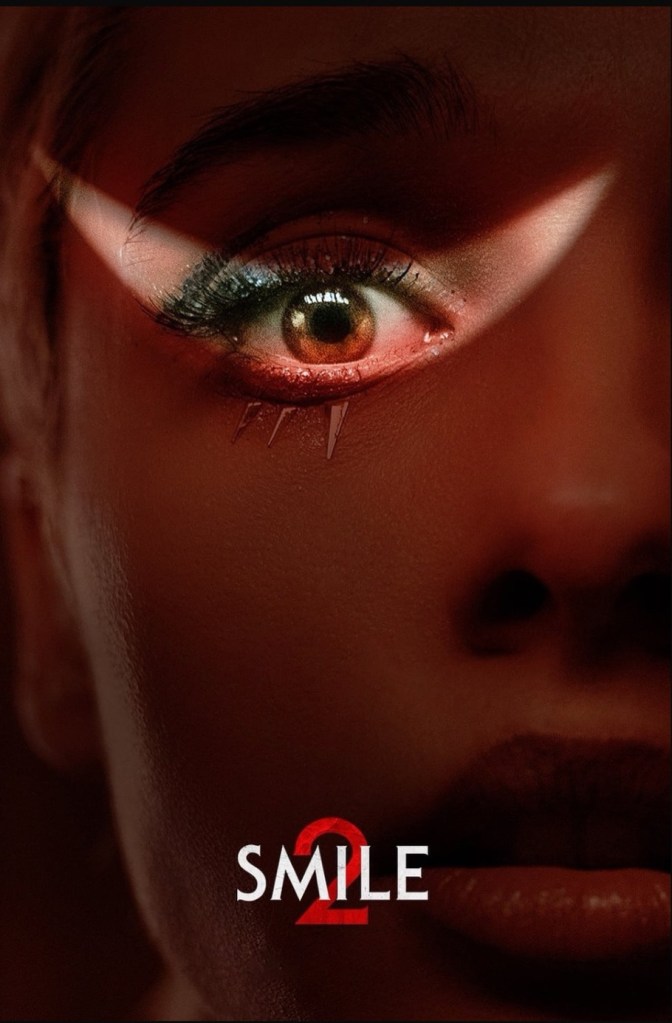
Directed by: Parker Hill
Written by: Parker Hill
Starring: Naomi Scott, Rosemarie DeWitt, Kyle Gallner, Lukas Gage, Miles Gutierrez-Riley, Peter Jacobson, Raúl Castillo, Dylan Gelula and Ray Nicholson
Music by: Cristobal Tapia de Veer
Rated: 18
A year after recovering from a car accident, pop sensation Skye Riley (Naomi Scott), is ready to embark on a world tour to celebrate her recovery from trauma and disgrace. However, when she witnesses her school friend, Lewis (Lukas Gage), kill himself as a result of him inheriting the “Smile demon” parasite from Joel (Kyle Gallner), the creature finds a new victim in the form of Skye…
After the first Smile, a creepy and pessimistic film about mental illness metaphors in the form of demon possession, ended up being a big success for Paramount Pictures in 2022, a new horror franchise was immediately set up with this sequel. Director and writer Parker Hill , takes the satirical themes of the first film and ups them up with an additional message about the pressures of maintaining happiness as a musical celebrity.
While the nihilism still hasn’t gone away and the actors all manage to be excellent performers in both their possession and human scenes, Smile 2 does miss a few opportunities to really take its singing celebrity setting, to even higher levels. This is especially during the climax, where one last song could have really made this as fun as the insanity of The Substance’s ending.
Overall, in spite of these films still not being good representations of how to deal with mental struggles, Smile 2 still manages to work as a darkly twisted cautionary tale, with the addition of being a entertaining satire of celebrity culture.
Rating: 3.5/5
The Wild Robot

Directed by: Chris Sanders
Written by: Chris Sanders
Starring: Lupita Nyong’o, Kit Connor, Pedro Pascal, Catherine O’Hara, Matt Berry, Stephanie Hsu, Bill Nighy, Mark Hamill and Ving Rhames
Music by: Kris Powers
Rated: U
In the near future, on an island of animals, ROZZUM Unit 7134 (Lupita Nyong’o), a self-service robot, ends up getting stranded without a purpose. Despite being unsuccessful in finding a task, even after learning the language of the animals, “Roz” ends up adopting a Canada goose named Brightbill (Kit Connor), after he imprints on her. With the help of a mischievous fox named Fink (Pedro Pascal), a mother opossum named Pinktail (Catherine O’Hara) and a falcon named Thunderbolt (Ving Rhames), Roz must find a way to teach Brightbill to survive before winter arrives…
In mainstream American animation, one of the best types of protagonists for some of the best films has been the robot. While the likes of the droids of Star Wars, Robbie from Forbidden Planet and the T-800 have dominated popular culture, ones from animated films, such as Wall-E and EVE from WALL-E and the titular character from The Iron Giant, have become just as beloved as those examples.
After three decades of content, DreamWorks Animation have finally decided to make their own robot feature with The Wild Robot, an adaptation of the book series by Peter Brown, which may be the company’s best original film since How to Train Your Dragon. This isn’t surprising, given the fact that the director of that film, Chris Sanders, who also directed Lilo & Stitch for Walt Disney Animation Studios and The Croods for DreamWorks, has returned to the latter company to bring this story to life, after a brief foray into live-action with 2020’s The Call of the Wild.
Continuing the successful use of the technology that was seen in The Bad Guys and Puss in Boots: The Last Wish, The Wild Robot’s painterly stylised CGI, blends together to make the forest and futurist environments, look like a blend of Bambi, Castle in the Sky and My Neighbor Totoro’s art direction. While some people that were let down by the later trailer’s revelation of talking protagonists after the first teaser trailer hinted at a silent film, the likes of Lupita Nyong’o, Pedro Pascal, Kit Connor and Catherine O’Hara, all bring so much life to their robot and animal characters, with the former three making for such a lovable adoptive family unit of Roz the robot, Fink the fox and Brightbill the goose.
Overall, with beautiful animation, a heartwarming story about adoptive family love and timeless themes of belonging, The Wild Robot is proof that Chris Sanders is easily one of the best of the ex-Disney animators and a fitting way to celebrate the thirtieth anniversary of the house that Shrek (and The Prince of Egypt and Chicken Run), built.
Rated: 5/5
Venom: The Last Dance

Directed by: Kelly Marcel
Written by: Kelly Marcel
Starring: Tom Hardy, Chiwetel Ejiofor, Juno Temple, Rhys Ifans, Peggy Lu, Stephen Graham, Clark Backo, Alanna Ubach and Andy Serkis
Music by: Dan Deacon
Rated: 15
After their (very brief) visit to the Sacred Timeline (The Marvel Cinematic Universe), Eddie Brock (Tom Hardy) and Venom (also Tom Hardy) find themselves on the run from Imperium, a government operation stationed in Area 51, Nevada, who have possession of numerous other symbiotes. When Eddie and Venom soon discover that Knull (Andy Serkis), an alien god who created the alien symbiotes, is planning to use a Codex that resides inside Eddie’s body to invade Earth as a result of Venom bringing Eddie back to life in the first film, both Eddie and Venom are forced to come to a fateful decision regarding their partnership and universe protection…
While Sony’s recent attempt to build their own Marvel franchise with the Spider-Man villains has resulted in awful films like Morbius and Madame Web, one exception to this has been the ones about one guy and his alien true love. Even though this “Spider-Man, but with no Spider-Man” franchise has been really unpopular, both 2018’s Venom and its sequel, 2021’s Venom: Let There Be Carnage both grossed over 500 million at the box office, and found an unexpected adoration revolving around Tom Hardy’s hilarious double act as Eddie Brock and a much goofier Venom than most depictions of one of Spidey’s most popular enemies.
In this supposed final film of the story of Eddie and his alien buddy, like the first two films, anything that exclusively revolves around Tom Hardy’s characters is as funny as you’d expect, with Las Vegas casinos, an ABBA dance off with fan-favourite character, Mrs. Chen (Peggy Lu) and all the hilarious banter that Tom Hardy can provide. However, Venom: The Last Dance doesn’t have much aside from that.
Although the disappointing payoff to Let There Be Carnage’s post-credit scene was already set-up in Spider-Man: No Way Home’s one, it is clear that long-time writer of this trilogy, Kelly Marcel, could have kept a few of that premise in her directorial debut. Andy Serkis’s new antagonist, Knull is underwhelming at best and with the premise of a whole new army of alien symbiotes, it is clear that this trilogy was starting to run out of ideas with all its antagonists being either them, or their human hosts.
Overall, with underwhelming new characters played by Chiwetel Ejiofor, Juno Temple and Clark Backo, a slightly disappointing payoff to numerous story threads from the rest of the films and much cheaper looking CGI, Venom: The Last Dance ends the story of Eddie and Venom (at least, until their inevitable reunion in Avengers: Secret Wars), on a fine, yet underwhelming final dance.
Rating: 2.5/5
Heretic
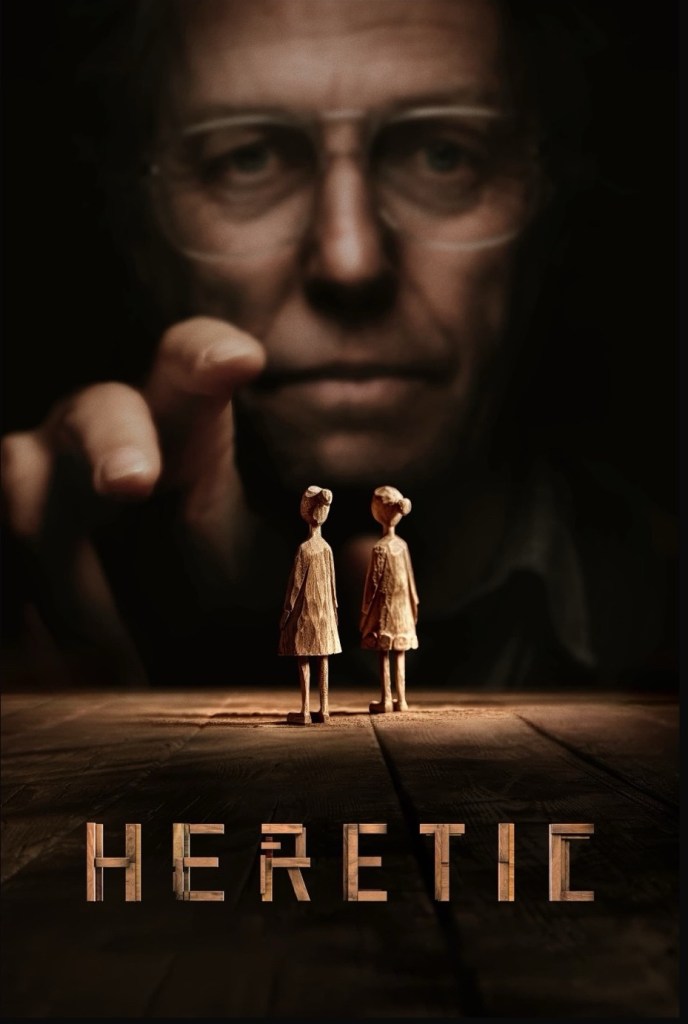
Directed by: Scott Beck and Bryan Woods
Written by: Scott Beck and Bryan Woods
Starring: Hugh Grant, Sophie Thatcher, Chloe East and Topher Grace
Music by: Chris Baccon
Rated: 15
Two Morman missionaries named Sisters Barnes (Sophie Thatcher) and Paxton (Chloe East) visit the home of Mr. Reed (Hugh Grant), in order to convert him to their religious beliefs. However, the two young women find themselves in an unexpected situation when Reed is shown to be dangerously smart about the truth of religion and its impact on world culture…
Despite the mild hiccup that was the poorly conceived 65, directors and writers Scott Beck and Bryan Woods thankfully have headed back to their elevated horror roots with this sharp dark satire of how people can be manipulated by religious beliefs.
Even though he is playing a much darker character than usual, Hugh Grant is still ridiculously entertaining as Mr. Reed, whose roasts to the preachers, are delivered with the same charm and laughter as his comedic roles, even if it is a lot more savage this time around.
As expected from an A24 elevated horror film, the production design, chilling moments and haunting score from Chris Bacon, makes Heretic feel incredibly scary, even if most of the runtime takes place in brightly lit rooms. While the last ten minutes do veer into an anticlimax, the themes of storytelling and how it can be used to manipulate people, are very well staged.
Overall, Heretic, despite its minor issues, is still something worth believing in.
Rating: 4.5/5
Red One
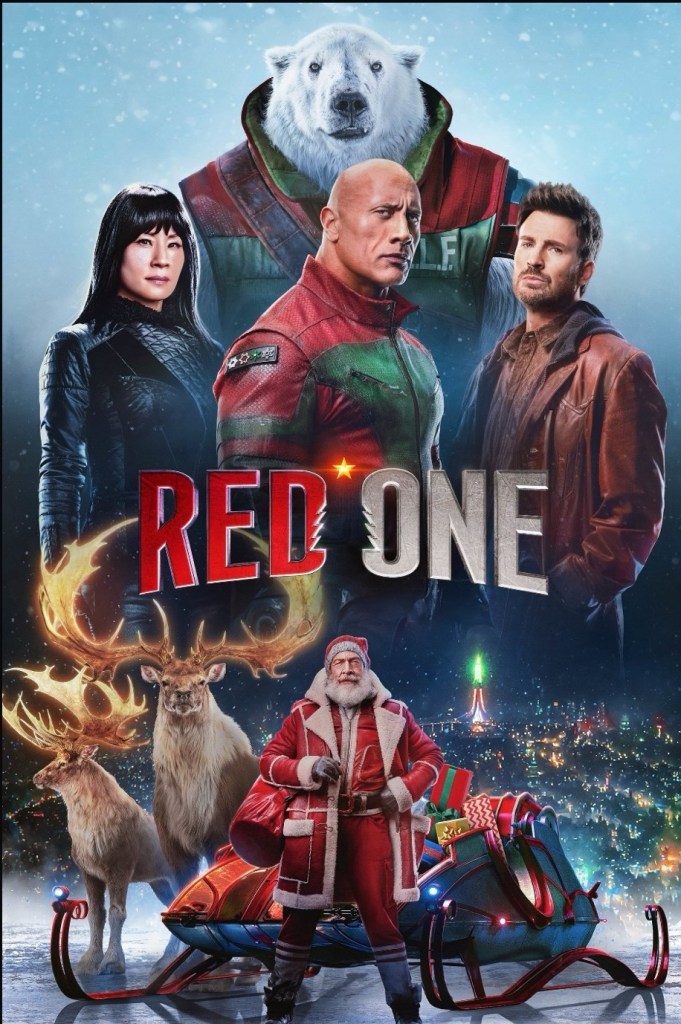
Directed by: Jake Kasdan
Written by: Chris Morgan
Starring: Dwayne Johnson, Chris Evans, Lucy Liu, Kiernan Shipka, Bonnie Hunt, Nick Kroll, Kristofer Hivju and J.K. Simmons
Music by: Henry Jackman
Rated: 12A
In the modern day, the work of Santa Claus (J.K. Simmons), has expanded to a massive military style operation that is led by his most trusted bodyguard and head of North Pole security, Callum Drift (Dwayne Johnson). When Santa gets kidnapped by Gryla (Kiernan Shipka), an evil sorceress, Callum’s only hope to get his boss back, is to hire an 4-class “naughty lister”, bounty hunter Jack O’Malley (Chris Evans), in order to save Christmas…
Originally planned to be released in fall 2023 until the SAG-AFTRA strikes pushed it back a whole year, Red One, directed by Jumanji sequel director Jake Kasdan, and written by Fast & the Furious veteran, Chris Morgan, is the latest attempt for Amazon Studios to build their own Christmas franchise.
While loads of laughs can be found in Dwayne Johnson and Chris Evans’s constant bickering and comedy, Red One doesn’t have some of the charm that made the recent Jumanji films so fun to watch. However, the creativity around how Santa’s operations run in a modern world, and the character designs of creatures such as giant killer snowmen and talking animal agents, does lead to some funny moments, even if a lot of the gags are recycled from the likes of Arthur Christmas.
Overall, with a funny double act in Johnson and Evans and really inventive worldbuilding, Red One does manage to be a likeable new seasonal film, even if some of the CGI and the cruder humor, does leave a lot to be desired.
Rating: 3/5
Paddington in Peru

Directed by: Dougal Wilson
Written by: Mark Burton, Jon Foster and James Lemont
Starring: Ben Whishaw, Hugh Bonneville, Emily Mortimer, Julie Walters, Jim Broadbent, Madeline Harris, Samuel Joslin, Olivia Colman, Antonio Banderas and Imelda Staunton
Music by: Dario Marienelli
Rated: PG
Several years after welcoming his beloved Aunt Lucy (Imelda Staunton) to her London visit, Paddington Bear (Ben Whishaw) and the Brown family are invited by the new head for the Home for Retired Bears, The Reverend Mother (Olivia Colman), to return the favour by visiting Lucy in Peru. However, when Paddington, the Browns and Mrs. Bird (Julie Walters) arrive, they find out that Lucy has left on a quest to find the lost city of El Dorado. Worried for Lucy’s safety, Paddington, Henry (Hugh Bonneville), Mary (Emily Mortimer), Jonathan (Samuel Joslin) and Judy Brown (Madeline Harris), hire a a boat captain named Hunter Cabot (Antonio Banderas), to take them across the Amazon River to find her, while discovering that Paddington may have a secret connection to the city…
After the first two Paddington films have become two of the most beloved live-action family films of the 2010s, with Paddington 2 in particular, also being hailed as one of the greatest films ever made by some critics, it was always going to be a massive challenge for a third film about Michael Bond’s beloved bear, to live up to such massive expectations. Although Paddington in Peru may not be as fantastic as those films, it is still a wonderful movie for all ages.
As revealed from the title, for the first time in the history of this franchise, Paddington and the Browns finally decide to go back to the bear’s original home of “Darkest Peru”, which does have the opportunity to lead into some great examples of comedy. However, one of the biggest charms of the previous films and television shows, was Paddington’s “fish-out-of-water” gags of misunderstanding human culture, which is lacking in a premise where the Browns are the misfits this time. However, the treasure hunt plot does lead to the usual moments of comedy and heart that the previous films have had.
Ben Whishaw is once again, fantastic as the friendly Paddington and the likes of Hugh Bonneville, Julie Walters, Jim Broadbent and Imelda Staunton all bring back their characters with so much humorous energy. However, while Paddington in Peru doesn’t feature the likes of Paul King and Simon Farnaby (apart from a small cameo) coming back as director or co-writer, one more notable absence is Sally Hawkins as Mrs. Brown. While Emily Mortimer does a passable job as the caring mother, she lacks the natural charm that Hawkins brought to the role. Thankfully, new additions Olivia Colman and Antonio Banderas bring a fresh burst of energy as the quirky Reverend Mother and the gold-hungry explorer, Hunter Cabot.
Overall, while Paddington in Peru did get itself into a sticky situation regarding being compared to two of the most popular family films of the twenty first century, it is still a wonderful family adventure that is worth passing the marmalade for, until 2025’s West End musical and the inevitable fourth film arrives.
Rated: 4/5
Gladiator II
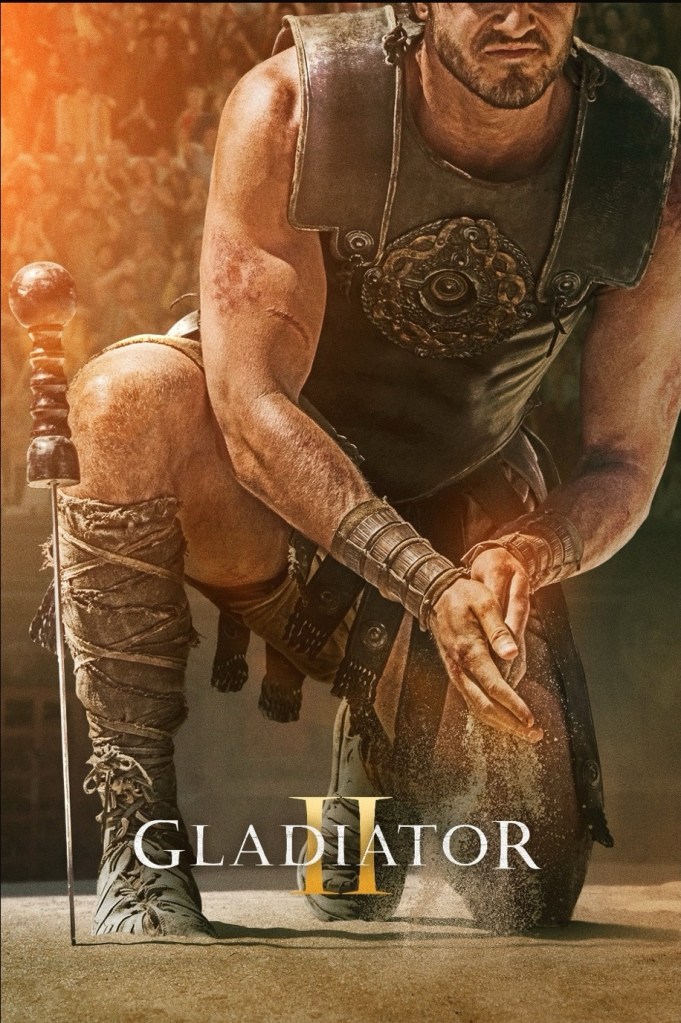
Directed by: Ridley Scott
Written by: David Scarpa
Starring: Paul Mescal, Pedro Pascal, Joseph Quinn, Fred Hechinger, Lior Raz, Derek Jacobi, Connie Nielsen and Denzel Washington
Music by: Harry Gregson-Williams
Rated: 15
Over two decades after Maximus’s heroic victory and death, the Roman Empire still hasn’t returned to the Republic that was envisioned by Emperor Marcus Aurelius, and is now ruled by two selfish twin brothers named Geta (Joseph Quinn) and Caracalla (Fred Hechinger). Lucius Verus (Paul Mescal), the young prince who witnessed Maximus’s final stand, has grown up living in exile on Numidia, until he is captured by General Marcus Acacius (Pedro Pascal). Unaware that Marcus is his mother, Lucilla’s (Connie Nielsen) new husband and is secretly planning to free Rome from the tyranny of the Emperors, Lucius plans for revenge against Marcus for killing his wife (Yuval Gonen), and gets trained by a former slave named Macrinus (Denzel Washington), who has his own plans for Rome…
Although Sir Ridley Scott’s career in the twenty-first century has been infamously hit and miss, with great films like The Martian, The Last Duel and American Gangster being balanced with bad ones such as Alien: Covenant, Exodus: Gods and Kings and House of Gucci, the one thing that most people can agree on, is that Scott’s films peaked in the year 2000, with Gladiator.
Winning five Academy Awards including Best Picture, being the second most financially successful film of 2000 and being credited for launching the mainstream acting career of Russell Crowe, Gladiator’s timeless revenge story about a wronged Roman general’s battles against a ruthless Emperor, was a perfect return to the David Lean and Cecile B.De Mille epic genre that had been dormant for decades, that prepared audiences for the Lord of the Rings trilogy and Scott’s later films throughout the next two decades.
While some could argue that a sequel to this story may feel unnecessary, Ridley Scott has wanted to go back to Ancient Rome since the early 2000s and after a few cancelled attempts, including a bizarre Nick Cave script that would have seen Maximus fight battles in the Roman Afterlife before being revived to fight in all wars of history, Gladiator II has finally arrived in the arena of legacy sequels.
While this new story does admittedly repeat a few elements from the first film, (dead relative, training montage, revenge motivations), Scott does manage to subvert expectations by having the consequences of seeking revenge as a theme and in being a character study of Maximus’s legacy. Paul Mascal’s Lucius (who was played by Spencer Treat Clark as a child in the first film), is a lot more flawed character when compared to Maximus, especially his motivations to seek revenge against a man who is trying to save Rome as well, but who doesn’t realise that he killed his wife. Both Paul Mascal and Pedro Pascal bring a lot of likeable energy to their roles, while returning faces Connie Nielsen and Derek Jacobi are nice to see back.
However, the best character in Gladiator II, is Denzel Washington’s new gladiator trainer, Macrinus. Being a much more interesting take on the mentor role that the late Oliver Reed took in the original, Macrinus’s motivations and role in the plot, does lead into some shocking plot twists, especially in how the film examines how easily revenge can backfire into disaster.
As expected from a Ridley Scott epic, the fight sequences and cinematography of the Ancient Rome cities and battles are absolutely stunning to look at, and it is nice to finally get lighting back to where it was in the James Cameron’s Titanic days, looking like actual battles and not like poor music videos. However, some of the new types of Gladiator games do tend to get extremely silly, especially with demon baboons, shark arenas, and an out of nowhere Matt Lucas cameo. Unfortunately, another major plot twist that was given away in the trailers, does damage the first film in a big way, as it sounds like something that Maximus would NEVER do, and feels completely unnecessary to the story.
Overall, in spite of falling a bit short on the sword when compared to the first film, Gladiator II is an entertaining and engaging return to Ridley’s Ancient Roman universe.
Wicked

Directed by: Jon M. Chu
Written by: Winnie Holzman and Dana Fox
Starring: Cynthia Erivo, Ariana Grande, Jonathan Bailey, Ethan Slater, Bowen Yang, Marissa Bode, Peter Dinklage, Michelle Yeoh and Jeff Goldblum
Music by: Stephen Schwartz and John Powell
Rated: PG
In the magical land of Oz, Glinda (Ariana Grande), the Good Witch of the North, proceeds to tell the citizens of Munchkinland, the truth about the recently melted Wicked Witch of the West. Years before Dorothy’s house dropped in, both witches were Galinda Upland, a spoiled teenage girl obsessed with popularity and boys, and Elphaba Thropp (Cynthia Erivo), a kindhearted, yet stubborn green-skinned girl with a talent for magic. As both girls grow from rivals to friends at Shiz University, Elphaba’s mentor, Madame Morrible (Michelle Yeoh) and the Wonderful Wizard of Oz (Jeff Goldblum), take interest in her abilities…
Out of all of the proposed books, comic book characters, videogame and stage film adaptations that have been proposed over the last few decades, nothing has been as demanded for a big-screen treatment than Wicked. In 1996, author Gregory Maguire published a revisionist take on L. Frank Baum’s The Wonderful Wizard of Oz, Wicked: The Life and Times of the Wicked Witch of the West, that was a dark satirical tale about how the infamous villain, was actually an innocent green woman who was framed for her crimes against Oz.
This tale was later completely reimagined in 2003 as a Broadway musical, that, despite mixed reviews and being snubbed majorly at the 2004 Tony Awards by Avenue Q, became one of the biggest cultural phenomenons in musical history. This heartwarming friendship story between the Witches of Oz, became not only the biggest impact on the Oz franchise along with the 1939 MGM classic, but launched its own subgenre of “ pop culture villains being actually decent people”, as seen in Maleficent, Disney’s Descendants franchise, the Venom films and, with the original Elphaba actress, Idina Menzel’s Queen Elsa in Frozen.
With this massive impact, a film adaptation was a long time coming, with multiple delays, two cancelled attempts at ABC to make a non-musical version of the tale, names such as J.J. Abrams, Rob Marshall and James Mangold attached as possible directors, and the original director, Stephen Daldry, leaving due to COVID delays, Wicked has finally come to the screens with In the Heights director, Jon M. Chu, as the first of a two part adaptation.
While splitting this musical into two films may sound like an attempt to give Elphaba’s story the same treatment that Peter Jackson gave to The Hobbit, this expanded take on Wicked’s first act, does help give a lot more depth to some characters and sequences. Both Cynthia Erivo and Ariana Grande give fantastic performances as the two future witches, with the latter being really funny as a boy-crazy selfish character and the former being a worthy follow-up to Idina Menzel’s legacy.
Fully redeeming themselves from Universal’s embarrassing 2019 take on Cats, the visual and production design of Oz, Shiz University and the Emerald City, looks absolutely stunning and magical, even with the much darker takes on classic Oz mythology. Even if Jeff Goldblum does tend to play himself at times, he does succeed in bringing a much less pleasant take on the Wizard, Peter Dinklage brings a heartfelt performance as the abused goat teacher, Dr. Dillamond, and the always entertaining Michelle Yeoh does a great job as the strict Madame Morrible.
Overall, with all of those beloved songs from the show, including the legendary Defying Gravity, a fantastic vision of a not-so Merry Old Land of Oz, and a fantastic double act in Erivo and Grande, Wicked was well worth the two decade long wait. Even if a year-long interval is required to see the rest of this story, like Elphaba’s statement, one only has to look to the Western sky and celebrate the momentum!
Rating: 4.5/5
Moana 2
Directed by: David Derrick Jr., Jason Hand and Dana Ledoux Miller
Written by: Jared Bush and Dan Ledoux Miller
Starring: Auliʻi Cravalho, Dwayne Johnson, Hualālai Chung, Rose Matafeo, David Fane, Temuera Morrison, Nicole Scherzinger, Rachel House and Alan Tudyk
Music by: Mark Mancina and Opetaia Foaʻi
Rated: PG
Three years after returning the heart of Te Fiti, Moana (Auliʻi Cravalho) has become both a full-time wayfinder for her island home of Motonui, and a big sister as well. When she receives a vision from her ancestors instructing her to go on a new mission to reconnect Motonui with other islands, Moana, along with her demigod bestie, Maui (Dwayne Johnson), and a new crew consisting of Maui fanboy Moni (Hualālai Chung), boat engineer Loto (Rose Matafeo) and a grumpy farmer named Kele (David Fane), must set off across the ocean again, if she ever hopes to reconnect the islands…
Throughout the year 2024, after suffering from financial underperformances over and over again in the last two years, especially during the company’s 100th anniversary in 2023, Disney have slowly but surely, been building back their reputation. Inside Out 2 from Pixar, ended up making up for the bombing of Lightyear by becoming the highest grossing animated film of all time, all the 20th Century films such as The First Omen, Alien: Romulus and Kingdom of the Planet of the Apes all achieved solid praise with more entries set to come, and on the Marvel side, X-Men ‘97, Deadpool & Wolverine and even Echo and Agatha All Along to a lesser extent, served as a course correction for the Multiverse Saga.
However, while the controversy surrounding The Acolyte on the Lucasfilm side, shows that they aren’t fully out of the woods yet, one area that Disney have been desperate to turn things around, has been Walt Disney Animation Studios. Regardless of what one thinks about 2023’s Wish, its poor performance at the box office was the final straw and in September 2024, CEO Jennifer Lee, was removed from the position to go back to screenwriting duties on the upcoming Frozen two-part third film. However, as Disney wasn’t willing to give up their traditional Thanksgiving slot, they have done something that they haven’t done since the mid 2000s, take several episodes of a cancelled television series, and re-edit them into a feature film, resulting in the previously announced Moana: The Series, to be transformed into Moana 2.
From a business perspective, this actually makes sense, as the first Moana, released in 2016 with great success, an Academy Award nomination and a whole host of lovable characters and Lin-Manuel Miranda songs, is actually the most watched film ever on Disney+. While the previous statement of this sequel being several episodes edited together to a film does bring back bad memories of the likes of Cinderella II: Dreams Come True, Tarzan and Jane and Belle’s Magical World, animated television has come a long way since those days,with some of Disney’s best content, Phineas and Ferb, Gravity Falls and The Owl House being great examples, resulting in the animation looking still incredibly stunning, even if slightly less impressive than the first film.
Although Moana 2 does thankfully work as a full story, Moana and Maui’s new adventures with the Kakamora pirates, new sea monsters and her new crew, are slightly more aimed at younger audiences than the original. Even if the new crew does lack memorable moments, both Auliʻi Cravalho and Dwayne Johnson are still as lovable as ever as Moana and Maui.
Overall, while more time given to this film could have been used to better develop its narrative and new characters, as the conversion from Disney+ miniseries to feature film, was clearly rushed to fix Walt Disney Animation Studios’s money problems, Moana 2 does manage to be decent family entertainment for all ages.
Rating: 3/5
Conclave
Directed by: Edward Berger
Written by: Peter Straughan
Starring: Ralph Fiennes, Stanley Tucci, John Lithgow, Sergio Castellito, Lucian Msamati, Carlos Diehz and Isabella Rossellini
Music by: Volker Bertelmann
Rated: 12A
When Pope Gregory XVII suddenly passes away, Cardinal-Dean Thomas Lawrence (Ralph Fiennes), is put in charge of arranging a papal conclave to elect a new Pope. However, as Lawrence goes through the secrets of the four candidates, Aldo Bellini (Stanley Tucci), Joseph Tremblay (John Lithgow), Joshua Adeyemi (Lucian Msamati) and Goffredo Cardinal Tedesco (Sergio Castellitto), along with a new archbishop named Vincent Cardinal Benitez (Carlos Diehz), he soon discovers that some of them, are not who they say they are…
After a surprising amount of films that revolve around horror stories set in religious places like Immaculate and The First Omen in 2024, the year’s last of these examples, has decided to take a much more grounded approach in its depiction of a different kind of religious horror, the complicated process of choosing a new Pope.
Fresh off of his award winning remake of All Quiet on the Western Front, director Edward Berger successfully adapts Robert Harris’s 2016 novel, Conclave, into this darkly funny, yet intense insight into how scandals and conflicts can make the process of selecting the holiest man of the Catholic Faith, even if Volker Bertelmann‘s score is a bit too over the top at times.
While Ralph Fiennes does a fantastic job as the troubled Cardinal-Dean that has to rake in the chaos, it is the subjects of his research that get the most interesting moments , with Stanley Tucci, John Lithgow and the underrated Sergio Castellitto in particular, getting the best moments in their quests to either become Pope or to select the one they like.
Overall, despite having a bit too many twists that make the mystery feel a bit too complicated, Conclave is an interesting and darkly funny experience for anyone who enjoys seeing how easily a simple task, can end up in chaos.
Rating: 4/5
Kraven the Hunter
Directed by: J.C. Chandor
Written by: Richard Wenk, Art Marcum and Matt Holloway
Starring: Aaron Taylor-Johnson, Ariana DeBose, Fred Hechinger, Alessandro Nivola, Christopher Abbott and Russell Crowe
Music by: Benjamin Wallfisch, Evgueni and Sacha Galperine
Rated: 15
Set in the same universe as the Venom trilogy, Morbius and Madame Web, Sergei Kravinoff (Aaron Taylor-Johnson), has operated as the violent vigilante, Kraven the Hunter, ever since he was seriously injured and given a serum that enhanced his natural abilities during a hunting trip with his brother, Dmitri (Fred Hechinger) and his abusive father, Nikolai (Russell Crowe). When Dmitri gets kidnapped by mercenaries led by the shapeshifting criminal, Rhino (Alessandro Nivola), and a deadly assassin known as Foreigner (Christopher Abbott), Kraven and the woman who gave him the serum, lawyer Calypso (Ariana DeBose), set out to save him…
A year after DC’s Extended Universe came to an end with Aquaman and the Lost Kingdom, another cinematic universe franchise is set to come to an incredibly messy end, Sony’s so-called “Spider-Man, but with no Spider-Man” universe that started with Venom in 2018. Although the Venom trilogy has managed to find an audience in spite of having almost no resemblance to the character’s role in the Spider-Man mythos, by being incredibly goofy unintentional rom-coms between Tom Hardy and his alien buddy, the same cannot be said for the rest of these films.
After the huge bombs of Morbius and Madame Web, Sony have finally decided to end the story of Earth-688 with Kraven the Hunter, originally intended to be released after Morbius, but kept getting delayed from January 2023, to October, to August 2024 and finally to December. Out of all the classic Spider-Man villains, Kraven, an animal hunter who is obsessed with making Spidey his biggest trophy, originally appearing in 1964’s The Amazing Spider-Man issue 15, was the only major one who hadn’t appeared in a mainstream live-action film, despite being a popular member of the Sinister Six, starring in one of the best Spider-Man graphic novels, Kraven’s Last Hunt and having a major presence in the animated shows and video games. (Sam Raimi, Marc Webb and Jon Watts all planned to use the character at some point, Raimi for a future Tobey Maguire Spider-Man film, Webb as a planned member of the Sinister Six as teased in The Amazing Spider-Man 2 and Watts, as the main antagonist for an early version of No Way Home. Even Ryan Coogler wanted to use Kraven as a possible villain for the first Black Panther film, before learning that Sony owned the rights to the Spider-Man characters.)
Much like Venom and Morbius, the titular hunter is reimagined as an antihero for this particular film, and while director J.C. Chandor does deserve some respect for trying to keep some of the iconic imagery of Kraven’s hunter background, even he cannot prevent the limitations that the broken premise of these spinoffs have gotten themselves into. Even though Morbius and Madame Web were terrible as well, at least some unintentionally funny moments made them anything but boring. How can a film where a lion man fighting a rhino man with animal powers, be this boring and dull?
Speaking of Kraven, Aaron Taylor-Johnson tries his best of what he has been given, and he does look great in the iconic costume. However, he doesn’t wear it until the final scene, as a majority of time is spent with the likes of Alessandro Nivola, Christopher Abbott and even Russell Crowe giving one of his worst performances in years, as three incredibly flat villains, and the former’s Rhino design is so bad, that no one will ever complain about Paul Giamatti’s mechanical suit in The Amazing Spider-Man 2 ever again. Ariana DeBose and Fred Hechinger don’t fare much better as Kraven’s love interest lawyer and little brother either, with the latter also dragging down a major character from Spidey’s mythology.
Overall, with dull fight sequences, incredibly boring plot developments and awfully developed character motivations, Kraven the Hunter ended possibly one of the worst cinematic universe franchises in history, with a wimpy prodding stick, instead of a masterful last hunt.
Rating: 1/5
The Lord of the Rings: The War of the Rohirrim
Directed by: Kenji Kamiyama
Written by: Jeffrey Addiss, Will Matthews, Phoebe Gittins and Arty Papageorgiou
Starring: Brian Cox, Gaia Wise, Luke Pasqualino, Lorraine Ashbourne and Miranda Otto
Music by: Stephen Gallagher
Rated: 12A
One hundred and twenty-three years before Bilbo Baggins left on his adventure with Gandalf and the dwarves of Erebor, the Kingdom of Rohan, realm of the horse lords, suffers a major crisis. When King Helm Hammerhand (Brian Cox) of Edoras accidentally kills Freca (Shaun Dooley), chief of the Dunlendings during a duel, the latter’s vengeful son, Wulf (Luke Pasqualino), declares war. With the Rohirrim greatly overwhelmed by the Dunlendings, Helm and his beloved daughter, a headstrong shield maiden named Héra (Gaia Wise), find themselves stranded at the Hornberg tower, where they must find a way to save their people from certain death…
A decade after Peter Jackson left behind Middle-Earth for the seemingly final time with The Hobbit: The Battle of the Five Armies in 2014, J.R.R Tolkien’s franchise of hobbits, wizards, elves and dwarves has found new life in newly published collections of writings of Professor Tolkien, several video games and a very controversial streaming series on Amazon, The Lord of the Rings: The Rings of Power, which, as of 2024, has just finished its second season.
However, recently, Warner Bros., New Line Cinema and Peter Jackson’s company, WingNut Films, have begun to bring the most popular version of Middle Earth, the one established in Peter Jackson’s six Hobbit and Lord of the Rings films, back in popular culture, with a film based on The Hunt for Gollum on the way for 2026. However, as the companies had to have quickly made another Lord of the Rings film by the end of 2024 to keep the rights to the franchise, a completely new approach has been done to keep costs down, with War of the Rohirrim being an anime adaptation of one of the Appendices chapters from the book version of The Return of the King that told the story of the founding of the iconic fortress from The Two Towers, Helm’s Deep.
Although Middle-Earth has had its fair share of history in animated films such as Ralph Bakshi’s 1978 Lord of the Rings and the two Rankin/Bass Hobbit and Return of the King films, this is the first time that one has been set in the same universe of Jackson’s films, as well as the first film in the franchise to not feature Hobbits, elves or dwarves as main characters.
By being focused entirely on the history of Rohan, the human kingdom of the Horse Lords that played a major role in Two Towers and Return of the King, director Kenji Kamiyama tells a much more gritty and bleak story about the consequences of provoking war with enemy nations, even when done with good intentions. Both Helm Hammerhand and his daughter, Héra, make for fantastic new protagonists, even if more could have been done for the former’s iconic moments. As for Wulf, he may be one of the cruelest and most realistic antagonists of the franchise, as he is just an angry commander rather than a Dark Lord, a evil wizard or an Orc, and his conclusion is a surprising one, but well deserved.
Overall, while the character animation does take some getting used to, the background and character animation are incredibly beautiful to look at, the likes of Brian Cox, Gaia Wise and the returning Miranda Otto as Éowyn serving as a narrator, all do solid voice acting, and it is a treat hearing those classic Howard Shore music soundtracks on the big screen again to tell this untold story of Middle Earth.
Rating: 3.5/5
Mufasa: The Lion King

Directed by: Barry Jenkins
Written by: Jeff Nathanson
Starring, Aaron Pierre, Kelvin Harrison Jr., Tiffany Boone, Seth Rogen, Billy Eichner, John Kani, Blue Ivy Carter, Donald Glover, Mads Mikkelsen, Thandiwe Newton, Lennie James, Anika Noni Rose, Keith David and Beyoncé Knowles-Carter
Music by: David Metzger and Nicholas Britell
Rated: PG
A few years after Simba (Donald Glover) saved the Pride Lands and became king, both the young lion and his queen, Nala (Beyoncé Knowles-Carter) have become parents to a female cub named Kiara (Blue Ivy Carter). When Simba and Nala leave to attend a ritual ceremony, Kiara’s babysitters, Rafiki (John Kani), Timon (Billy Eichner) and Pumbaa (Seth Rogen) decide to tell her a legendary story of her grandfather, the late King Mufasa (Aaron Pierre), during his childhood as a stray cub, his adoption into a royal family where he becomes a brother to that Pride’s prince, Taka (Kelvin Harrison Jr.) and an incredible journey he takes across Africa, along with his brother, his future mate, Sarabi (Tiffany Boone), and eventually Zazu (Preston Nyman) and even a younger Rafiki (Kagiso Lediga), that will eventually lead to his destiny as King of Pride Rock…
Despite the fact that the 2019 photorealistic animated remake of 1994’s legendary classic, The Lion King, ended up becoming the highest grossing worldwide animated film for five years, Jon Favreau’s take on the legendary story of Simba, has also become infamous as the least original, and the most completely pointless example of Disney’s recent obsession with live-action remakes, which isn’t made better with its overly realistic animation style.
However, even if the sequels to Disney’s remakes such as Alice Through the Looking-Glass and Maleficent: Mistriss of Evil, haven’t done as well financially as the remakes, there is a lot of potential for the premise of an origin story of Simba’s late father, King Mufasa, whose original voice actor, James Earl Jones, passed away earlier in 2024, which is also on the thirtieth anniversary of the 1994 film.
This is made more apparent by the hiring of Best Picture winner director of Moonlight , Barry Jenkins, and the fact that the animators have listened to previous complaints and have made these animal characters, a lot more expressive in their emotions. However, even if Jenkins does lose a lot of the creativity of his previous films as a result of going into mainstream cinema, he does manage to tell the origin story of the Pride Lands, with powerful animation and a strong use of cinematic storytelling in the cinematography and editing.
While being a very good origin story for Mufasa, Sarabi, Zazu and Rafiki, some minor plotholes and a terrible depiction of the fall of the lion that will become Scar, Taka, prevents Mufasa: The Lion King, from reaching its true potential. However, Aaron Pierre, Kelvin Harrison Jr. and Mads Mikkelsen do great jobs as younger versions of Mufasa, Scar and the new white lion antagonist, Kiros, as well as returning faces from the 2019 film, Seth Rogen, Billy Eichner and John Kani’s takes on Pumbaa, Timon and Rafiki.
Overall, Mufasa: The Lion King, despite being attached to one of the least popular Disney remakes, was always going to be a much better film solely on the more expressive character animation, some good songs from Lin-Manuel-Miranda and having an original story about one of the most beloved Disney characters out there. It may not be perfect, but given the quality of most Disney remakes these days, that’s a massive achievement.
Rating: 3/5
Wallace & Gromit: Vengeance Most Fowl
Directed by: Nick Park and Merlin Crossingham
Written by: Mark Burton
Starring: Ben Whitehead, Peter Kay, Lauren Patel, Reece Shearsmith and Diane Morgan
Music by: Julian Nott and Lorne Balfe
Rated: U
Getting into a habit of inventing loads more stuff than usual, Cheese-loving inventor, Wallace (Ben Whitehead) annoys his best friend, Gromit, when his latest invention, a “smart-gnome” named Norbert (Reece Shearsmith), starts doing all of Gromit’s work, even though the lovable dog loves doing things himself. After Gromit accidentally plugs Norbert into a computer, it soon catches the attention of his and Wallace’s old nemesis, Feathers McGraw. the criminal chicken (penguin), from The Wrong Trousers, who seeks “Vengeance most fowl” after spending years of imprisonment at the zoo…
After making two sequels in a row with Farmageddon: A Shaun the Sheep Movie and Chicken Run: Dawn of the Nugget for Netflix, Aardman Animations have decided to go back to their most famous franchise for their third sequel in five years. Although the creator of everyone’s favourite inventor and dog duo, Wallace and Gromit, Nick Park previously stated that there would be no more feature-length films, due to clashes with DreamWorks Animation during production of the duo’s first movie, The Curse of the Were-Rabbit, feeling that they worked best in commercials and shorts such as 2008’s A Matter of Loaf and Death and the tragic death of Wallace’s voice actor, Peter Sallis in 2017, the company’s recent success in their distribution deal with Netflix, would eventually lead them back to 62 West Wallaby Street, almost two decades after Were-Rabbit.
As expected from Aardman’s talents, the stop-motion and humour are still incredibly impressive and extremely funny, with some of the funniest sight gags in the entire franchise. Furthermore, Wallace & Gromit: Vengeance Most Fowl does manage to break the conventional rules of each entry being stand-alone adventures, by having this film be a direct sequel to the events of the second short film, 1993’s The Wrong Trousers.
As that film is, as of 2024, the most critically acclaimed entry of the franchise and was the film that won the duo their first Academy Award and their mainstream success around the world, it was a only a matter of time before that film’s breakout character, the evil penguin, Feathers McGraw, would return in another film (After being a main antagonist in a 2003 video game, Project Zoo and in the long lost stage adaptation of Wallace & Gromit in the late 1990s). However, while the little penguin is still as creepy as ever, more could have been done with him, as most of the film is taken up by his new minions, the robot smart-gnomes.
Reece Shearsmith does manage to get some of the biggest laughs as Norbert the gnome, Petey Kay makes a welcome return from Curse of the Were-Rabbit as an older Pc Mackintosh, but it is Ben Whitehead, who, after debuting as the new voice of Wallace in the video game, Wallace & Gromit’s Grand Adventures in 2008 and refining his skills over the last decade in commercials, whose work has finally paid off in sounding exactly like the late Peter Sallis, who would be extremely proud of him.
Overall, Wallace & Gromit: Vengeance Most Fowl, aside from a padded out subplot involving a young police officer (Lauren Patel), is one of the best things to have come out of Aardman in years and a cracking return for a new era of invention, cheese and crackers for one man and his loyal dog.
Rating: 4.5/5
Better Man

Directed by: Michael Gracey
Written by: Simon Gleeson, Oliver Cole and Michael Gracey
Starring: Robbie Williams, Jonno Davis, Steve Pemberton, Kate Mulvany, Alison Steadman, Damon Herriman and Raechelle Banno
Music by: Batu Sener
Rated: 15
As told by himself, singer Robbie Williams (Himself and Jonno Davies) recounts his entire life story and singing career. From his childhood relationships with his estranged father, Peter (Steve Pemberton) and beloved grandmother, Betty (Alison Steadman), his big break with boy band, Take That, up to his struggles in the early 2000s, as he has always seen himself as “less evolved”, Williams is portrayed as a chimpanzee, trying to find his place in the universe…
If one thinks that a Lego version of Pharrell Williams’s life story, Piece by Piece, was the weirdest place that the constantly growing musical biopic subgenre can go, it is nothing compared to what Paramount and The Greatest Showman Director, Michael Gracey, have dreamt up for this.
Better Man, based on the life story of former Take That singer, Robbie Williams, who has also become one of the most successful British singers of the twenty-first century, does follow the same formula of Rocketman, Bohemian Rhapsody and Elvis, with one major exception. As Williams, much like Pharrell, wanted to make his biopic stand out from the rest, he is portrayed as a motion-captured talking and singing chimpanzee, without any winking to the camera and taken extremely seriously.
While some could consider this a cheap gimmick, even taking away Williams’s self-imposed “monkey filter”, Better Man is still incredibly good, with well-choreographed dance sequences and great recreations of Williams’s songs, which isn’t surprising given that Gracey is well suited into shooting musicals in his portfolio.
Both Robbie Williams himself and Jonno Davies as his younger self, manage to bring so much personality to his ape version of himself, while the likes of Steve Pemberton, Kate Mulvany and Alison Steadman, also do great jobs as his family members. Even if more could have been done in depicting Williams’s relationship struggles with his manager, Nigel Martin-Smith (Damon Herriman) and girlfriend, Nicole Appleton (Raechelle Banno), the final sequence does manage to be a heartwarming recreation of a certain moment in the Royal Albert Hall.
Overall, Better Man is an entertaining and unorthodox way to experience the music of Robbie Williams, if one is willing to watch a story about a singing chimpanzee conquering the world with music, rather than with weapons!
Rating: 3.5/5
Sonic the Hedgehog 3
Directed by: Jeff Fowler
Written by: Pat Casey, Josh Miller and John Whittington
Starring: Ben Schwartz, Jim Carrey, Colleen O’Shaughnessey, Idris Elba, James Marsden, Tika Sumpter, Krysten Ritter, Natasha Rothwell, Shemar Moore and Keanu Reeves
Music by: Tom Holkenberg
Rated: PG
Four years after retrieving the Master Emerald, Sonic the Hedgehog (Ben Schwartz), is enjoying spending time with his adopted human parents, Tom (James Marsden) and Maddie (Tika Sumpter), and his team of adopted siblings, Tails the Fox (Colleen O’Shaughnessey) and Knuckles the Echidna (Idris Elba). However, an attack on the G.U.N. Organisation lifts Team Sonic into action, where they discover that their arch-nemesis, Dr. Robotnik (Jim Carrey), has a grandfather, Gerald (Also Jim Carrey), who is even more evil than him and possesses a secret weapon, another talking super-powered hedgehog named Shadow (Keanu Reeves), who despises the world for causing a personal tragedy to himself…
It is amazing to see how far the Sonic the Hedgehog film series has come ever since that infamous teaser trailer for the first film came out in 2019. After director Jeff Fowler actually listened to the backlash and delayed the film to redesign the titular character to more closely resemble his videogame counterpart, the two films have since become some of the most successful in the live-action video game adaptation subgenre.
With the infamous “Ugly Sonic” making an appearance in Disney’s 2022 Chip n’ Dale: Rescue Rangers film and the films expanding to television with the divisive Knuckles show, it was only a matter of time that Sonic, Tails and Knuckles would return to the big screen. As teased in the post-credit scene of Sonic the Hedgehog 2 however, the next story from the videogame series, was the last one anyone expected for the comedic tone of the films, due to the Shadow the Hedgehog story being the darkest and most tragic story of the franchise.
Much like how the first film adapted the first game and the second adapted Sonic 2, 3 and Sonic & Knuckles at the same time, Sonic the Hedgehog 3 has decided to take elements from 2001’s Sonic Adventure 2 and 2006’s infamous Shadow the Hedgehog game, with those games’s breakout character, Shadow, being a major character in this film. While some aspects of these games are modified to better fit with the tone of the first two films, most of Shadow’s story remains intact, even with his bike poses, and his tragic backstory. Keanu Reeves does a fantastic job as Shadow, and while less serious than his game counterpart, Jim Carrey manages to bring a understated menace to his second character, Gerald Robotnik, while also still being as hilarious as ever, as the original Robotnik.
As expected, Ben Schwartz, Colleen O’Shaughnessey and Idris Elba are great as Team Sonic, with Knuckles still getting huge laughs and Sonic getting more attention than in the first two films. Those who were upset over the unnecessary wedding subplot of the second film and with James Marsden getting too much screen-time in the first, will be happy to know that Sonic, Shadow and their teams get the most attention, with an insane third act finale that will have Sonic fans cheering with joy.
Overall, Sonic the Hedgehog 3 is a fantastic experience for both fans and families alike. While being slightly more intense than the first two films, this is the film that fans of this long-running franchise have been waiting decades for. Shows how Jeff Fowler’s decision to “Live and Learn” from a mistake, paid off in the end.
Rating: 4.5/5
 Chaz’s Cinematic Odyssey